Lumps, Sediment and Foam: Sieving and Whisking Done Right
Why matcha clumps, leaves sediment or makes no foam, and what helps: sieve it, stir a paste first, whisk in a W motion with the Chasen.
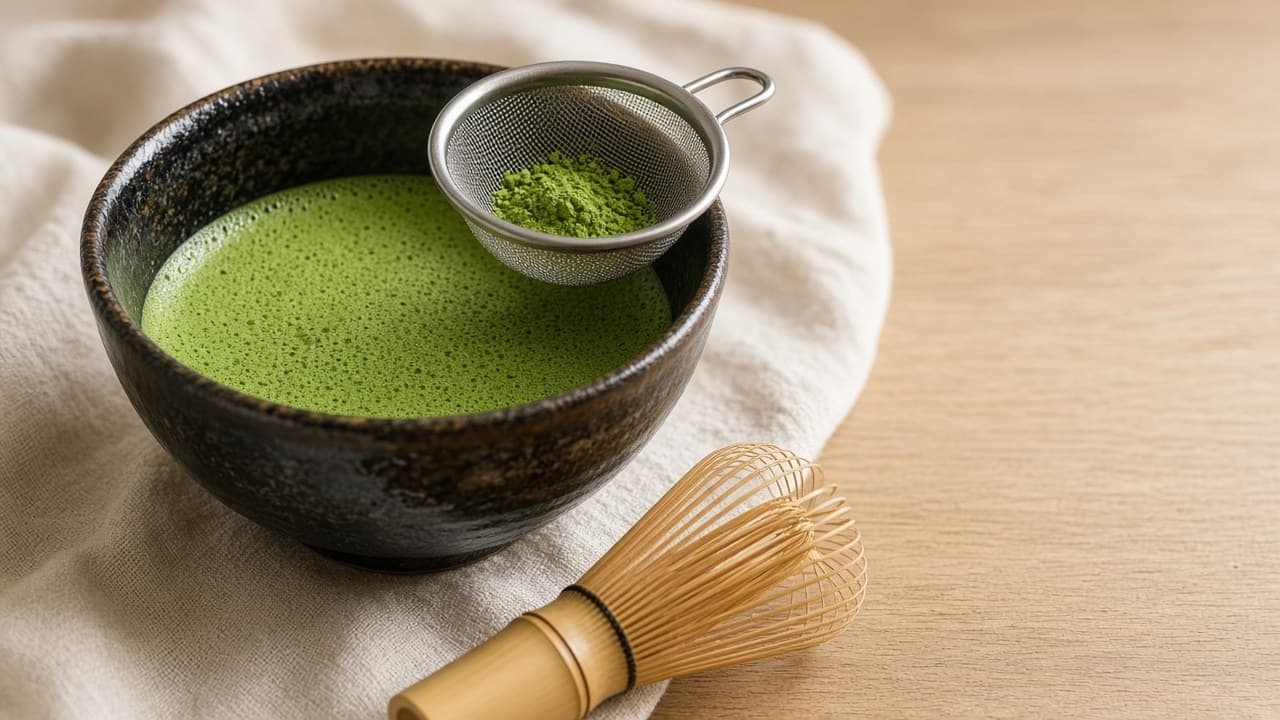
Matcha clumps because fine powder absorbs moisture and balls up into small lumps. Sieving, stirring it smooth with a little water first and then whisking vigorously in a W motion fixes most of it. Foam usually fails to appear when the powder is not sieved, the water is too hot or too cold, or the whisking is too timid. A little powder at the bottom is normal: matcha does not dissolve, it only disperses.
Why matcha clumps
Matcha is a very fine powder made of ground tea leaves. Fine particles stick to one another, and a little moisture or pressure is enough for them to form small lumps. Typical triggers:
- The powder went straight into cold water or milk without being sieved first.
- It stood open for a long time and humidity got into the powder.
- It was pressed firmly together in the pouch or tin, for example by stacking or squeezing.
- A spoon is used for stirring, which tends to smear the lumps rather than break them up.
Important for putting it in perspective: a few small lumps in fresh powder are not a defect, they come with such fine material. On the other hand, throw away powder that is clearly damp, forms damp clumps or smells musty. The same applies if it shows traces of mould. Do not use it any further, not even in the kitchen.
If a powder dissolves instantly without any tools, that points more to an instant product or a blend with additives. Pure matcha disperses less readily without a sieve and whisk. With blends, look at the ingredient list. A binder holds ingredients together or gives a blend more cohesion. Pure matcha needs no such additive; to prevent lumps, sieving and careful stirring help.
Sieving: with what and how
Do you always have to sieve matcha? No, but it is the simplest step against lumps and is especially worthwhile for latte, iced and cold water. If you stir the powder directly in the bowl with the whisk, with fresh, loosely stored powder you can often manage without a sieve. If lumps appear, sieving is the first measure.
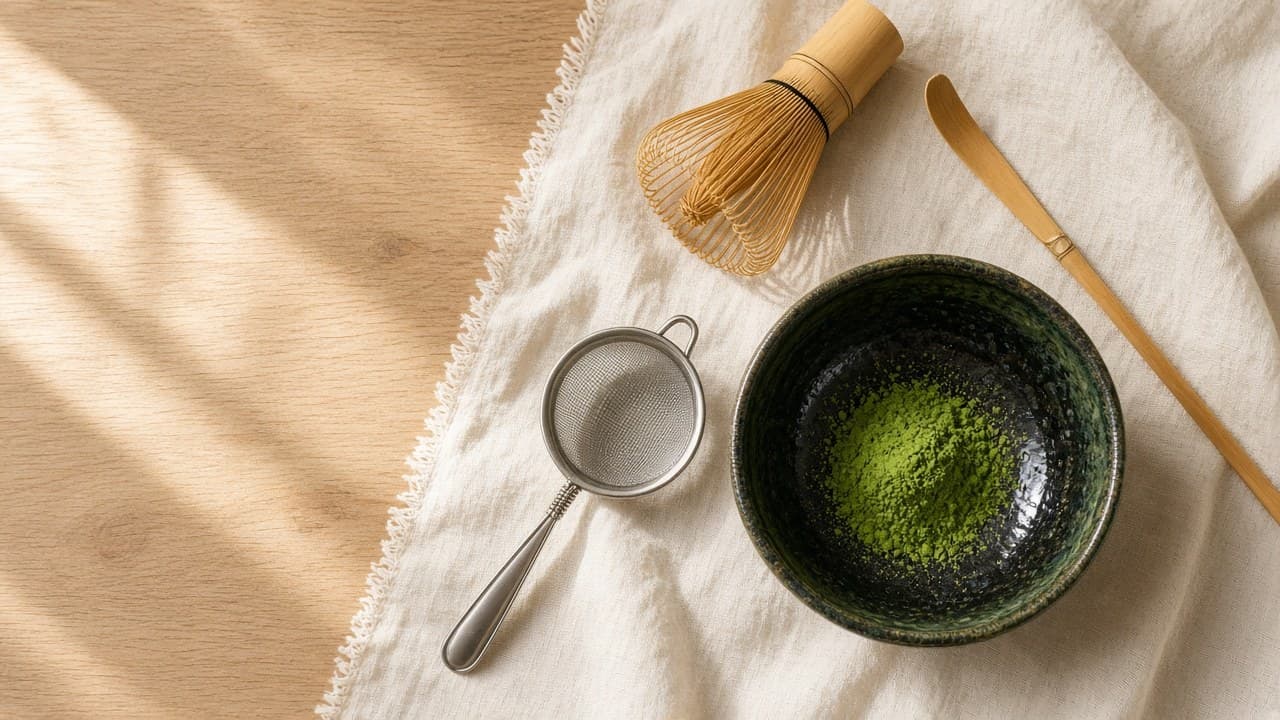
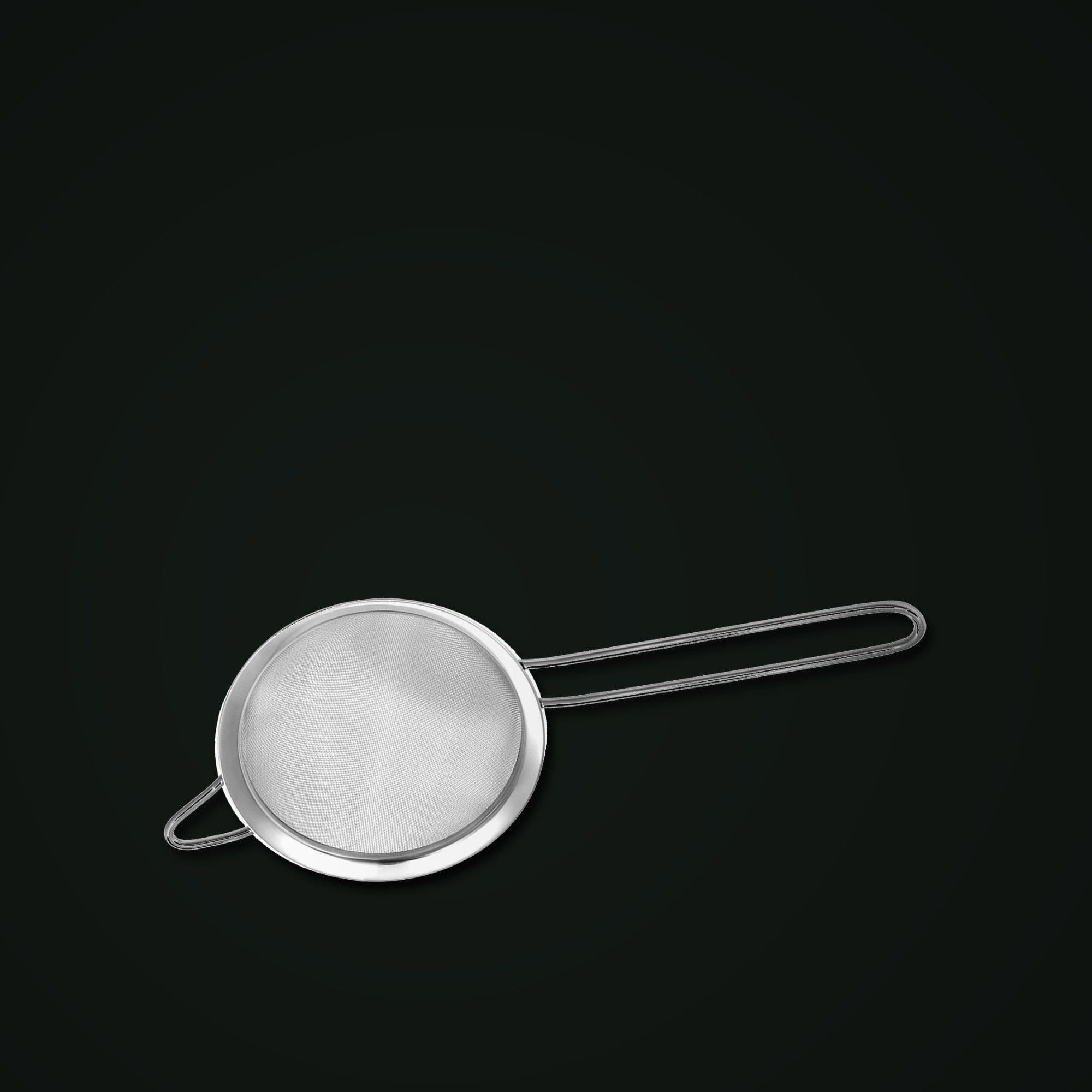
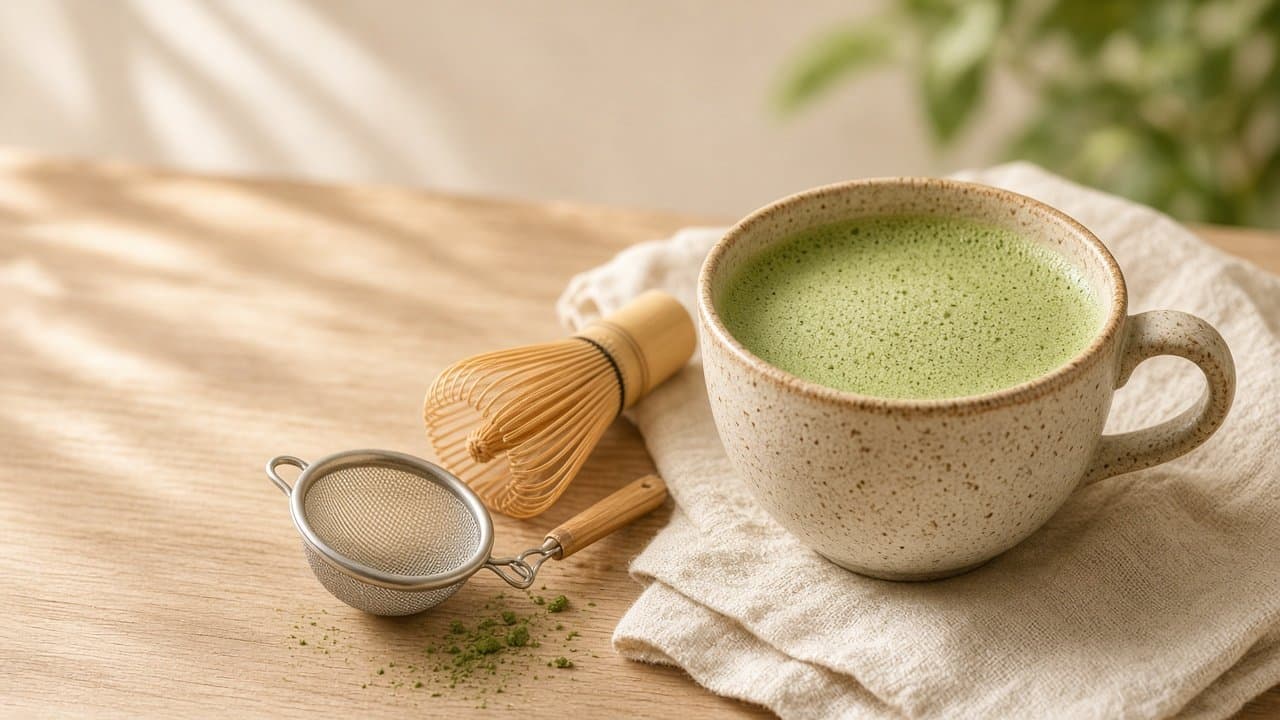
Which sieve? A small, fine tea sieve or matcha sieve with a tight mesh is ideal. A coarse kitchen sieve lets lumps through. Hold the fine sieve over the bowl or glass.
Here is how:
- Put about 2 g of powder into the sieve. Spoons vary in size, so weigh the amount once with a precision scale.
- Gently brush the powder through the mesh with the back of a spoon or the Chashaku. Do not press, but circle or brush.
- If lumps stay in the sieve, crush them carefully and brush again. Discard anything that still remains.
Sieved powder looks like a light green haze. It disperses more reliably, and the foam becomes finer.
Stir a paste first, then top up
For latte in particular, this order helps most: first add only a little water to the sieved powder and stir a smooth paste. Only when no more lumps are visible do you top up.
Using our house values: put 2 g of powder in a bowl and add 30 ml of water at about 75 °C. The water should not boil. Stir it smooth briefly with the Chasen or a small whisk and whisk to a fine foam. Then top up with 200 ml of milk or oat drink, warm or over ice. For a bowl of straight matcha, use 2 g and 70 ml of water at about 75 °C.
Why water first? In a larger amount of liquid the particles drift apart and are less likely to clump if they have been wetted beforehand. If you put the water in the bowl first and then sprinkle the powder over it, you often get fewer lumps than the other way round. If you still have lumps even though you sieved: make a paste with a little less water, stir it vigorously smooth and then dilute it with the remaining water or the milk.
Lumpy powder can often be saved: sieve it again, crush the lumps in the sieve and make a paste. If it is damp, smells musty or has mould, the only option is to throw it away.
Chasen technique: W motion, duration, wrist
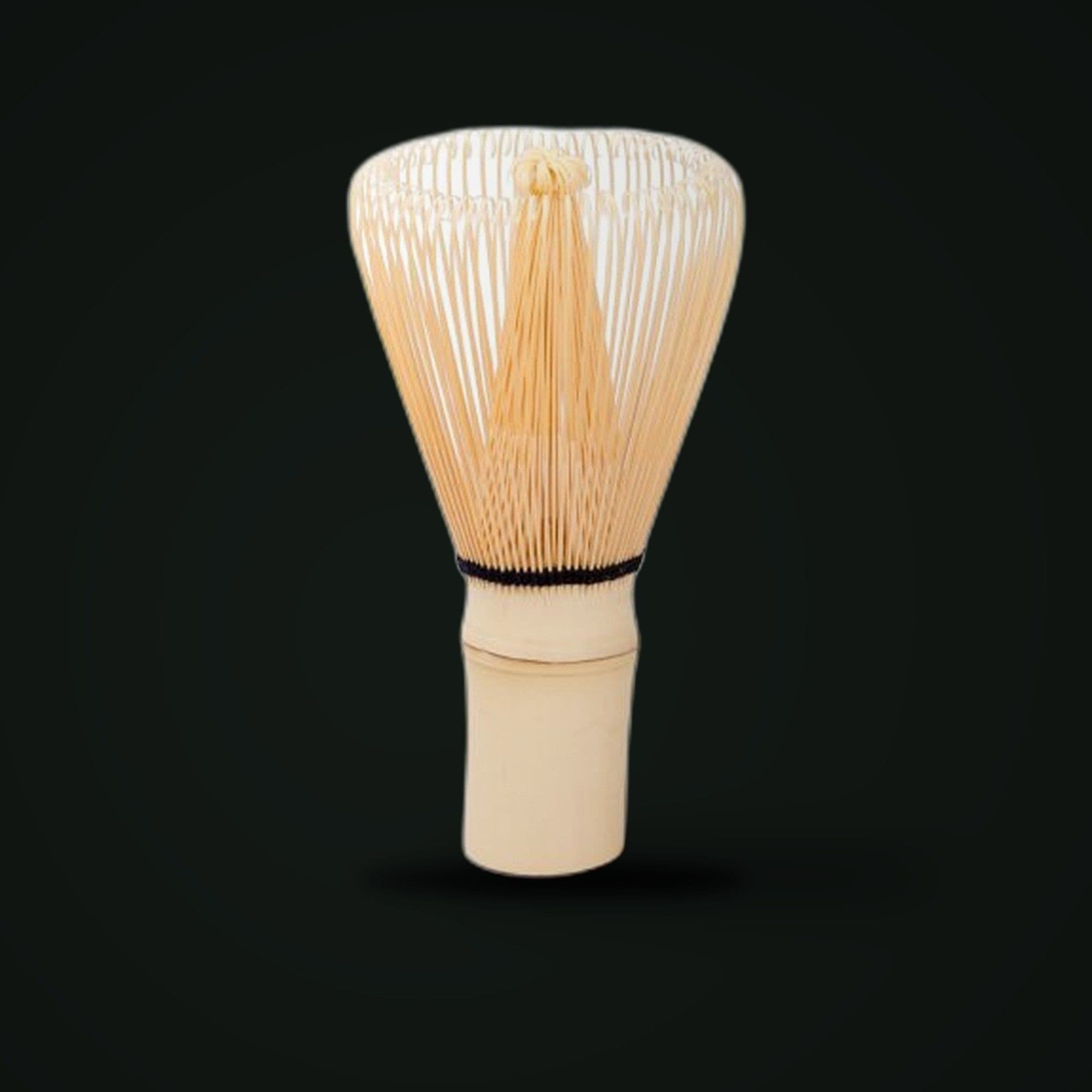
The Chasen is the bamboo whisk for matcha. Because the powder does not dissolve but disperses, you need a whisk that beats in air and keeps the particles in suspension.
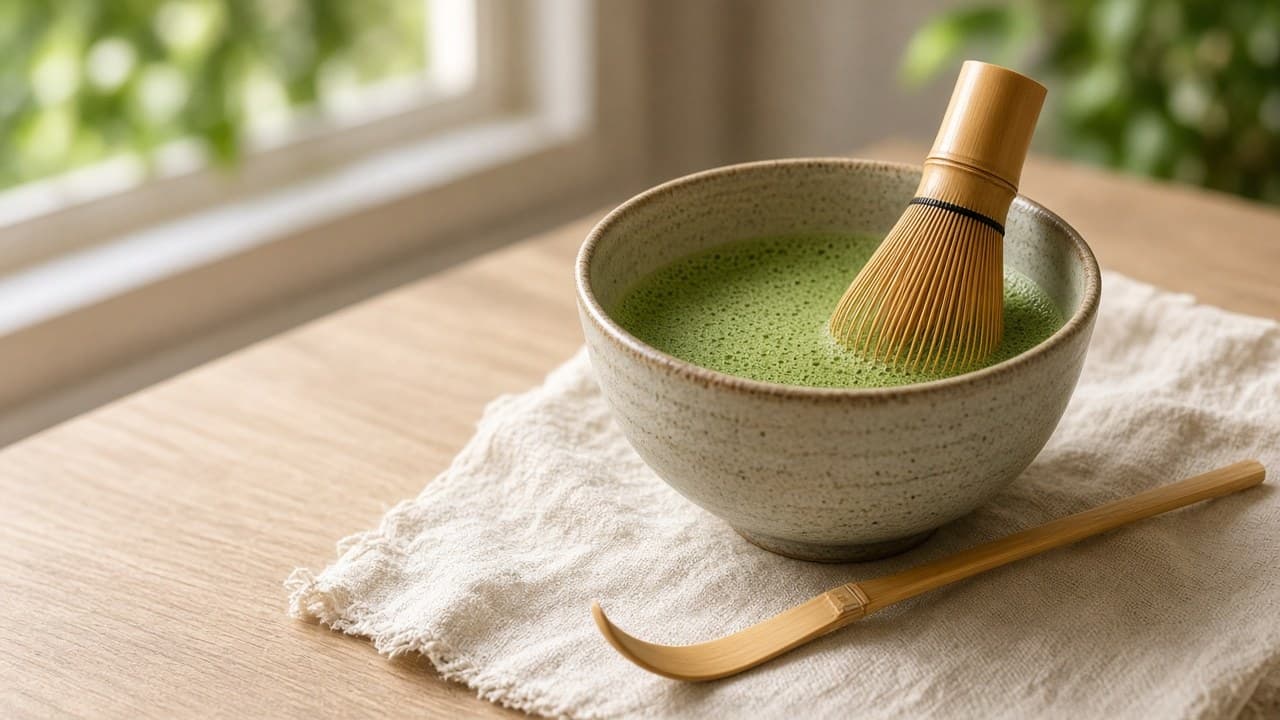
The motion: Hold the whisk loosely and move it quickly back and forth from the wrist, in a W or M motion. Only touch the bottom of the bowl lightly, otherwise you will bend the tines. Keep your arm still, the motion comes from the wrist. Circling is less reliable than the zigzag motion because it hardly beats in any air.
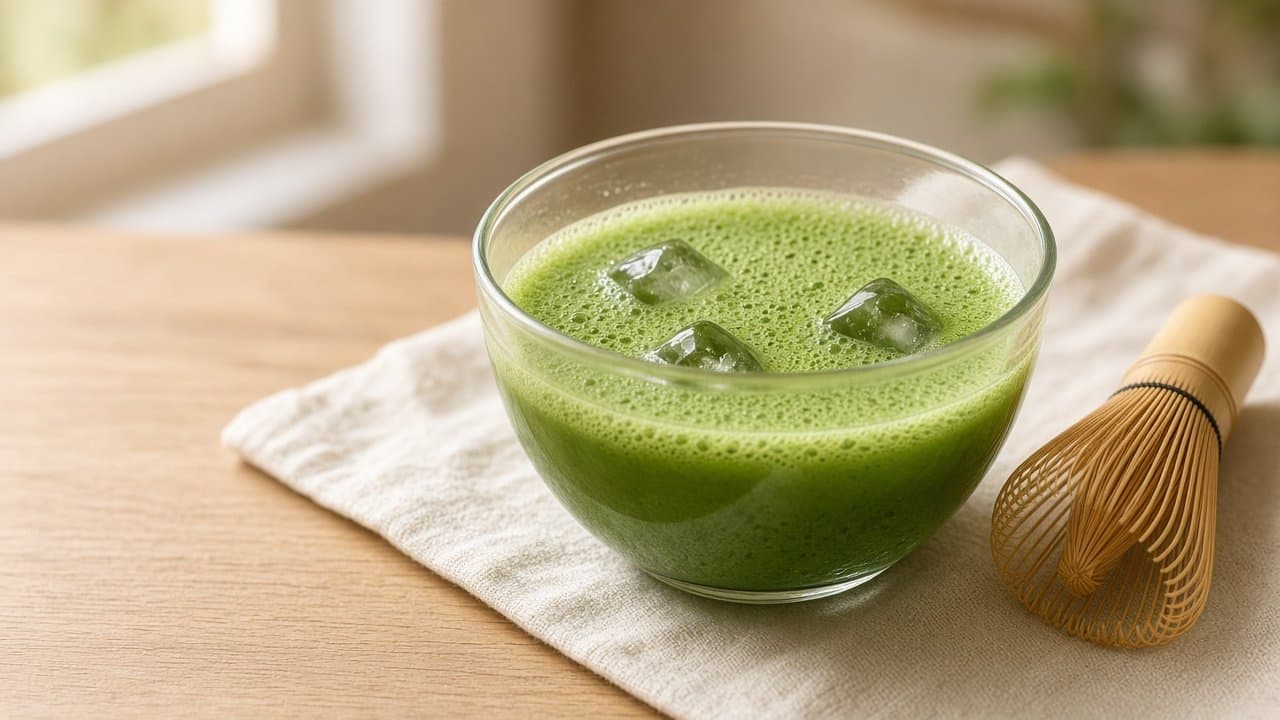
The duration: About 15 to 30 seconds is enough for fine foam. Whisking for longer does not necessarily give more foam. Finally, move the whisk slowly across the surface. This breaks up large bubbles and makes the foam even. Lift the whisk out of the bowl in the middle. When you drink, small, tightly packed bubbles may cover the surface at first. Over time the foam layer can become thinner and form gaps.
Getting faster: If you are slow, practise moving your wrist. Start with less water: the resistance is higher, so the technique is easier to feel.
Combining techniques: Some drinkers mix techniques, for example first stirring smooth briefly with the whisk and then finishing with a frother. That is a matter of taste and works as well.
If the whisk wears out quickly: Soak the tines briefly in warm water before use, do not press against the bottom, rinse with water after use and let it dry. Do not store a wet Chasen in a closed tin.
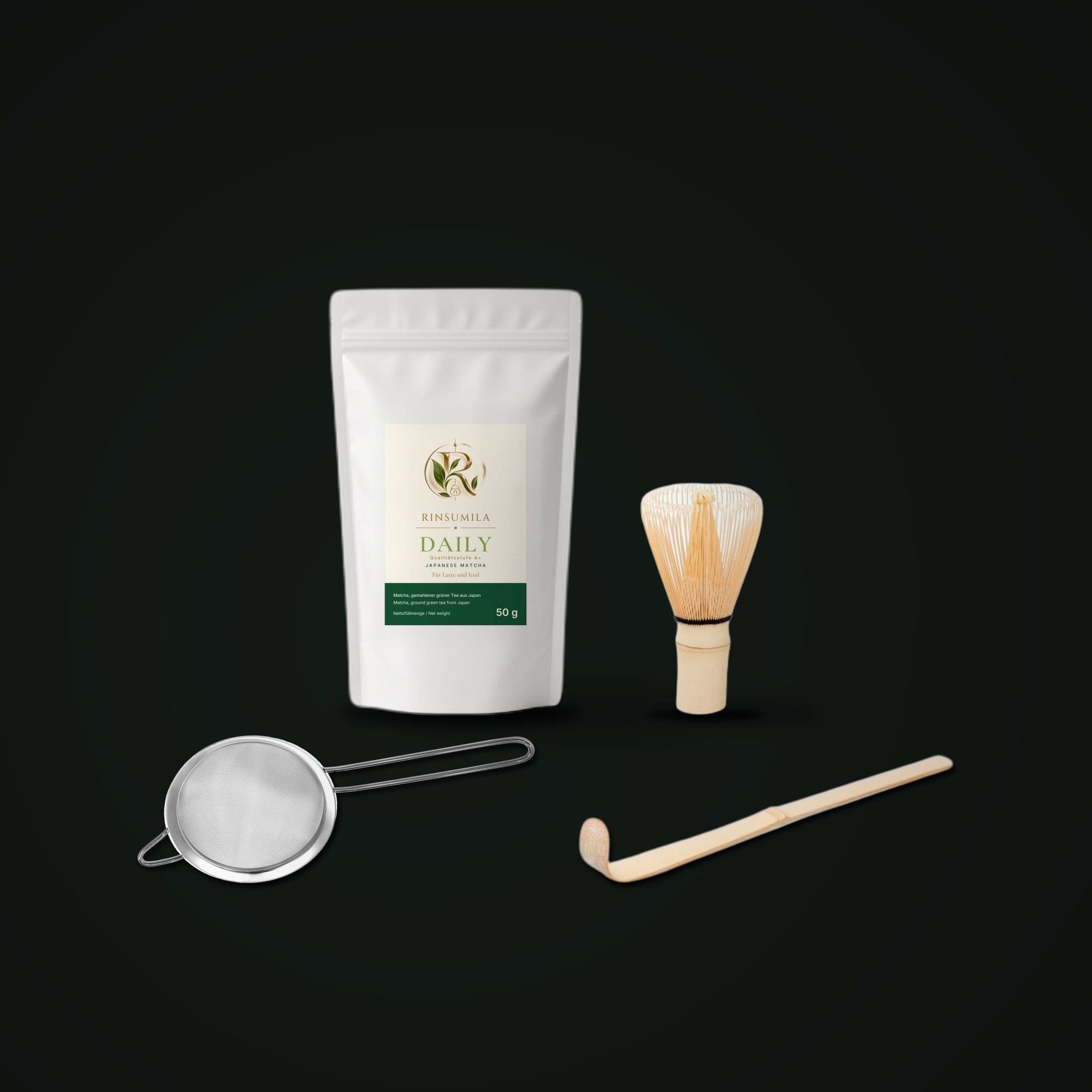
The START RITUAL includes a Chasen, together with a sieve and Chashaku. You can find more on tools in our guide Matcha Tools at a Glance.
Why matcha foams
That matcha forms foam at all is down to substances from the tea leaf itself. A laboratory study of nine matcha types and grades (2025) found that a pH of around 6, catechins, amino acids, pectin, soluble proteins and lipids promoted foam formation. Among the substances studied, one catechin of the tea had the greatest influence on how much foam formed; the amino acids mainly kept the foam stable [1]. This explains why different powders foam differently, even when you whisk them the same way.
The speed and duration of stirring also change the drink. Another study (2024) stirred matcha with a laboratory stirrer, not a Chasen, at different speeds and durations [2]. With slow and short stirring, the aroma was richer in the tasting, but bitterness and astringency were also more pronounced. The values cannot be transferred directly to the bamboo whisk. They do show, however, that whisking changes not only the foam but also the taste.
Foam forms or fails: causes
Why is there no foam? Usually it comes down to one of these points:
- Water: Water that is too hot or boiling makes the powder taste bitter and flat and makes fine foam harder. Water that is too cold disperses the powder less well. Usual range: 70 to 80 °C, not boiling.
- Amount: Too much water dilutes the mix so that hardly any foam forms. 70 ml for 2 g is a good ratio. Too little powder also gives less foam.
- Powder: Unsieved, old or very coarse powder foams less. It helps to check whether the brand or batch is the reason: try another powder with the same technique.
- Chasen: A bent, broken or hard whisk beats in less air.
- Bowl: A bowl that is too narrow makes the motion harder. Choose a bowl with a sufficiently wide, smooth inner surface and gentle transitions to the walls.
Do you need the foam at all? No. It is a matter of taste: foam makes the drink softer and milder in the mouth, but a well dispersed matcha is perfectly fine without foam too. If the colour is pale or brownish, it is usually due to water that was too hot, or to the age of the powder.
Too much foam in the latte? Whisk for less time, let the mix rest briefly and pour in the milk slowly. A few taps of the glass on the counter break up large bubbles.
Whisk matcha with water or with milk? Water disperses the powder more reliably and foams more finely. Using milk directly is possible, but needs more technique because the powder clumps more readily in thicker liquid. Water first, then milk is the simpler order.
Sediment in the bowl
Does powder always settle? Yes, to a certain degree, and that is normal. Matcha is a powder of ground leaves that does not dissolve. It disperses in the liquid and slowly sinks again, especially if you leave the drink standing for a long time. That applies to straight matcha as well as latte.
What helps:
- Whisk right before drinking, not minutes beforehand.
- Stir or swirl the bowl briefly in between if powder settles. If you like, whisk once more briefly.
- With sieved, very fine powder, less stays at the bottom.
- If the powder looks very grainy, it may be down to the grind. The powder is then coarser and settles faster.
A thick residue at the bottom that hardly stirs up points more to too little water when stirring, unsieved powder or skipping the paste. In that case, go through the steps above once more.
With a frother or shaker
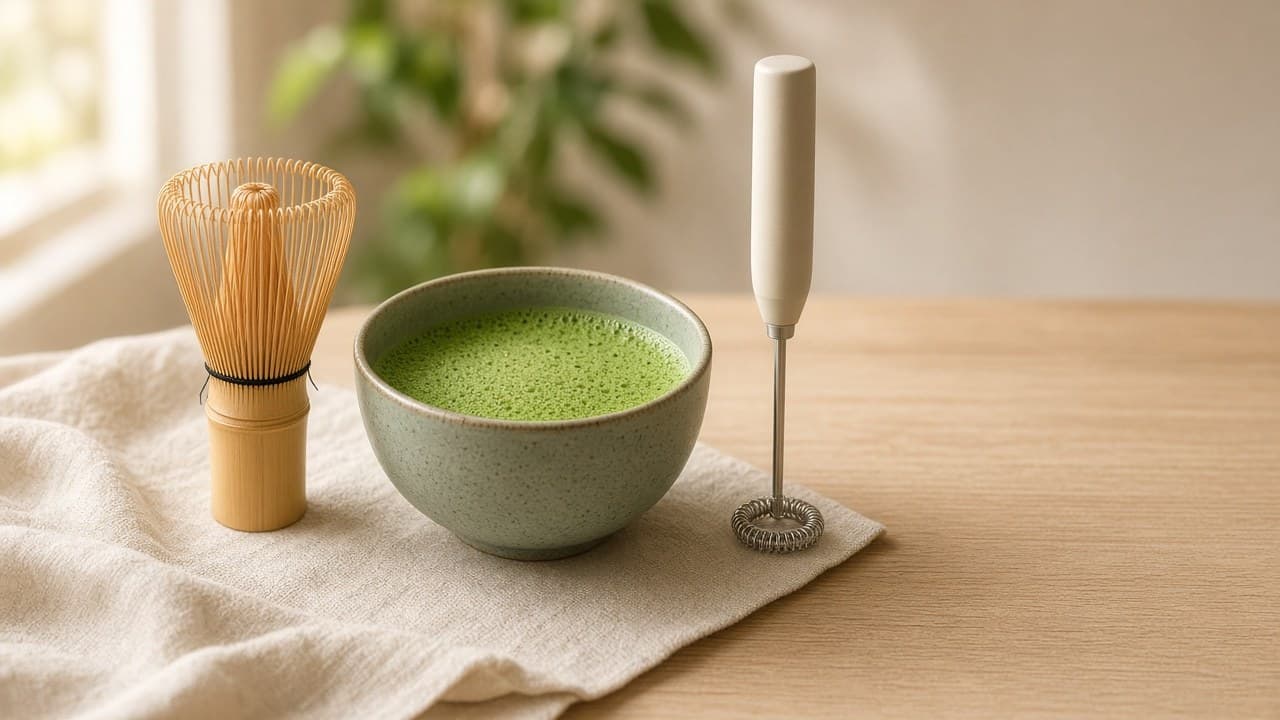
If you have no Chasen or have trouble with the technique, take a frother or shaker. An electric milk frother in a glass disperses the powder reliably, saving you the effort of whisking by hand. It is also a good alternative if the quick hand motion is hard for you.
Use cold water in a shaker or screw-top jar: put in sieved powder, close it and shake vigorously until no more lumps are visible. Make a warm mix with the Chasen or a frother in an open vessel. The shaker is slightly less reliable than the Chasen, but saves you a bowl. Then add the milk or ice.
With a frother or shaker you often get more foam, but coarser than with the Chasen. For latte that is usually no disadvantage.
Frequently asked questions
Why is matcha sieved?
Fine matcha powder quickly forms small lumps that disperse poorly when whisked. The sieve breaks them up beforehand, so the powder disperses more evenly and the foam becomes finer. The short step is especially worthwhile for latte, iced and cold water.
How do I get foam with a Chasen, frother or spoon?
With the Chasen you whisk sieved powder with water at about 75 °C for about 15 to 30 seconds in a W motion from the wrist. A frother in an open glass usually gives more foam, but coarser. With a spoon you disperse the powder less reliably, and real foam hardly forms.
What helps against grainy matcha?
Sieve the powder once more, crush lumps carefully in the sieve and first stir a smooth paste with a little water. If the drink is still grainy, a coarser grind may be the reason. Throw away damp, musty-smelling or mouldy powder.
Is a thick residue at the bottom of the cup normal?
A little powder at the bottom is normal because matcha does not dissolve, it only disperses. A thick residue points more to unsieved powder, too little water when stirring or skipping the paste. Whisk right before drinking and swirl briefly in between.
Which alternative helps if the quick hand motion is hard for me?
An electric milk frother in an open glass disperses the powder without a quick hand motion. For cold drinks, a shaker or screw-top jar with cold water also works. Sieve the powder beforehand, then fewer lumps remain.
Sources
- Chen W, Chen J, Ni Z, Wu W, Dong J, Wang Z, Wang Y, Zhou J (2025): Comprehensive study of matcha foam formation: Physicochemical composition analysis and mechanisms impacting foaming properties. Food Chemistry 465(Pt 1):142009.
- Li S, Tian H, Zhu G, Wei Z (2024): Laboratory study on how stirring speed and stirring duration influence the aroma and taste of matcha; used for the tasting results. Current Research in Food Science 9:100843. DOI: 10.1016/j.crfs.2024.100843.
Related products
Related recipes
More guides