Chasen or Milk Frother: What Works Without a Bamboo Whisk
Is a frother or shaker enough for matcha? What the Chasen does, when a substitute will do and what to look for when buying a Chasen.
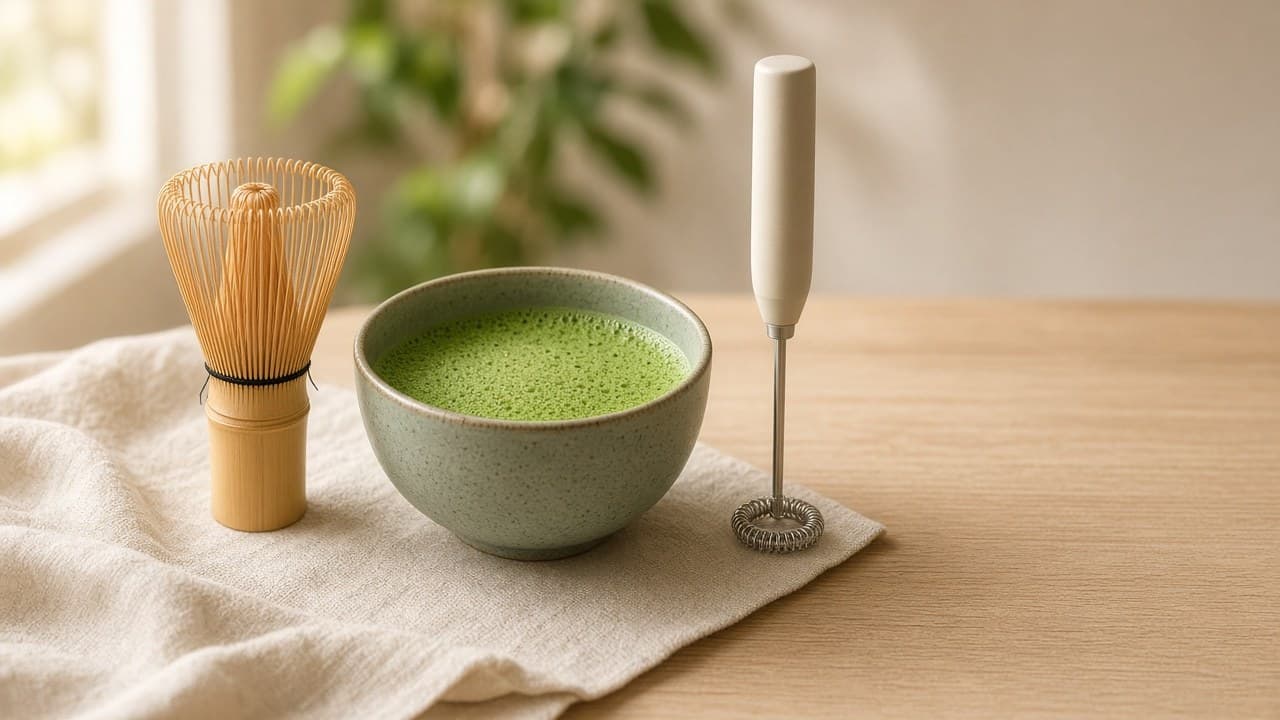
A milk frother or shaker is usually enough for a matcha latte; you do not need a Chasen for it. For a bowl of straight matcha, where fine, even foam counts, the bamboo whisk works more reliably, though. What matters is what you are making: with milk and ice a substitute often does the job, for straight matcha the Chasen is worth it. Important with every method: sieve the powder beforehand, otherwise lumps remain.
Chasen: what it can do
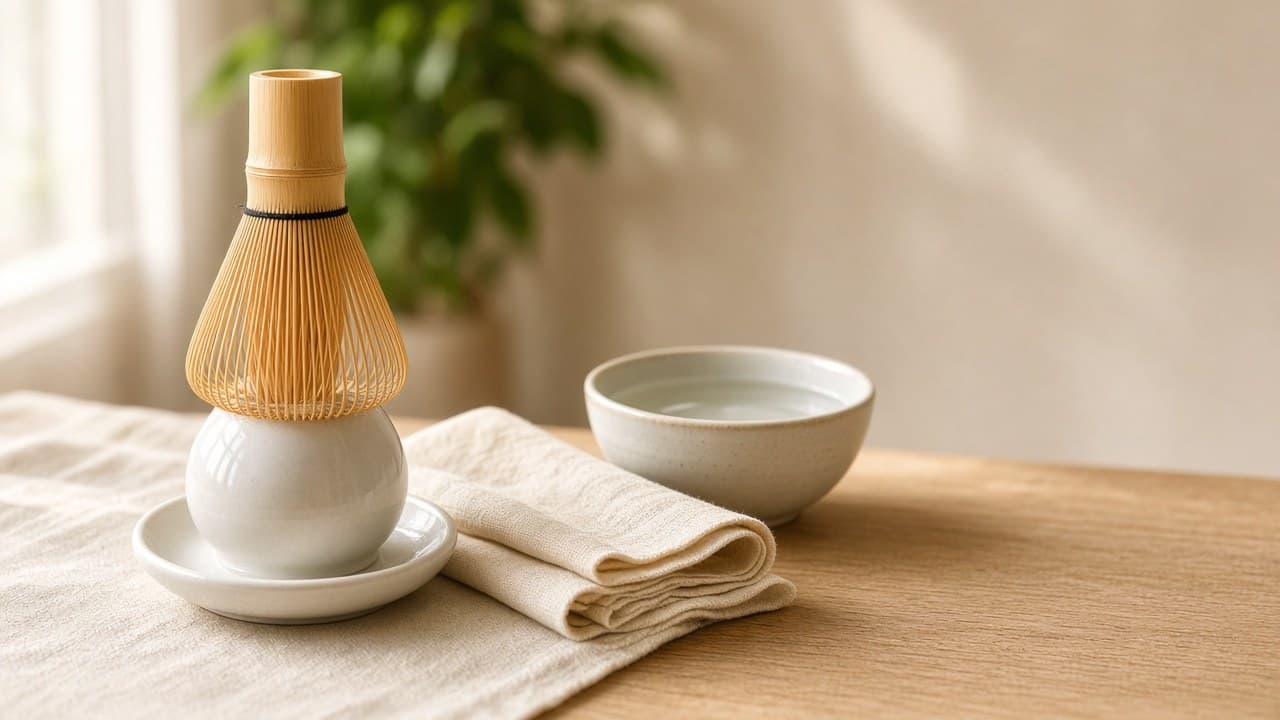
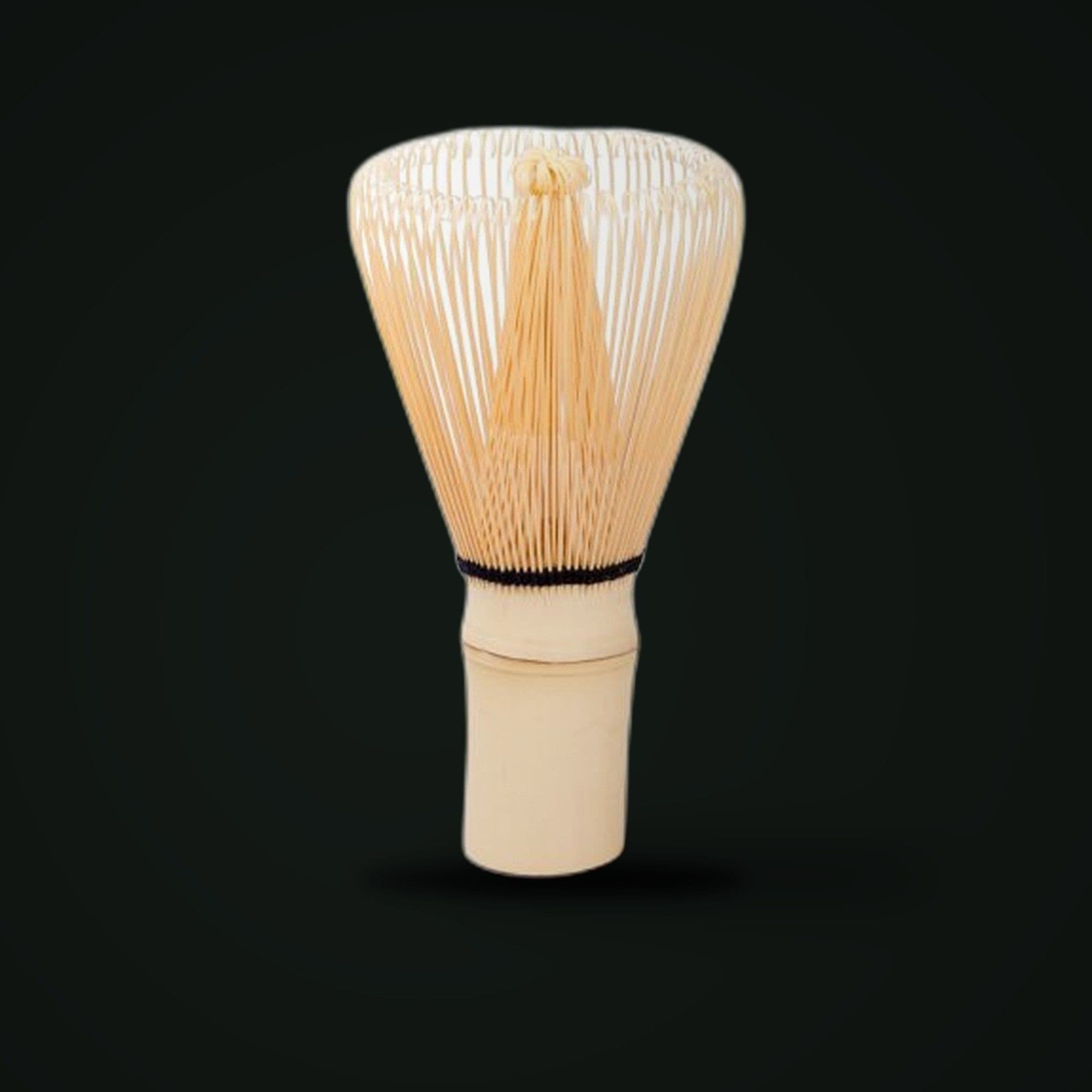
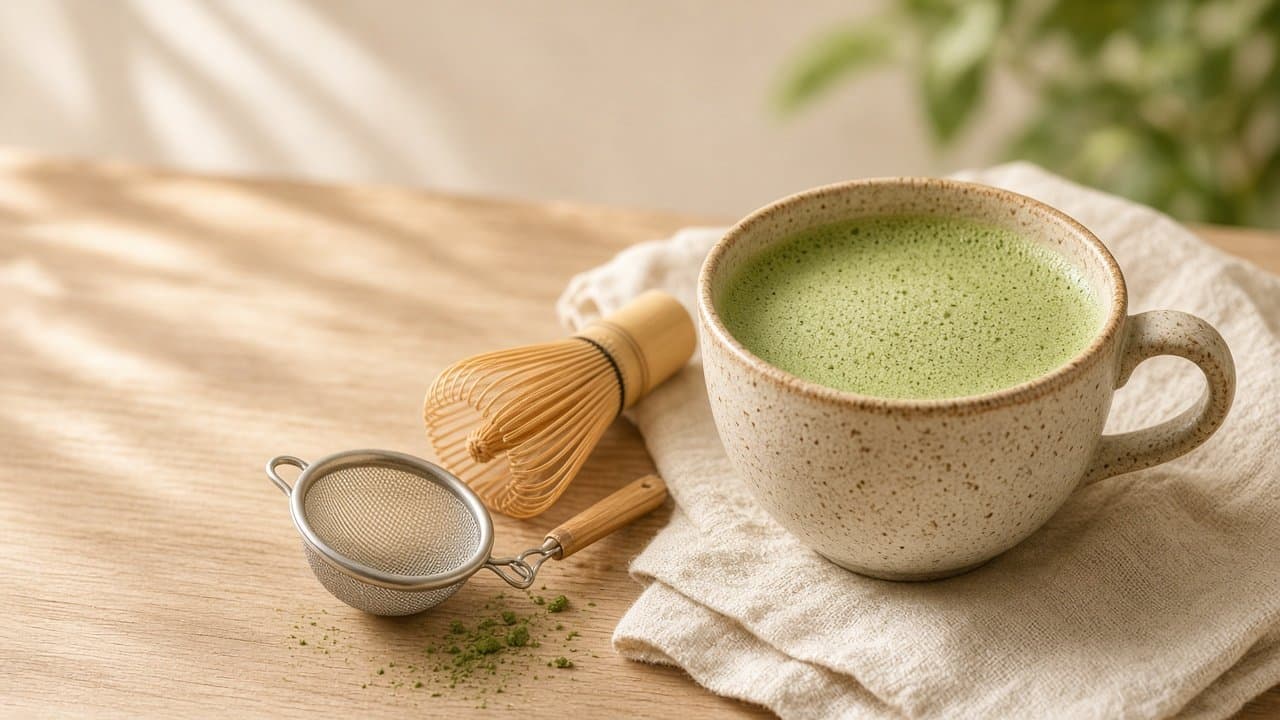
The Chasen is a whisk made from a single piece of bamboo, with the ends split into many fine, curved tines. When whisked briskly, it disperses the powder in the water and works in air at the same time. That creates a fine, dense foam instead of large bubbles.
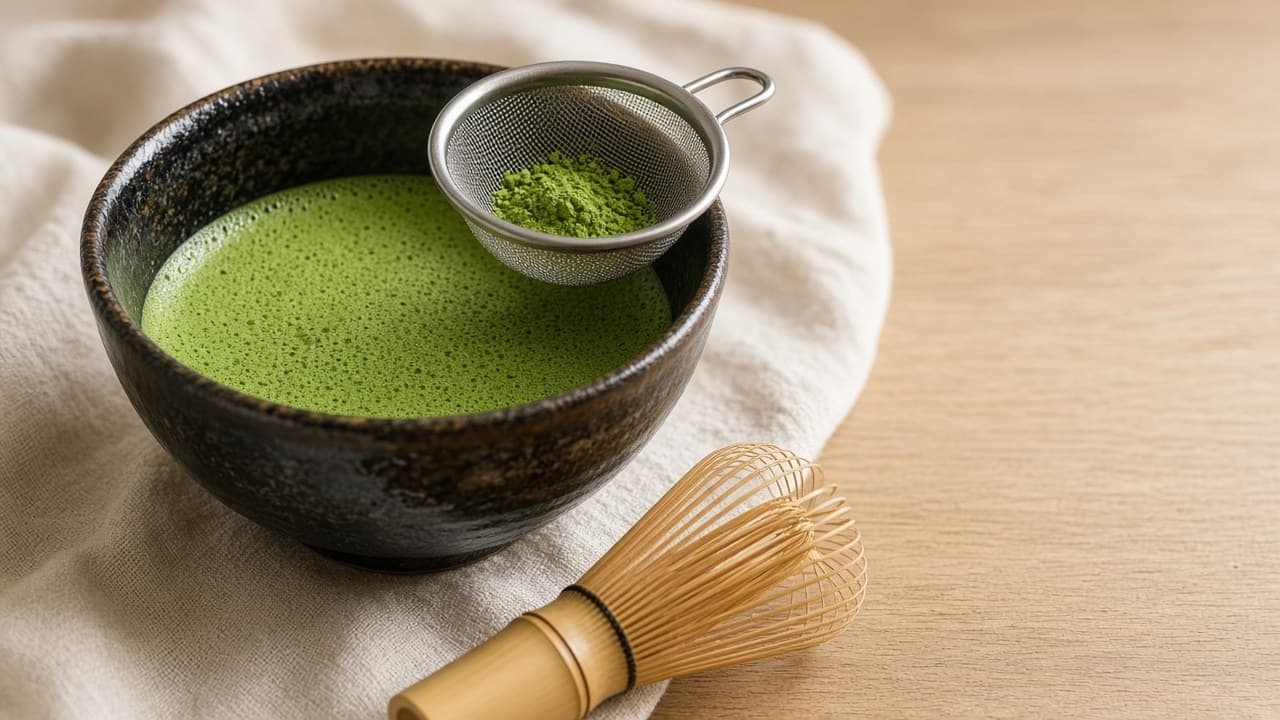
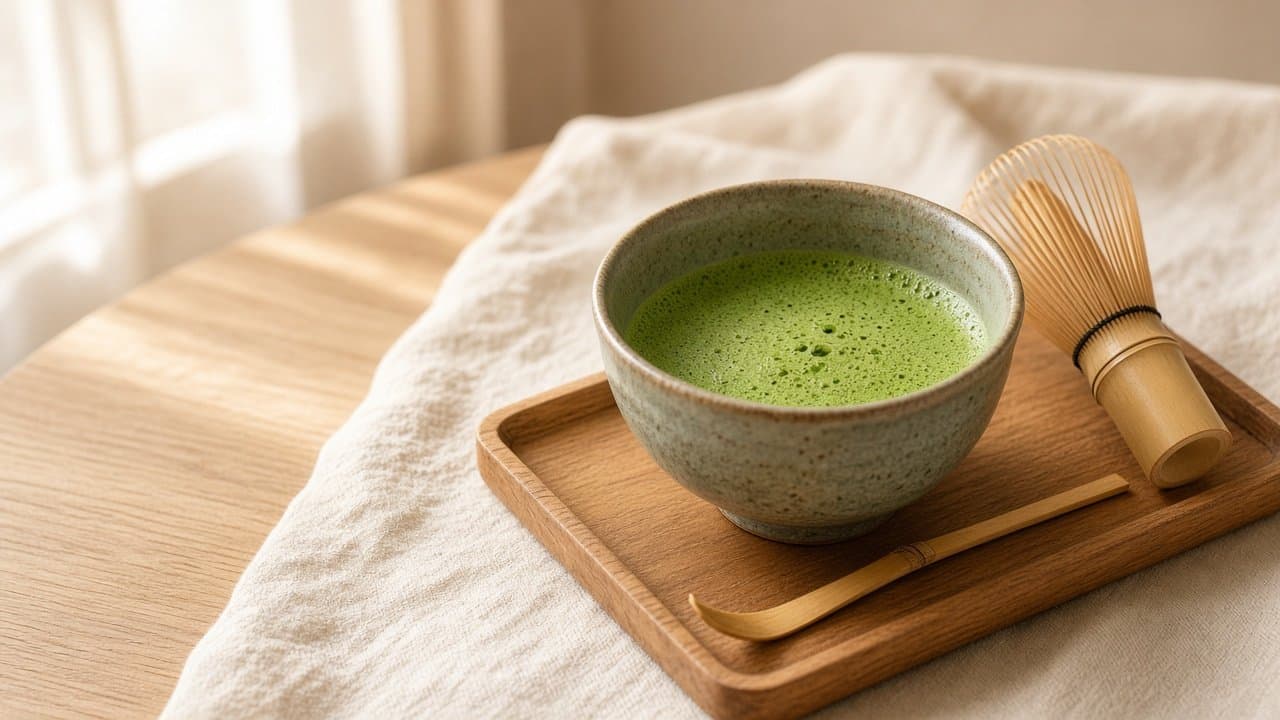
This is why the Chasen is the standard tool for straight matcha: you sieve 2 g of matcha into the bowl, add 70 ml of water at about 75 °C and whisk for about 15 to 30 seconds in loose motions from the wrist. Matcha does not dissolve like sugar in the process, it disperses as a fine powder in the water. The more even the dispersion, the rounder the drink feels in the mouth.
The Chasen is not a must, but a very good tool. Whether a Chasen is worth it depends on how you prepare your matcha: if you drink straight matcha every day, you notice the difference, if you mostly make iced latte, often less. You can find more on equipment in the guide to the matcha tool set.
There are practical reasons why a metal whisk is not the standard choice: metal wires are stiffer and coarser, so the foam usually gets larger bubbles and the bowl can get scratched while whisking. A metal whisk is suitable for dispersing the powder, but does not fully replace the fine bamboo tines.
Frother, shaker, blender compared
Electric frother (wand): An inexpensive handheld frother disperses the powder quickly and makes foam. It suits latte well, warm or over ice. For straight matcha it is less reliable: the foam gets coarser, and powder residues stick more easily to the wall of the bowl. Put the frother into the glass or bowl at an angle and move it slightly so that the edge is covered too.
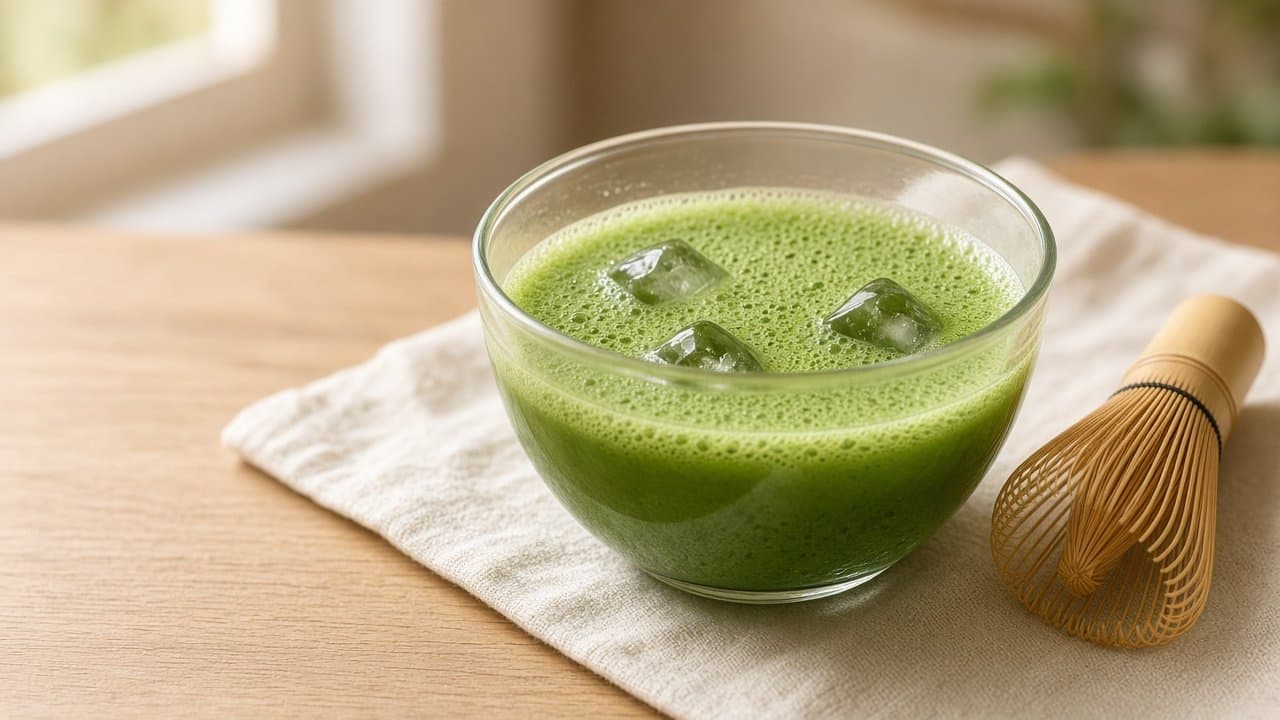
Shaker with shaker ball or sieve: A shaker is practical for iced latte and on the go. Use cold water in the shaker: put in sieved powder with a little cold water, close it, shake vigorously and then top up with milk and ice. Make a warm mix with the Chasen or a frother in an open vessel. If the matcha clumps in the shaker, it is usually down to skipping the sieving step or too little liquid for the first shake. The foam is lighter and shorter-lived than from the Chasen.
Countertop blender: A blender disperses powder reliably, especially for larger amounts. The foam does get coarse, however, and the effort of cleaning is higher. For a single serving it is usually not worth it.
Ordinary whisk or spoon: A wire whisk disperses the powder acceptably if you first stir it into a smooth paste with a little water. A spoon works least well: it disperses the powder only moderately and hardly works in any air.
Matcha machines: Devices that whisk matcha automatically are a subject of their own. How well they cope with matcha powder depends on the particular device; we cannot make a general statement about that here.
If you want as little cleaning effort as possible: the shaker saves dishes because you work directly in the cup or bottle, and it can be rinsed out with water and a little washing-up liquid. A Chasen is rinsed only with warm water, without washing-up liquid.
When a substitute is enough
A substitute is enough in these cases:
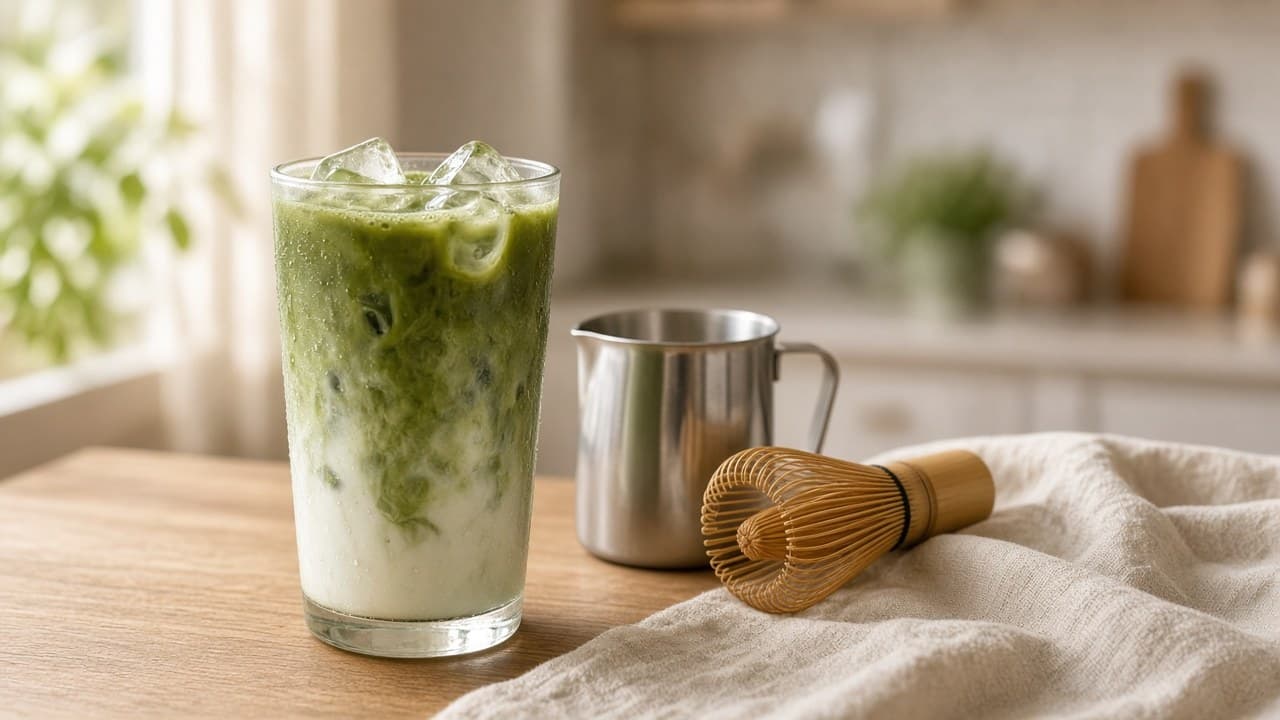
- Matcha latte, warm or over ice: Here the powder disperses in a lot of milk anyway. Our house recipe uses 2 g of matcha, whisked in 30 ml of water at about 75 °C, plus 200 ml of milk or oat drink. For the warm mix a frother in an open vessel is enough, for the cold variant a shaker with cold water too. You can find recipes and variations in our article on matcha latte.
- Occasional use: If you only make matcha now and then, there is little reason not to start with what you already have.
- On the go or at the office: A shaker is usually the simpler solution here.
- Larger amounts at once: A blender or shaker is faster than the Chasen.
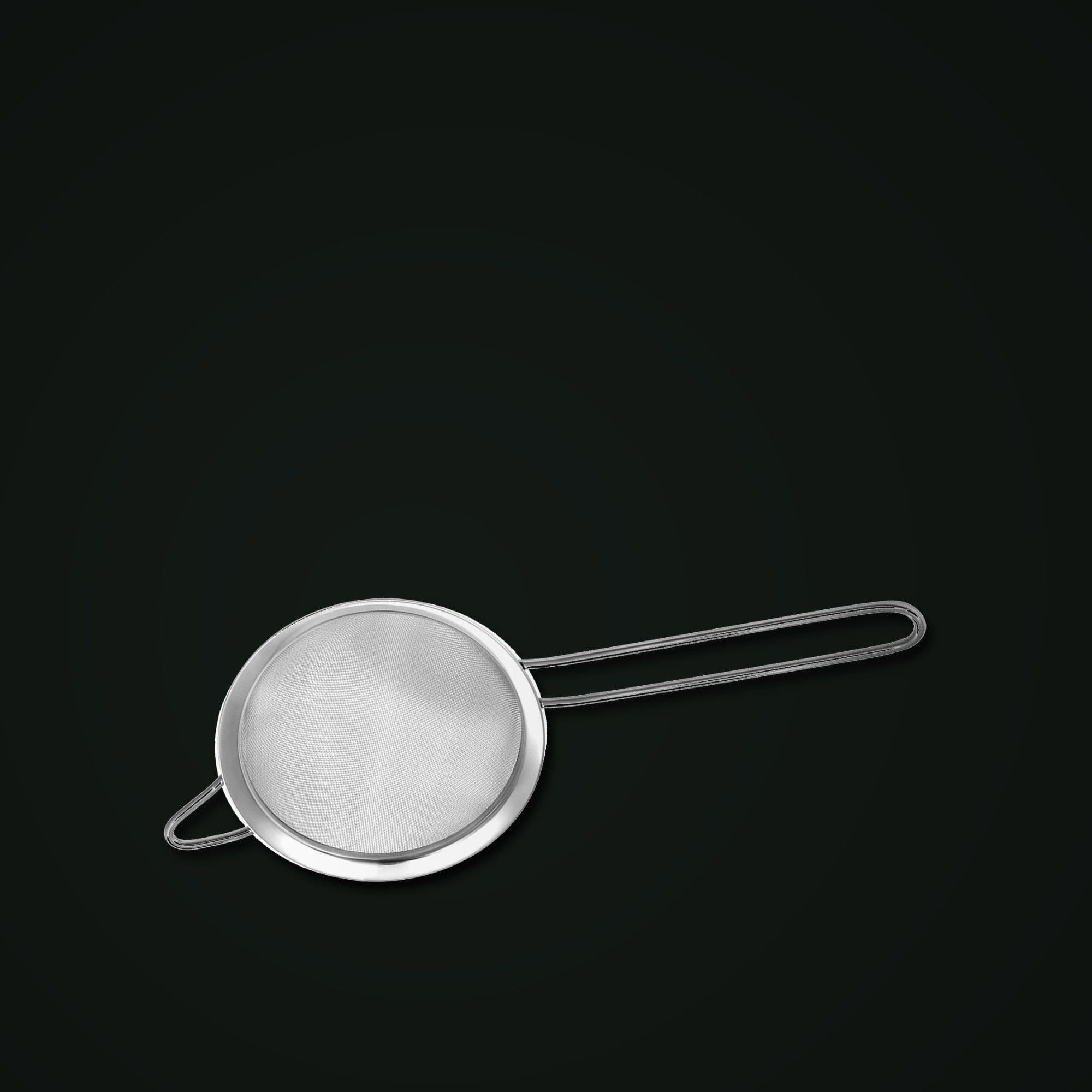
The device does not replace sieving. With a frother or shaker too, the rule is: pass the powder through a fine sieve beforehand. That also applies if you wonder why your matcha does not stay even in the shaker: sieve, first stir with a little water and only then top up with the rest of the liquid.
A Chasen, on the other hand, makes sense if you like a bowl of straight matcha, value fine foam or appreciate the preparation as a small ritual. For Koicha, the thick preparation, a suitable Chasen works especially well. For this, you slowly stir powder and water into an even, thick mass.
What to look for when buying a Chasen: tines and material
A good Chasen can be recognised by a few features:
- Tines: They should be fine, dense and evenly curved, without protruding, split or broken ends. More tines usually mean a finer foam. A number alone says little, though; pay attention to the overall impression.
- Material: Traditionally a Chasen is made from a single piece of bamboo. Look for smooth surfaces, intact tines, a stable handle, clean workmanship and no conspicuous foreign smell. The colour of the bamboo alone is not a quality criterion. We cannot make a firm statement on which type of bamboo is the best. Makers usually do not name the type anyway.
- Workmanship: The tines should be cleanly joined on the inside and the whisk should sit straight in the hand. A distinct chemical or varnish smell is a reason not to buy.
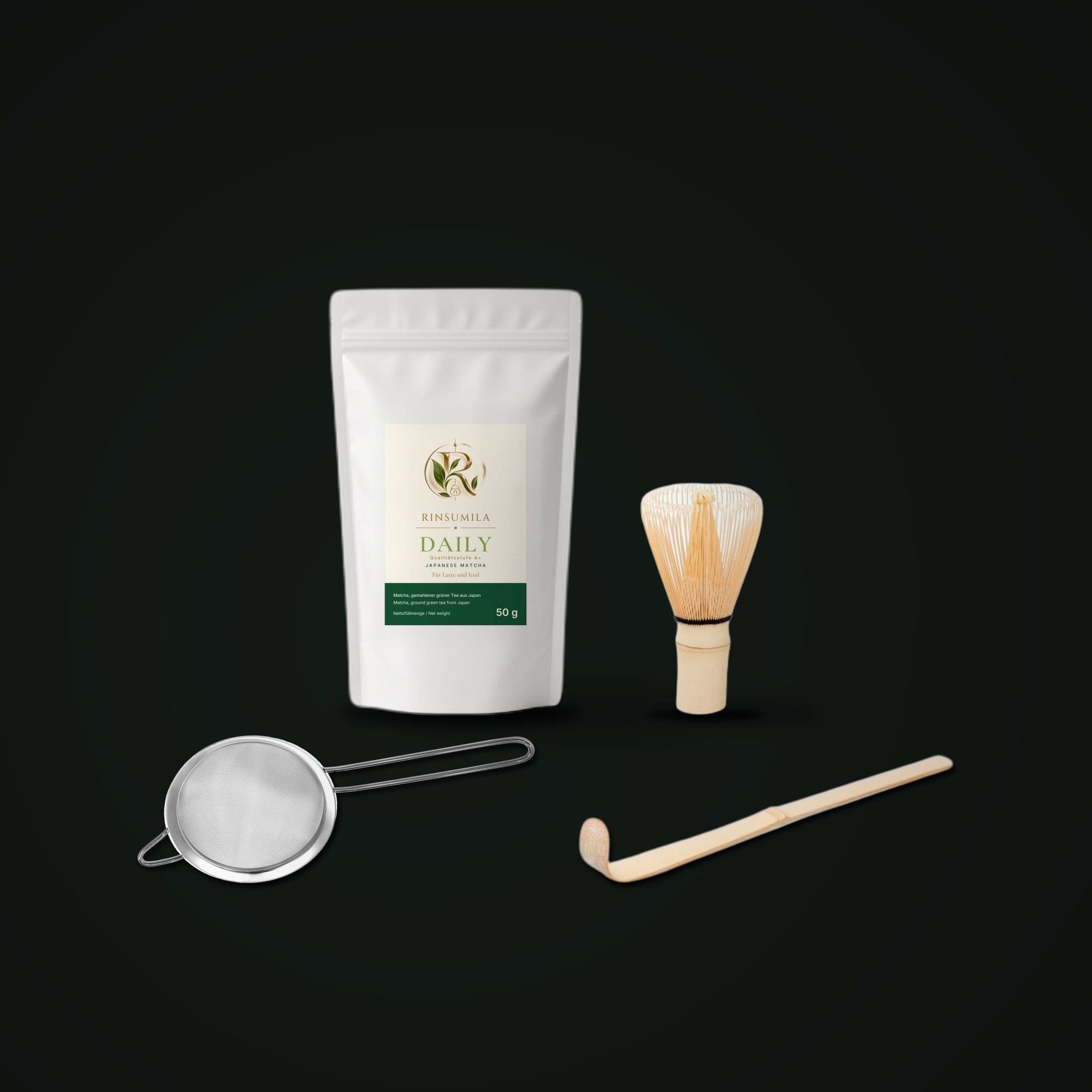
- Where to buy: You can get good Chasen in specialist tea shops and online shops with tea accessories. Look for details on origin and workmanship. The same approach works outside Europe: look at local tea specialist shops or order from specialist online shops that expressly deliver to your country, and factor in shipping costs, import duties and delivery time. Ask about origin and workmanship. An inexpensive Chasen can be enough to start with; price alone says little about quality. With sets, it is worth checking which Chasen is included: besides DAILY, the START RITUAL contains a Chasen, Chashaku and sieve.
How long does a Chasen last? That depends on use and care. With daily use the tines visibly wear down, with occasional use it lasts much longer. Rinse it with warm water after whisking, let it dry completely (ideally on a holder that helps it keep its shape) and do not hit the bottom of the bowl too hard. Replace the Chasen if many tines break off, the handle becomes unstable or the whisk smells musty. A small crack in the handle alone does not require replacement. A musty-smelling whisk is a sign of moisture and should no longer be used.
The quality of a Chasen affects durability, but also the result when whisking: cleanly made, fine tines produce more even foam than coarse or bent ones.
Where the difference in taste lies
The difference lies more in texture than in aroma. A Chasen produces fine foam and an even dispersion, which makes the drink creamier and rounder. With a frother or shaker the foam gets coarser and collapses faster. In a latte with a lot of milk this difference is hardly noticeable. In a bowl of straight matcha with little water it stands out more.
If the powder disperses poorly, some sips taste stronger, others flat. That is down to lumps, not the device: with a sieve and a little patience you get more out of even a simple tool.
Recommendation by use
- Recommendation
- Chasen
- Recommendation
- Chasen
- Recommendation
- Frother or Chasen
- Recommendation
- Shaker or frother
- Recommendation
- Shaker
- Recommendation
- Blender or shaker
- Recommendation
- Whisk or frother, sieve the powder first
If you are weighing better powder against a Chasen, first check what bothers you: if you do not like the taste despite careful preparation, try other powder. If you like the taste but want finer foam for a bowl of straight matcha, a Chasen can help. A set such as the START RITUAL (€80.90) brings Chasen, Chashaku and sieve together with DAILY 50 g; a bowl is not included.
Frequently asked questions
What should I look for in a frother for matcha?
The whisk head should fit into your glass or bowl so that you can hold it at an angle and cover the edge too. A device that can simply be rinsed with water after use is practical. Sieve the powder beforehand anyway, because the frother does not replace sieving.
When do I use a bamboo whisk, when an electric frother?
You use the bamboo whisk for Usucha when fine, even foam matters to you. For Koicha you slowly stir powder and water with the Chasen into a smooth, thick mass, without whisking up foam. You use the electric frother for latte, warm or over ice, and when it needs to be quick. With a lot of milk the difference is hardly noticeable.
How do Chasen, frother and spoon differ in foam?
The Chasen gives the finest and most even foam. A frother produces foam quickly, but the bubbles are larger and the foam collapses sooner. With a spoon you disperse the powder less reliably, and hardly any foam forms.
Which combination of whisk and frother makes sense?
A tried and tested approach is to first stir the sieved powder smooth in a little water with the Chasen or a small whisk. Then froth it further with the frother or top up with milk. That way you combine the even dispersion of the whisk with the speed of the device.
Is a simple milk frother enough?
For a latte a simple milk frother is usually enough if you sieve the powder beforehand and first stir it with a little water. For a bowl of straight matcha it is less reliable because the foam stays coarser and powder can stick at the edge.
Related products
Related recipes
More guides