Cold-Whisked Matcha without Milk
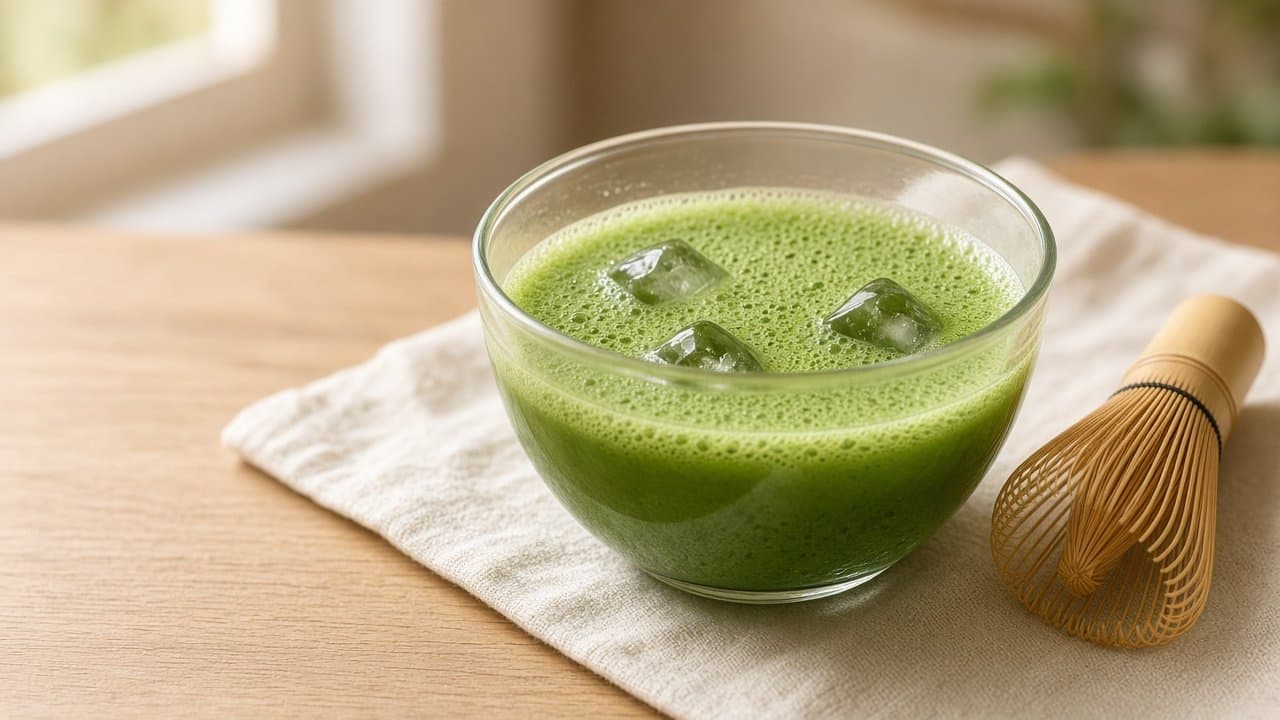
Cold-whisked matcha is straight matcha whisked with cold water and served over ice: clear, fresh and green in taste, without milk and without sweetener. You whisk 2 g of matcha with 70 ml of cold or room-temperature water, just as for the straight bowl, only without heating.
- Prep time
- 5 min
- Total time
- 5 min
- Makes
- 1 glass
- Difficulty
- Easy
Caffeine: by calculation about 30 to 90 mg per serving (from 2 g matcha)
Ingredients
- 2 g matcha
- 70 ml cold or room-temperature water
- ice cubes
- cold water for topping up, to taste
Utensils
Method
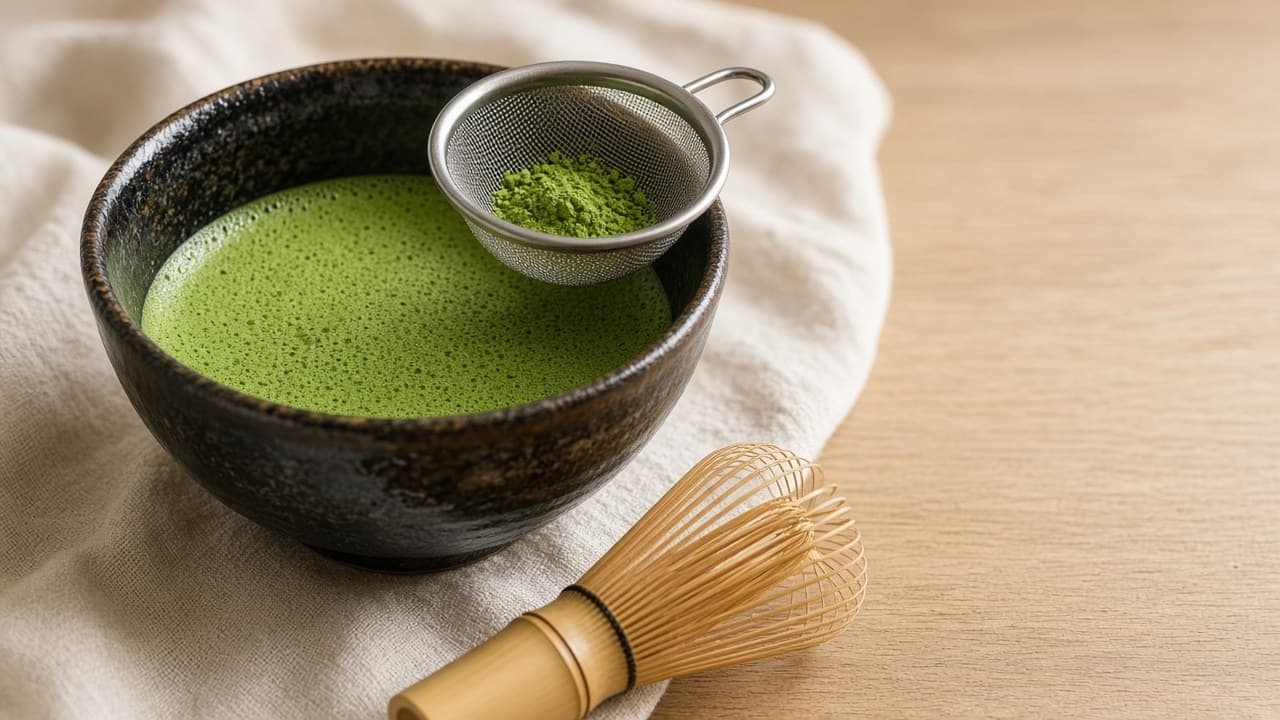
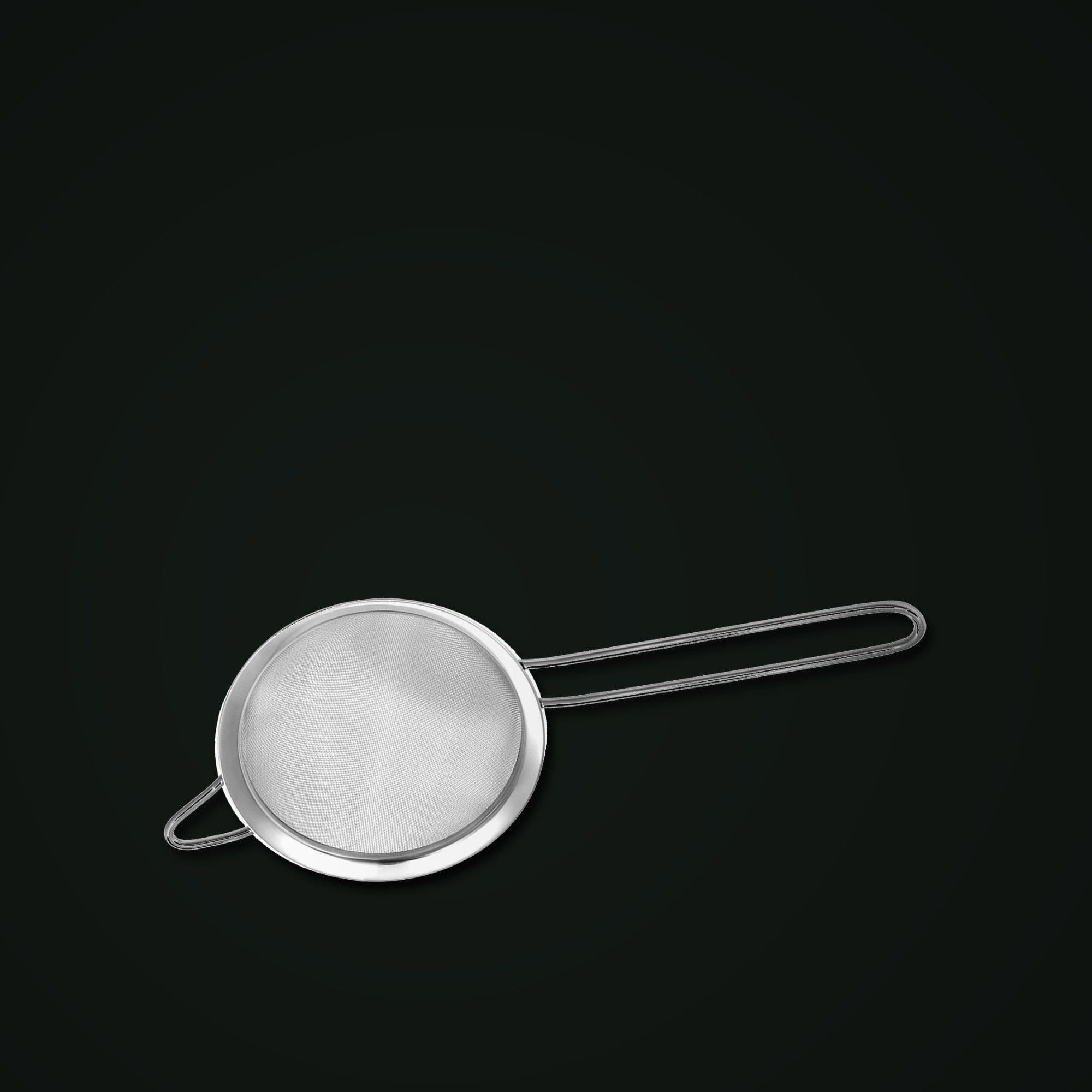
- Put the matcha through the sieve into the bowl.
- Pour in the 70 ml of cold or room-temperature water.
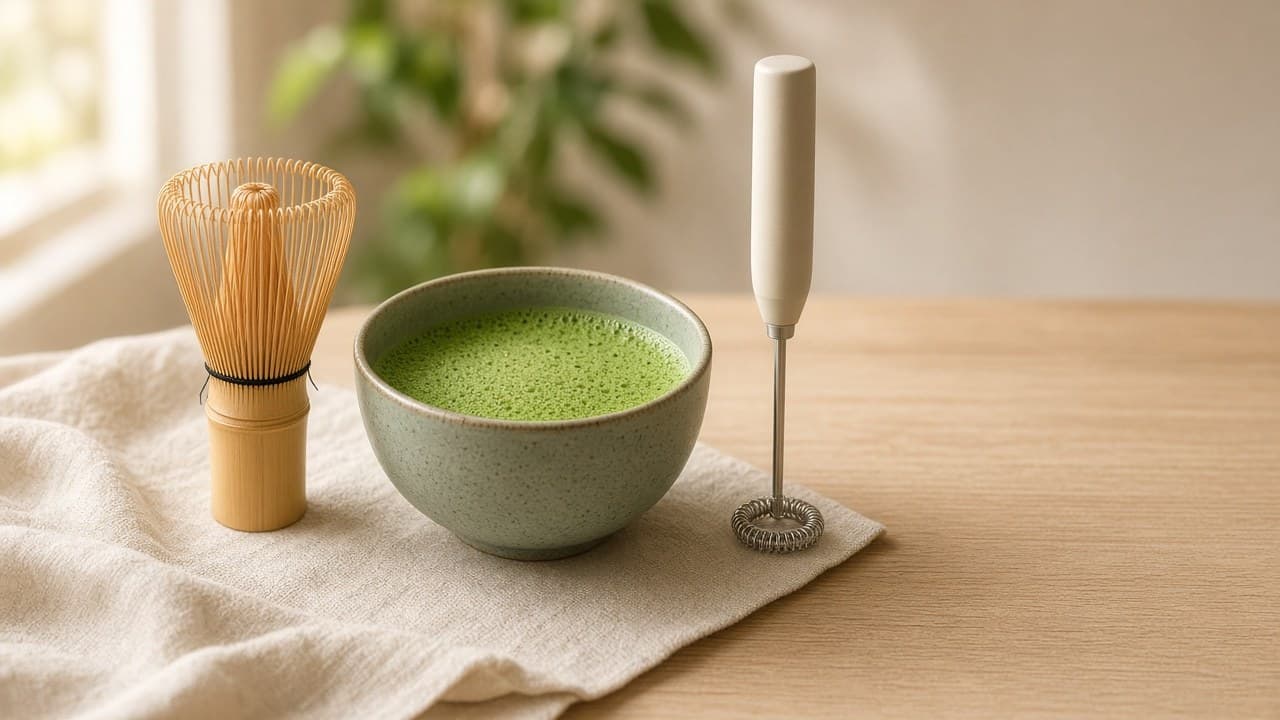
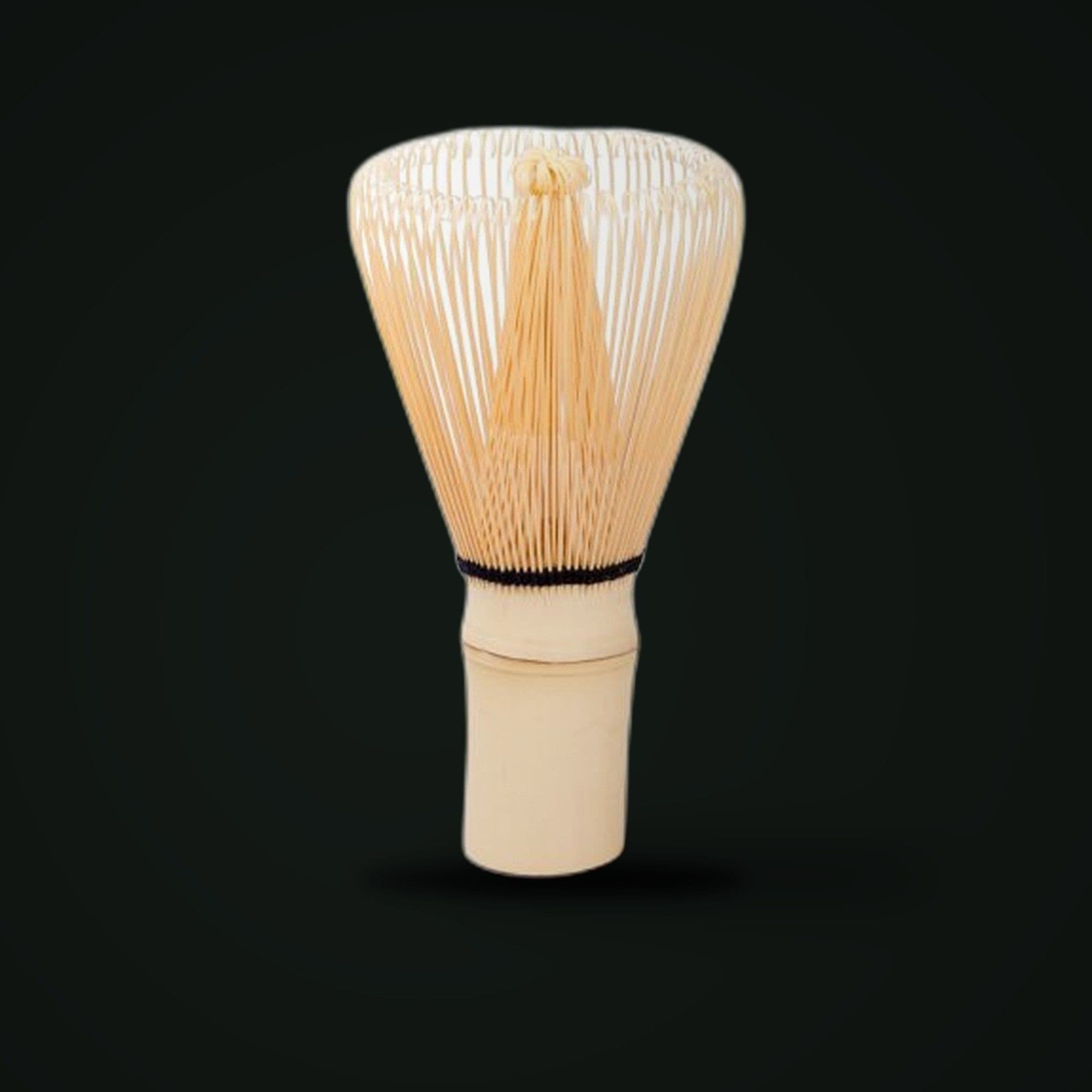
- Whisk vigorously with the bamboo whisk in a fast zigzag movement from the wrist until no lumps are visible and a fine foam forms. Cold, this takes a little longer than with warm water.
- Fill a glass with ice cubes and pour the matcha over them.
- Top up with a little cold water to taste and drink straight away.
Variations and tips
- Sieving matters most here: Cold, the powder disperses more slowly than warm. Sieved powder and vigorous whisking are therefore more important than with water at about 75 °C.
- Stronger or milder: With a little less water the matcha gets stronger, and with a little more water when topping up it gets milder. You can also whisk 2 g with only 30 ml of water into a dense base, pour it over ice and top up with cold water to taste.
- In a shaker: Put sieved powder, the water and a few ice cubes into a tight shaker and shake vigorously until nothing sticks to the side. With a sieve insert or mixing ball this works most reliably, but the foam is coarser than with the bamboo whisk.
- Mix warm, drink cold: If you whisk the matcha with water at about 75 °C and then pour it over ice, the powder disperses more easily and the foam is finer. In return the ice melts a little more, and the taste becomes rounder but less clear.
- Why cold often tastes milder: Ice dilutes, and bitter notes are usually less prominent in cold drinks. In addition, water that is too hot drops out as a cause of bitterness, which is why some people prefer matcha cold to warm.
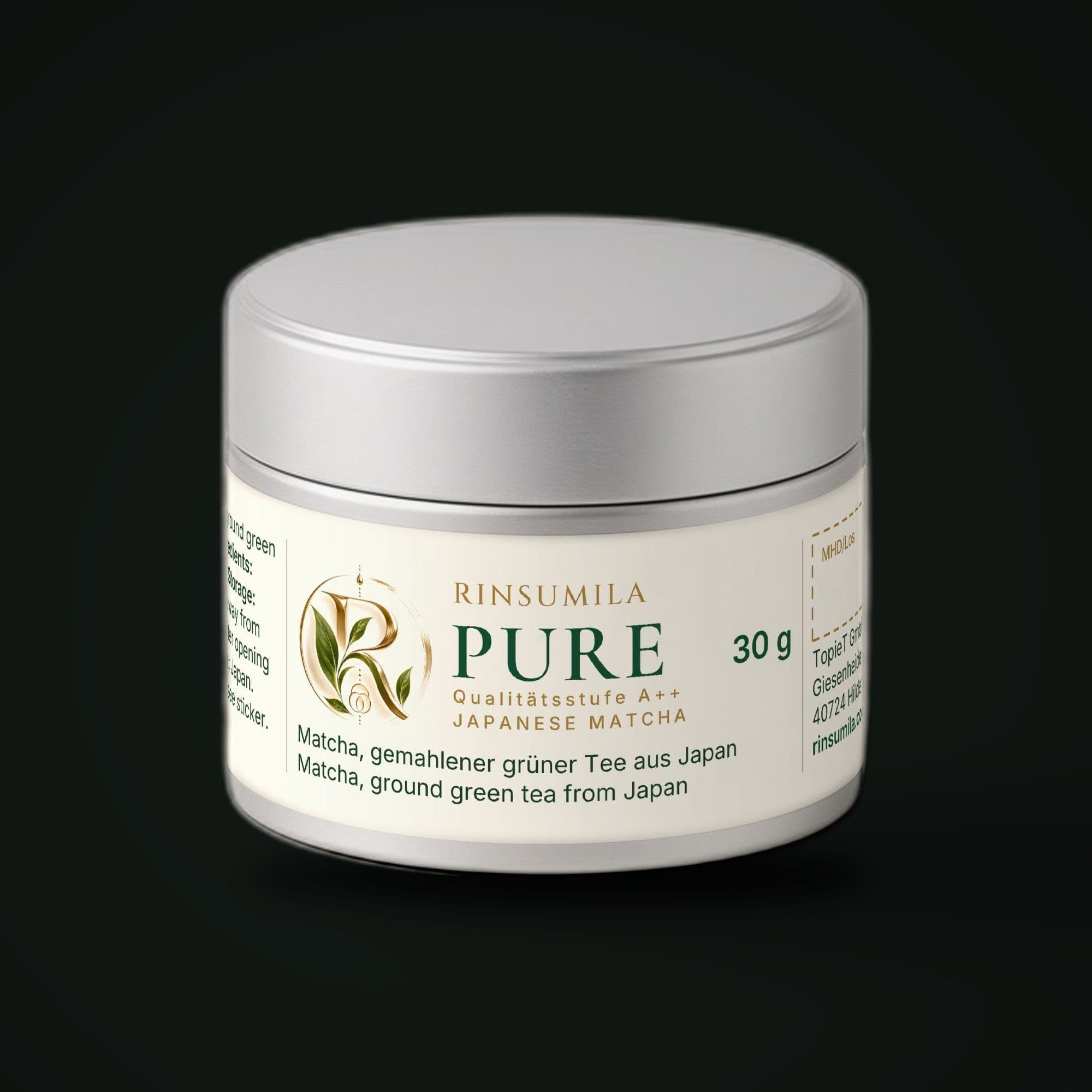
- The right powder: Without milk nothing is covered, so a mild, fresh and finely ground powder usually tastes more pleasant here than a robust latte powder.
- Preparing ahead: You can whisk a dense base, chill it tightly closed and top it up with ice and water later. The powder settles over time, so shake the base vigorously before drinking.
Frequently asked questions
Is it odd to drink matcha with room-temperature water?
No. The powder disperses in room-temperature water too if you sieve it first and whisk it thoroughly. It then often tastes rounder than ice-cold.
How do you make iced matcha without milk?
Sieve 2 g of matcha, whisk it smooth with cold water and pour it over ice. With a little more water the drink gets milder, with less stronger. You do not need sweetener, but you can stir in a little syrup.
Does matcha dissolve in cold water?
Strictly speaking, matcha does not dissolve either warm or cold, it disperses as a fine powder in the liquid. Cold, that works well if you sieve it and whisk it vigorously with a little water. If you sprinkle the powder straight into a glass of iced water, it often floats on top or clumps.
Can I make matcha as a cold brew?
Only to a limited extent. Matcha is not steeped and strained like tea, you drink the whole powder. You can, however, chill a whisked base and shake it vigorously before drinking.
Related guides