Matcha Latte
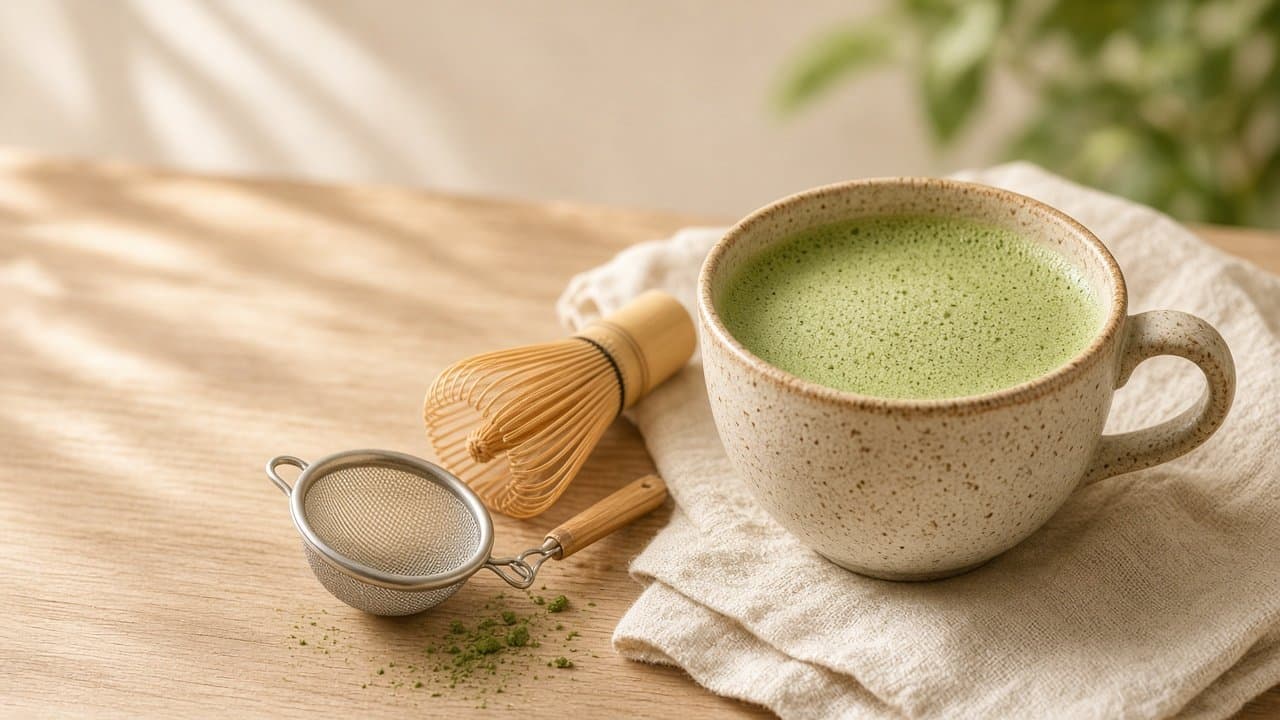
A matcha latte is whisked matcha topped with warm milk: creamy, gently bitter and slightly grassy, with the round sweetness of the milk. The basic recipe needs 2 g of matcha, 30 ml of water at about 75 °C and 200 ml of milk or oat drink. The key is to whisk the powder smooth with a little water first and only then add the milk, because matcha does not dissolve, it only disperses finely.
- Prep time
- 5 min
- Total time
- 5 min
- Makes
- 1 large mug
- Difficulty
- Easy
Caffeine: by calculation about 30 to 90 mg per serving (from 2 g matcha)
Ingredients
- 2 g matcha
- 30 ml water, about 75 °C
- 200 ml milk or oat drink
- sweetener to taste, such as maple syrup
Utensils
- Precision scale
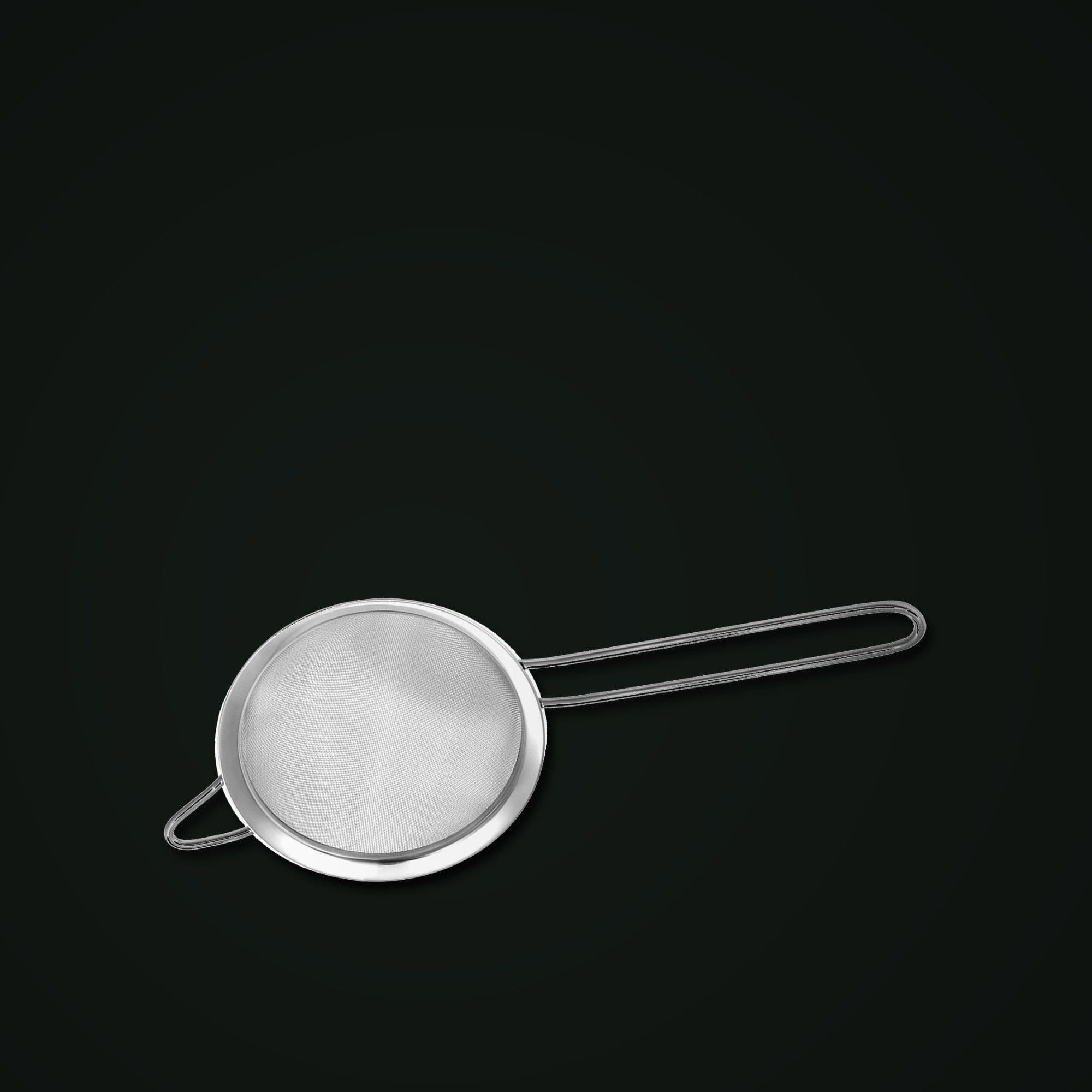
- Sieve
- Bamboo whisk (chasen) or milk frother
- Bowl or wide cup
- Pan or milk frother for the milk
Method
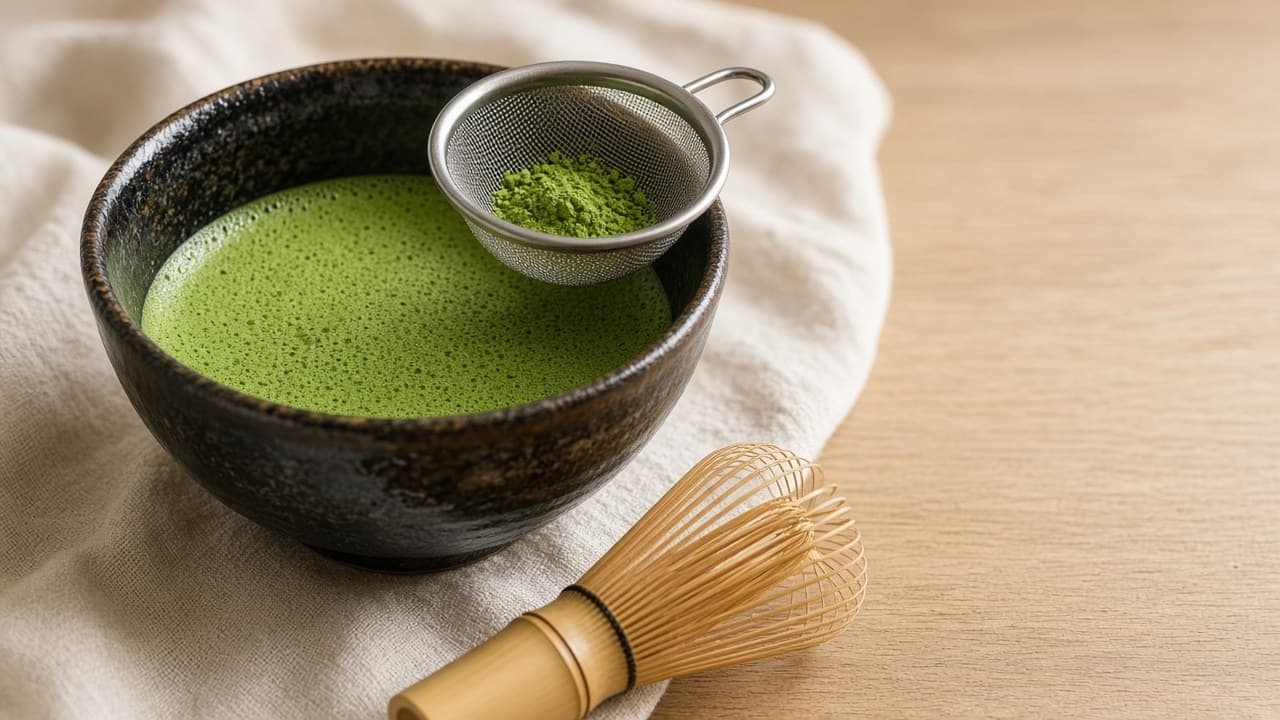
- Put the matcha through the sieve into a bowl.
- Pour in the 30 ml of water at about 75 °C and whisk the matcha with the bamboo whisk or the milk frother for about 15 to 30 seconds into a smooth base with fine foam.
- If you want to sweeten, stir the syrup into the warm base now so it disperses evenly.
- Heat the milk until it steams but does not boil, and froth it if you like.
- Pour the milk into a large mug and add the base on top. Drink it straight away.
Variations and tips
- Adjusting the ratio: The basic recipe is a starting point, not a law. The latte gets stronger with a little more powder and the same milk, less milky with less milk and 2 g of powder, and milder with a little less powder (1 to 2 g is usual) or more milk. For a larger glass, increase powder, water and milk in the same proportion, and change only one thing at a time so you know what helped.
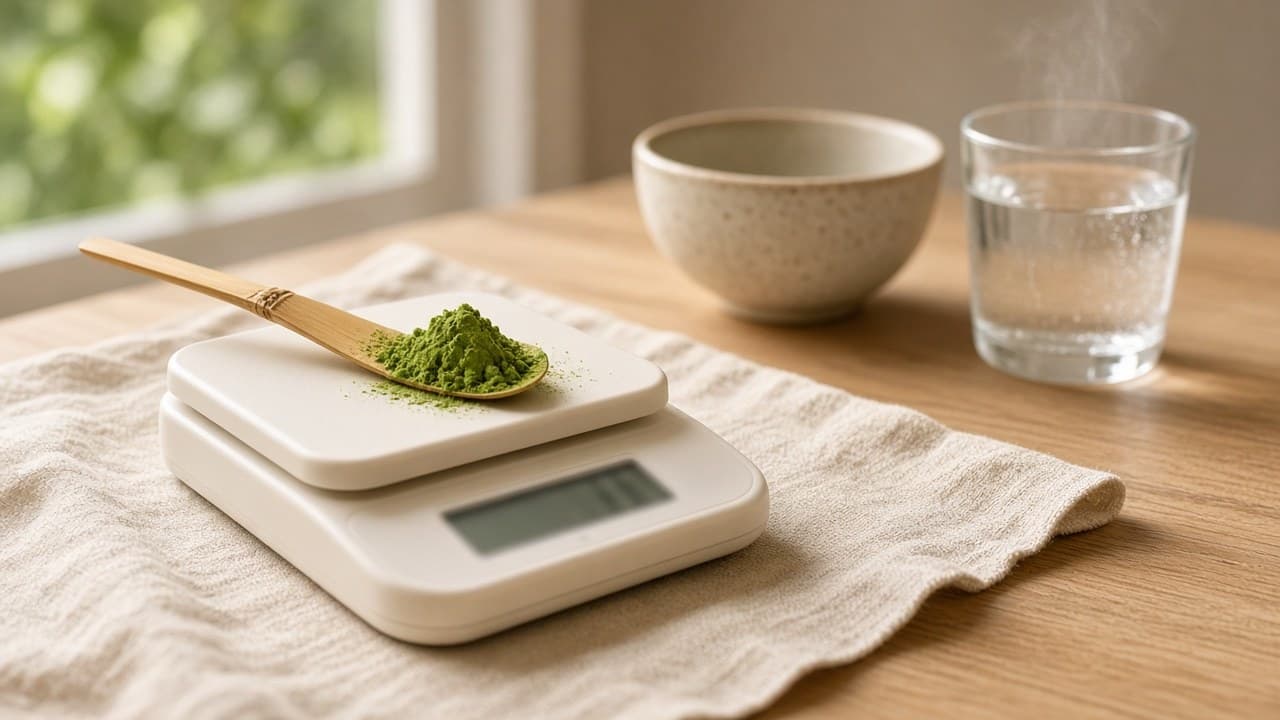
- Weigh instead of guessing: Spoons vary, and powder can be filled loosely or firmly. So weigh 2 g once with a precision scale and note how much that is with your spoon. The amount looks small, but well dispersed it is enough for a whole glass.
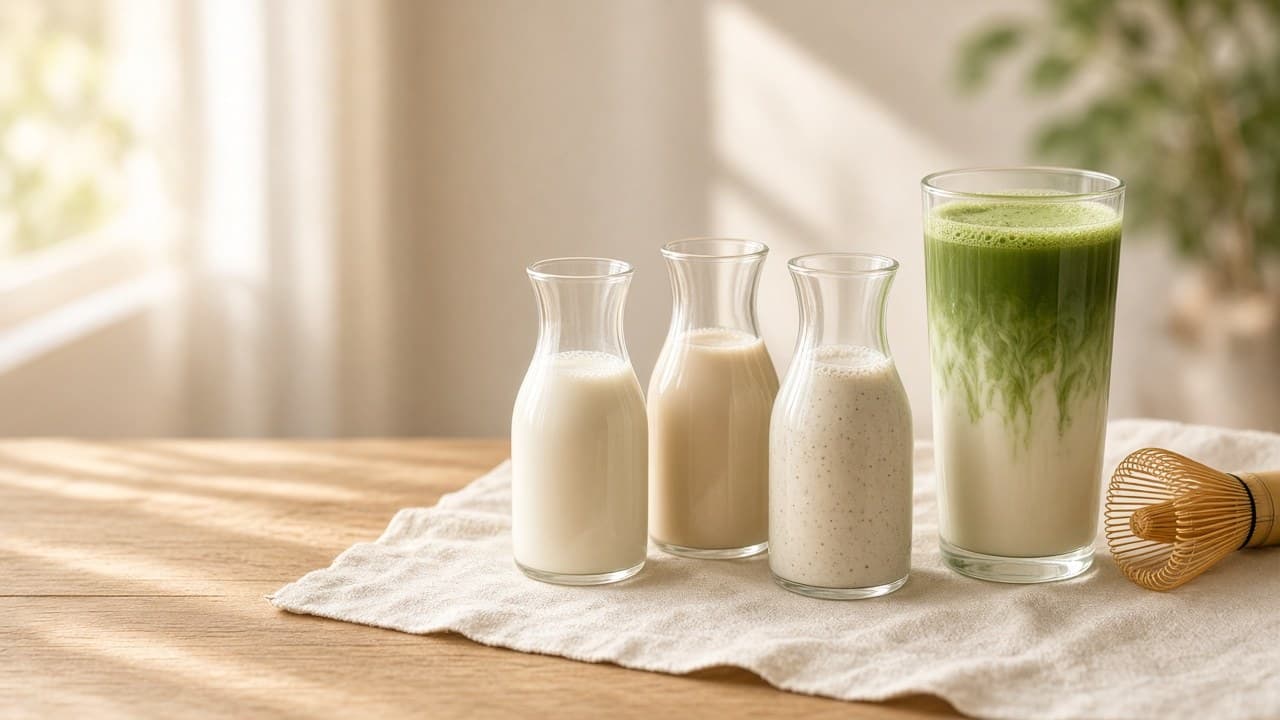
- Milk and foam: The milk should steam but not boil, because boiling milk tastes cooked, forms a skin and froths less well. Foam works with a milk frother or a hand frother; in a screw-top jar, shake only cold milk and then warm it uncovered in a pan. Whole milk tastes creamy and round, oat drink mild and slightly sweet; almond and rice drinks are thinner and froth less well, while barista versions of plant drinks froth better.
- Water and whisking: The water should be 70 to 80 °C; let boiling water cool briefly, and use a thermometer for exact values. Hotter water often makes the base more bitter. Whisk in a fast zigzag movement from the wrist, which usually works more reliably than stirring in a circle, and remember that a small, smooth base with foam is better than a large one with lumps.
- Common mistakes: Unsieved powder leaves dry pockets in the glass, and stirred straight into the milk it often stays unevenly dispersed. 1 g in a large glass gives colour but hardly any taste, and more than about 200 ml of milk per 2 g easily covers the matcha. Old powder or powder left exposed to air loses colour and taste, and too much syrup or cinnamon covers the matcha instead of accompanying it.
- When it tastes watery or only of milk: Go through powder, milk and preparation in turn. Test the powder straight with 2 g in 70 ml of water at about 75 °C: if it tastes flat and pale even then, the powder is the more likely cause; if it smells musty, is damp or visibly mouldy, throw it away. Otherwise a little more powder, less milk or a strong koicha-style pre-mix of about 4 g of powder with 30 to 40 ml of water at about 75 °C, topped up with milk, will help.
- Which matcha for a latte: Drunk straight, sweetness, umami and fine green notes come to the fore, and in 200 ml of milk these subtleties largely disappear. That is why a robust powder with a clear, somewhat more bitter taste makes sense for a latte and a milder, finer one for the straight bowl; a powder that is too bitter for you straight can work well in a latte, because the milk cushions bitterness. "Ceremonial" and "culinary" are trade names, not protected terms; freshness, colour and a fine grind matter more, although colour alone is not a reliable verdict.
- Hot, cold and variations: Warm, the latte usually tastes rounder and milder than over ice, and the cold version is in the iced matcha latte recipe. For a flat white, use less milk and froth it finely; for a cream top, whip cream only lightly so it still flows and let it run onto the latte over the back of a spoon. Cafés rarely reveal their recipe, and powder, amount, cup size and above all sweetness often differ: if the café latte tastes sweeter, stir some syrup into the warm base, and if it tastes stronger, use more powder or less milk.
Frequently asked questions
Do I need a bamboo whisk for a matcha latte?
No. An electric milk frother disperses the powder well too; in a screw-top jar, shake sieved matcha only with cold or room-temperature water. For a hot base, use a bowl with a bamboo whisk or milk frother. The bamboo whisk makes the finest foam, but sieved powder and a smooth base matter more than the tool.
Why does my matcha latte only taste of milk?
Usually there is too little powder, too much milk or lumps in the base. Sieve the powder, whisk it smooth with water at about 75 °C and only then pour in the milk. It gets stronger with a little more powder or less milk; if the powder tastes flat even straight, the powder is the more likely cause rather than the recipe.
Which matcha is best for a latte?
A powder with a lively green colour, a fine grind and a robust, slightly bitter taste that holds up against 200 ml of milk. It does not have to be the most expensive one or a powder labelled culinary: "culinary" is not a protected term, and no rule prescribes a particular powder. Compare the price per 2 g serving rather than just the pack price, and buy small amounts so the powder stays fresh.
What should I consider when buying in countries such as Australia or Canada?
Ask in local tea shops for matcha from Japan or look for specialised online shops that expressly confirm they deliver to your country. Before ordering, check shipping costs, possible import charges and delivery time, and ask about the origin and batch of the powder. We do not ship to Canada or Australia, but to Germany, all EU countries, Monaco, Switzerland and Liechtenstein. For parcels to Switzerland and Liechtenstein, the recipient pays import duties and fees.
Related guides