Which Milk Goes with Matcha? Oat, Almond, Soy and Cow's Milk
Oat, almond, soy, coconut or cow's milk: which milk suits matcha, when milk curdles and how much milk to use for 2 g of matcha.
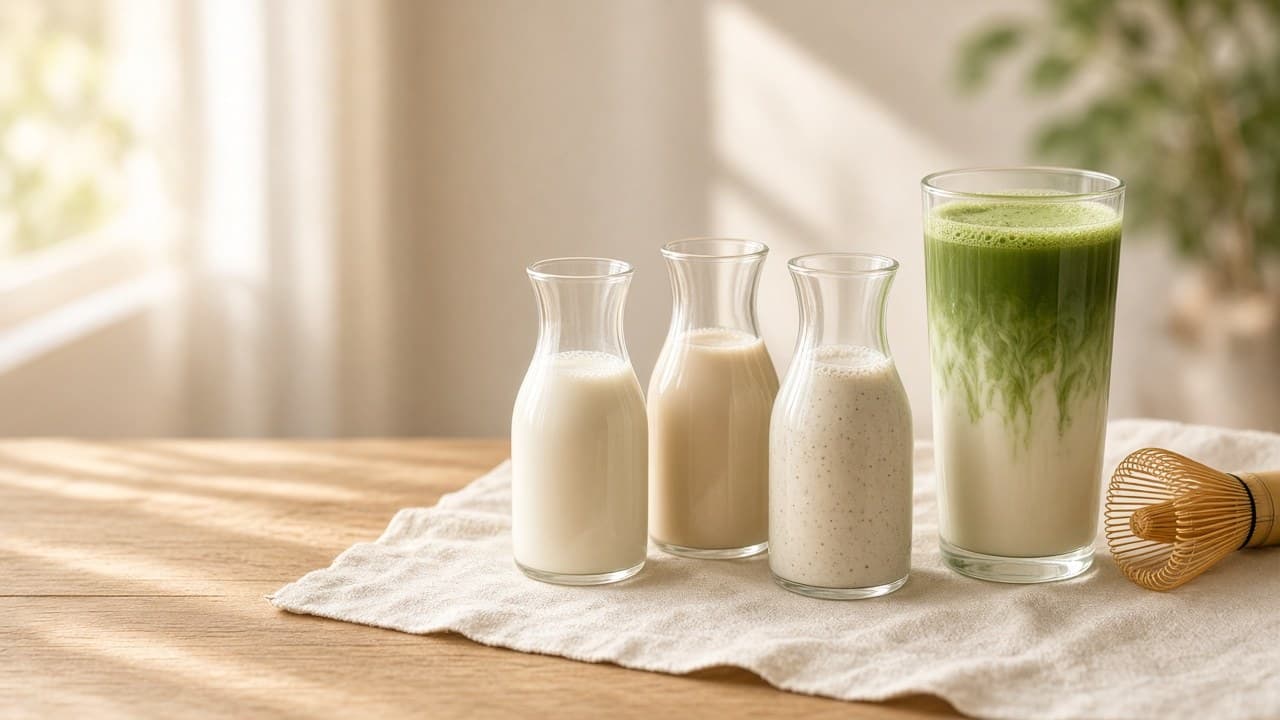
A good starting choice for matcha is oat drink or whole milk: both are mild, slightly sweetish and let the green taste come through. Soy drink can work well for frothing but has a stronger taste of its own; almond and coconut drinks bring their own notes. How creamy your latte turns out depends on the specific product. As a ratio, our recommended starting amounts work well: whisk 2 g of matcha with 30 ml of water at about 75 °C and top up with 200 ml of milk.
What matters in milk: fat, protein, distinctive flavour
Whether a matcha latte tastes round or watery, green or just milky depends not only on the powder and the ratio but also on three properties of the milk.
Fat makes the latte creamier. Too much fat can push the matcha into the background, though, and then you mostly taste cream. Fat and protein content differ from product to product. So compare the nutrition information on the pack.
Protein plays an important role in frothing because it can stabilise the air bubbles. How much protein a drink contains is listed in the nutrition information.
A flavour of its own is where opinions divide. Oat drink tastes of grain and is slightly sweetish, soy drink beany, almond drink nutty, coconut of coconut. Cow's milk is comparatively neutral. The stronger its own flavour, the more it competes with the matcha. Then there is sweetness: oat drink is sweetish even without added sugar, because during production part of the oat starch is broken down into sugar. Lactose-free cow's milk also tastes slightly sweeter than regular milk, because the milk sugar in it is split into its sweeter-tasting components. These are observations about flavour, not judgements of quality.
A fourth point has less to do with the milk than with the matcha: milk can cover delicate matcha notes. For a latte, a powder with a clear green taste can therefore make more sense than a very mild matcha intended for drinking straight.
Oat, almond, soy, coconut, cow's milk: a taste comparison
- Taste with matcha
- mild, slightly sweetish, grain note
- What to keep in mind
- its own sweetness can make syrup unnecessary
- Taste with matcha
- nutty
- What to keep in mind
- choose an unsweetened version without flavouring if you do not want extra sweetness
- Taste with matcha
- full, slightly beany
- What to keep in mind
- its own flavour can compete with the matcha; at high temperatures or with acidity, curdling is possible
- Taste with matcha
- distinct coconut note
- What to keep in mind
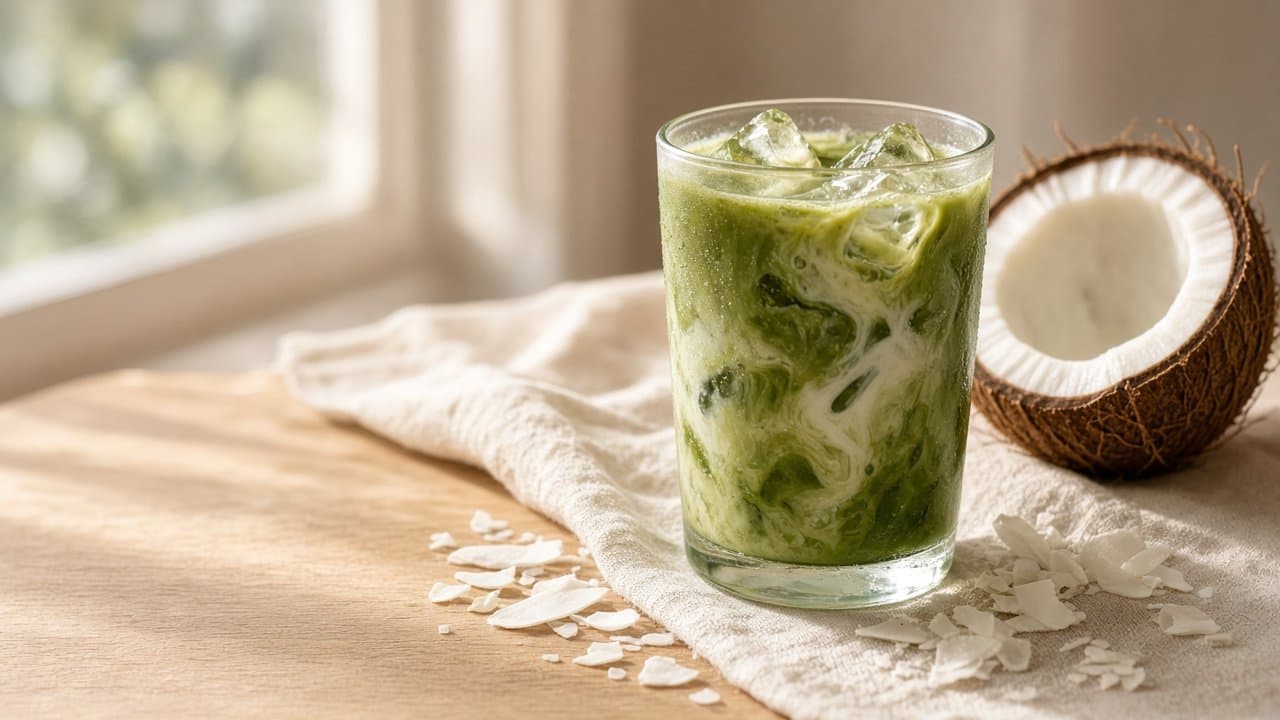
- suits iced matcha with a tropical note
- Taste with matcha
- very creamy, strong coconut taste
- What to keep in mind
- better as part of a mixture or for dessert variations; sets solid when cold
- Taste with matcha
- round, creamy, neutral
- What to keep in mind
- for a creamy latte
- Taste with matcha
- lighter, matcha more present
- What to keep in mind
- for anyone who wants to taste the matcha clearly
- Taste with matcha
- slightly sweeter than regular cow's milk
- What to keep in mind
- taste and creaminess also depend on the fat content of the product you choose
With froth, the result for all types depends on the product and the preparation. Test the specific product with your frother; froth volume and stability also depend on temperature and method.
Which plant milk tastes as neutral as possible with matcha? Most likely oat drink: comparatively little character of its own, natural sweetness. If you want it even more neutral, use low-fat cow's milk. Unsweetened almond drink without added flavouring avoids extra sweetness and flavourings, but can still taste nutty.
What is used in Japan for the matcha latte? Which milk a café in Japan uses cannot be determined from the sources available to us. Ask which milk is used and whether the latte is sweetened. Without cow's milk, barista oat drink is a possible starting choice, soy drink if froth matters more to you than neutrality.
Froth and barista versions
Barista versions are developed for frothing. Whether they contain oil, stabilisers or acidity regulators is shown in the ingredients list; curdling or settling cannot be ruled out entirely with them. How fine and stable the froth becomes depends on the product and the preparation.
Are barista editions worthwhile? If you want froth or make warm lattes, they are a possible starting choice. If you drink your latte cold and without froth anyway, a regular oat drink is enough. If you prefer a short ingredients list, you will find oat drinks with only oats, water, oil and salt. Test the specific product with your frother; froth volume and stability also depend on temperature and method.
How to make froth without a machine: warm the milk and froth it with an electric hand frother, a screw-top jar (shake vigorously) or a French press (plunger up and down quickly). Warm the milk for the latte without boiling it, and follow the preparation instructions on the pack.
When milk covers the matcha and what helps
One possible reason for a latte that hardly tastes of matcha is the ratio. The more milk for the same amount of powder, the less matcha you taste. Our recommended starting amounts: whisk 2 g of sifted powder with 30 ml of water at about 75 °C to a fine foam, then top up with 200 ml of milk or oat drink. If that still tastes too milky, stay with 2 g of matcha and use less milk; or use a little more powder and keep the milk at 200 ml. Always change only one thing, then you know what helped. For a strong latte, also check the ratio and the powder.
How do you stop the milk from drowning out the matcha?
- Base first, then milk. Sift the powder and whisk it with water first, so that lumps break up more easily. Only then does the milk go in.
- Choose a neutral milk. Oat drink, whole milk or low-fat milk instead of coconut or flavoured almond drink.
- Cut back the sweetness. Sweetened plant drinks plus syrup can push the matcha into the background. Use unsweetened versions and, if needed, add a small spoon of syrup yourself.
- A powder with a clear taste. For a latte, a powder with a clear green taste can make more sense than a very mild matcha intended for drinking straight.
- Watery? How creamy or watery your latte tastes depends on the specific drink, the ratio and, for the cold version, on the melting ice. Try a different product, a little less milk or a stronger base with a little more powder for the same 30 ml.
Does every latte you make simply taste bad? Check powder, water temperature, sifting, ratio and the milk's own flavour one by one: Is the powder old or stored open? Was the water for the base boiling? Did you skip sifting? Is there too little powder for too much milk? Does the milk have a strong flavour of its own?
Does the milk curdle or separate? Curdling happens when heat and acid cause proteins to coagulate. It gets risky if you mix very hot milk with a very hot base, or when lemon, fruit or fruit syrup meet plant drink in an iced matcha. Almond drink can settle depending on the recipe; stir the latte before drinking. Coconut milk from the tin separates into fat and water and sets solid in the fridge. What helps: only warm the milk, do not boil it, and do not bring base and milk together when both are very hot. Acidic fruit or fruit syrup can make plant drinks curdle; the order of adding does not reliably prevent that.
Cold and hot
Try your drink warm and cold and decide which version tastes better with matcha. In an iced latte, melting ice dilutes the drink; how creamy or watery it tastes depends on the specific drink, the ratio and the ice. If you want to counter that, use a creamier milk or a stronger base. Coconut drink works well cold if you want a tropical note. The portion stays at our recommended starting amounts: 2 g of matcha, 30 ml of water at about 75 °C, 200 ml of cold milk, plus ice. You make the base with warm water for the cold version too, because the powder distributes less well in cold water. That applies regardless of country: barista oat drink or whole milk are a possible starting choice for the iced latte, whatever brands are on the shelf.
For the warm latte: warm the milk without boiling it, then pour base and milk together. A hint of vanilla extract in the oat drink is a possible variation, as is maple syrup; both sparingly, so that the matcha stays the star. Oat drink with maple syrup is a possible combination if you like it sweetish.
A word on coconut milk from the tin: it is very fatty and very coconut-forward. Plain as a latte base, it is heavy. Better to use it as part of a mixture, for example with oat drink, or use coconut drink from the carton. Shake the tin well before opening, because the fat settles on top.
Recommendations by flavour preference
- Matcha in the foreground, as neutral as possible: low-fat cow's milk or unsweetened oat drink. Our recommended starting amounts, no sweetness.
- Creamy and round, café style: whole milk or barista oat drink, frothed, a small spoon of syrup in the base if needed.
- Sweetish without added sugar: oat drink or lactose-free milk; both bring sweetness of their own.
- Froth: whole milk, soy drink or a barista drink; test the specific product with your frother.
- Nutty: unsweetened almond drink.
- Tropical, over ice: coconut drink, with a little fruit if you like. Acidic fruit or fruit syrup can make plant drinks curdle; the order of adding does not reliably prevent that.
- Short ingredients list: oat drink made from oats, water, oil and salt.
- Strong latte: less milk or a little more powder; also check the ratio and the powder before you change the milk.
Which brand you choose is secondary. Instead, compare the ingredients list and the fat content of two products and try both with the same powder and the same amount. Our RINSUMILA DAILY is made for exactly this preparation: no bitterness in the taste, for lattes and iced lattes, with milk or oat drink. The basic recipe with all the steps is in the matcha latte recipe.
Frequently asked questions
Which milk goes best with matcha?
Oat drink and whole milk are a good starting choice: mild, slightly sweetish and without a taste of their own that drowns out the matcha. Soy drink can work well for frothing but has a stronger flavour of its own. Which suits best depends on whether you want the matcha in the foreground or a creamy café latte.
Why does my latte with oat or almond drink taste watery?
How creamy or watery your latte tastes depends on the specific drink, the ratio and, for the cold version, on the melting ice. Compare the nutrition information of two products and try a different one, use less milk for the 2 g of powder or make a slightly stronger base with more powder for the same 30 ml of water.
Which oat drink is suitable for matcha latte?
A barista oat drink is a possible starting choice if you want froth or drink it warm; it is developed for frothing. A regular oat drink is enough for cold lattes without froth. It should be unsweetened, because oats bring sweetness of their own. Try two products side by side and test them with your frother.
Which brand of milk should I use for matcha?
We do not name brands. Compare the specific products by their ingredients and your own taste test: ingredients list (for example oats, water, oil, salt, with barista versions possibly stabilisers), fat content and whether it is sweetened or flavoured. Try two products with the same powder and the same ratio, then you have your answer.
Can I use lactose-free milk for matcha?
Yes. Lactose-free cow's milk tastes slightly sweeter than regular milk, because the milk sugar in it is already split into its components. Taste and creaminess also depend on the fat content of the product you choose. That may mean you do not need syrup; ratio and preparation stay the same.
Related products
Related recipes

More guides