Iced Matcha Latte
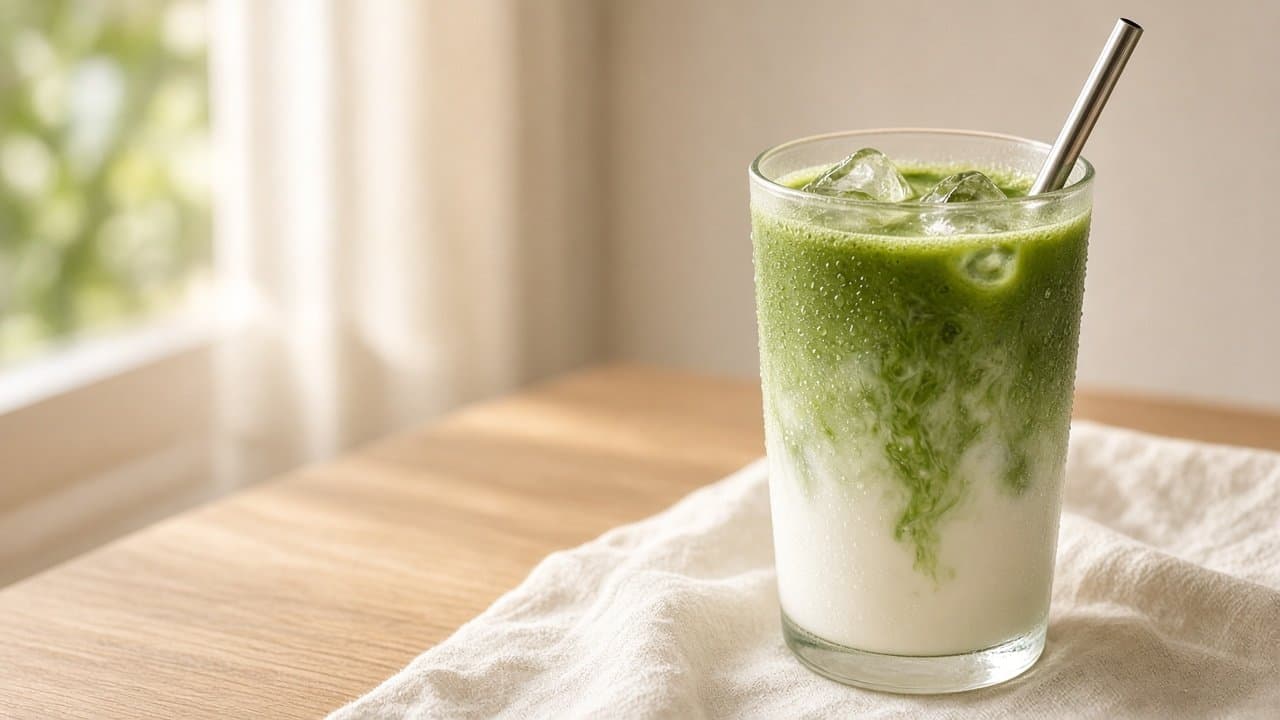
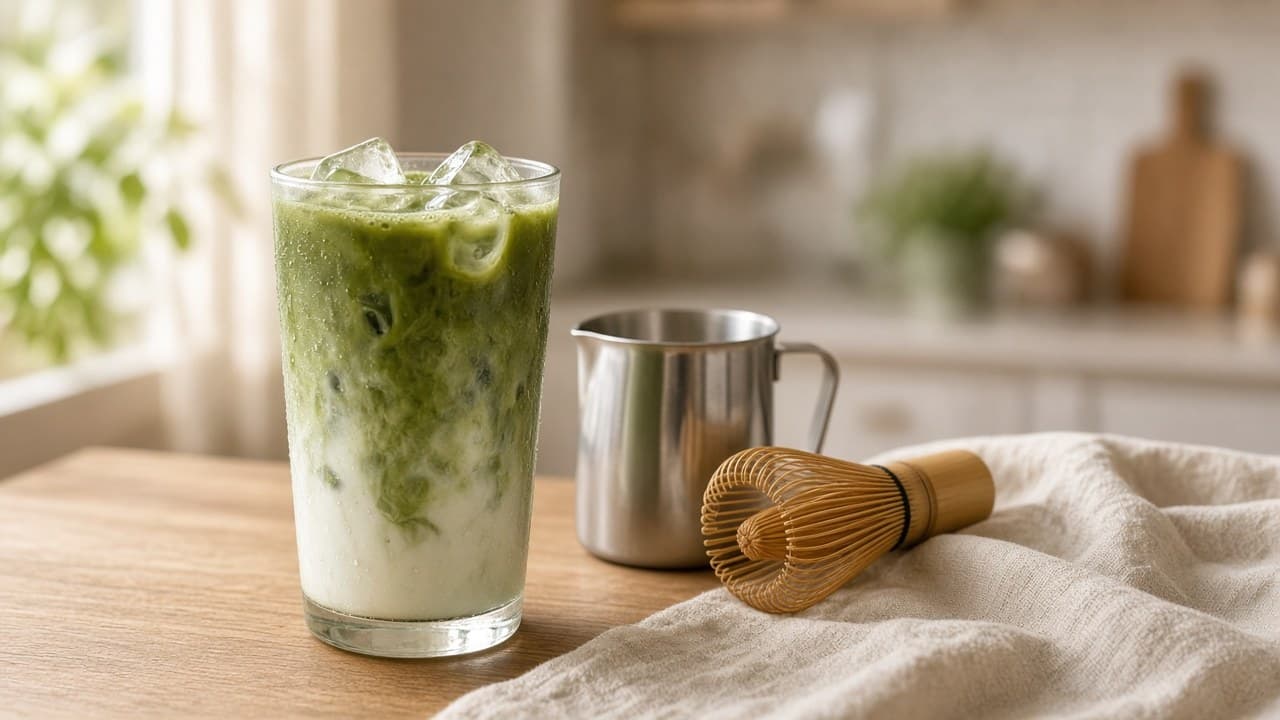
An iced matcha latte is whisked matcha with cold milk over ice: creamy, gently bitter and refreshing, with green streaks that slowly run down through the glass. For one glass, whisk 2 g of matcha with 30 ml of water into a dense base and pour it over ice and 200 ml of milk or oat drink. The base works with cold water or with water at about 75 °C, and both are right.
- Prep time
- 5 min
- Total time
- 5 min
- Makes
- 1 large glass
- Difficulty
- Easy
Caffeine: by calculation about 30 to 90 mg per serving (from 2 g matcha)
Ingredients
- 2 g matcha
- 30 ml water, cold or about 75 °C
- ice cubes
- 200 ml cold milk or oat drink
- syrup to taste
Utensils
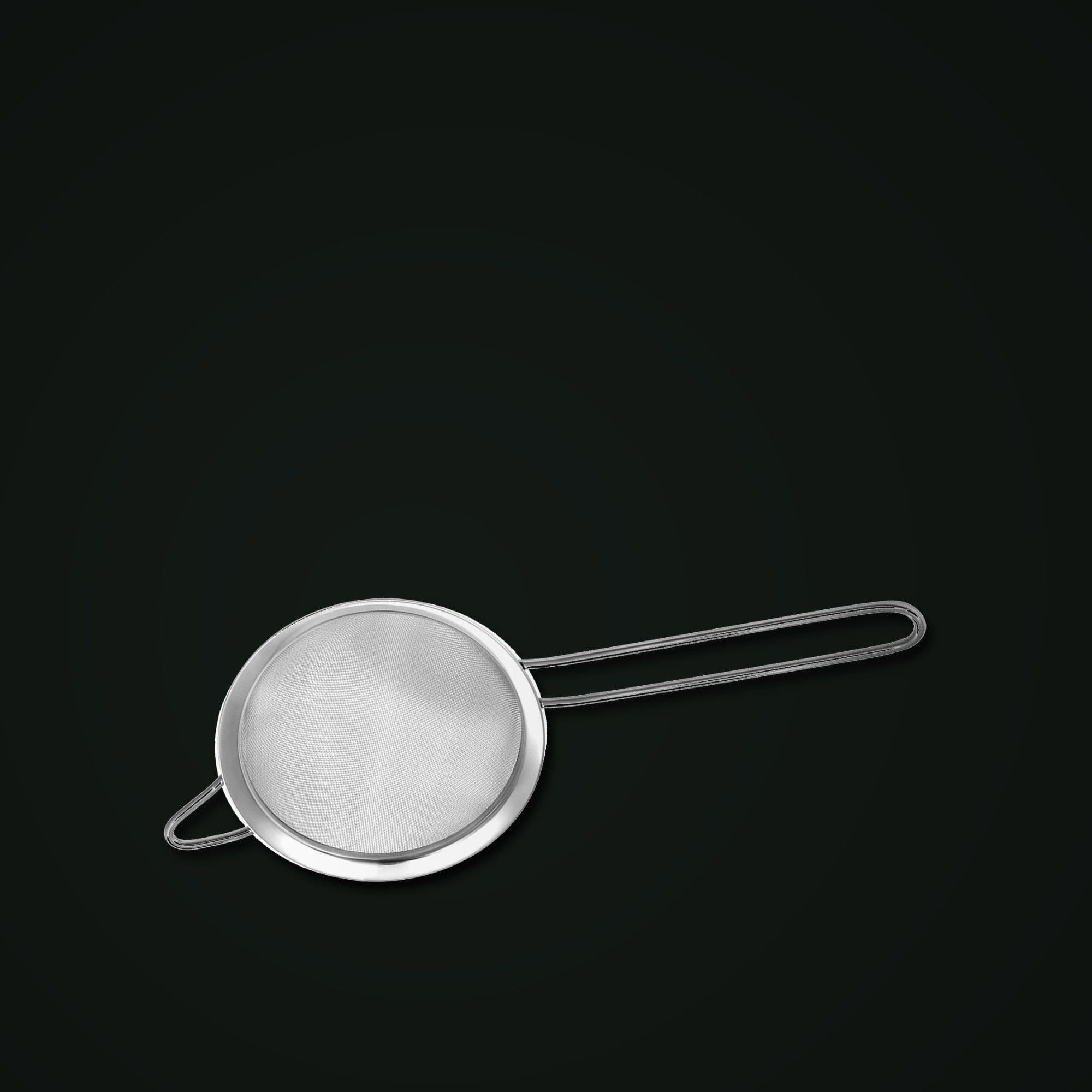
- Sieve
- Bamboo whisk (chasen), milk frother or shaker
- Bowl
- Large glass
- Spoon
Method
- Put the matcha through the sieve into a bowl.
- Pour in the 30 ml of water and whisk with the bamboo whisk or milk frother into a smooth, foamy base. With cold water this takes a little longer than with water at about 75 °C.
- If you want to sweeten, put the syrup into the empty glass and stir it with a splash of milk.
- Fill the glass with ice cubes to just below the rim and slowly pour the cold milk over them.
- Finally, add the matcha base carefully over the back of a spoon onto the ice, and stir before drinking.
Variations and tips
- First a dense base, then dilute: If you sprinkle the powder straight into a glass of ice and milk, it easily stays in clumps or settles at the bottom. Matcha does not dissolve, it disperses finely, and that works reliably even cold if you whisk it with the small amount of water first. Lumps in the glass usually come from unsieved powder, too little water for the base, whisking too briefly or putting everything into the glass at once.
- Whisk cold or mix hot: With cold or room-temperature water the powder takes a little longer, so sieving and vigorous whisking matter more; in return the base is cold straight away and often tastes clearer. With water at about 75 °C it usually disperses more easily and the foam is finer, but the ice then melts a little more. Try both side by side, it is a matter of taste.
- Chasen, frother or shaker: With a little practice the bamboo whisk makes the finest foam, and cold it needs a little more time. An electric milk frother is practical, also for several glasses, and disperses the powder reliably even in cold milk, but the foam is coarser. In a shaker, shake sieved powder, cold water and a few ice cubes vigorously, ideally with a sieve insert or mixing ball; with a spoon or fork, small lumps remain more easily and hardly any foam forms.
- Ice and milk: Fill the glass generously with ice, because large cubes melt more slowly and dilute less than small cubes or crushed ice. With plant drinks a barista version tastes less thin; if the latte is too flat for you, use a little less milk or sweeten slightly instead of adding more powder. For a stronger taste, the koicha-style pre-mix from the matcha latte recipe helps.
- Why iced often tastes less bitter: Many people find the same powder milder cold than hot, because ice dilutes the base and bitter notes are usually less prominent in cold drinks. If you mix it cold, water that is too hot drops out as a cause of bitterness. If it is still bitter, use a little less powder, 1 to 2 g per glass is usual, or a little more milk.
- Preparing and taking it with you: Portion 2 g of powder per glass dry into a small, tightly closing tin, fill it shortly before you leave and keep it dry, away from sun and radiators. Ready-mixed matcha settles, often after a short time, and vigorous shaking disperses it again; so make it as late as possible, keep it cold and drink it soon. Your packing list: the tin of powder, a small sieve or a cup with a sieve, a tight shaker, cold milk or water in a bottle and a cloth for wiping.
- Travelling with powder: Powder in hand luggage may be checked additionally at security, so take it in its original packaging or a clearly labelled tin and put it on top where you can reach it. Whether and how much powder is allowed is decided by the airport, the airline and, for import, the destination country; check the current rules with them before you travel, as we cannot give binding information on this. Buy milk or oat drink at your destination, or mix the base in your hotel room and pour it over cold water or milk.
- For guests and neat layers: Allow 2 g of powder and 30 ml of water per guest for the base, whisk the bases shortly before serving and set out ice, cold milk, plant drinks and syrup separately so everyone fills their own glass. A large jug works too, but the powder settles, so stir vigorously now and then; finished glasses from the night before are not worth it, at most a chilled base that you shake up before serving. Neat layers come from this order: syrup, ice to just below the rim, milk slowly over the ice and the base last over the back of a spoon.
Frequently asked questions
Which container is suitable for taking matcha with you?
A tightly closing shaker or cup, ideally with a sieve or mixing ball; in a normal drinking bottle without a sieve or ball, powder sprinkled in dry easily stays in clumps. A transparent cup shows you whether everything has dispersed. Rinse it straight after each use so no powder dries on.
Which container is suitable for taking a matcha latte to work?
A leak-proof cup with a lid, ideally insulated so the latte stays cool for longer. Make it as close as possible to when you leave and shake it once more before drinking, because the powder settles. In an insulated cup without a mixing ball, it is better to mix the base in a bowl first and then pour it into the cold milk.
What is the best choice for travelling?
Portioned powder in a small, labelled tin or the original packaging, plus a cup for shaking. Buy milk or water at your destination. Keep the powder closed, dry and away from heat while travelling.
Does a matcha latte taste better cold or warm?
That is a matter of taste. Cold, many people find the same powder milder, because ice dilutes and bitter notes are less prominent, while warm the latte usually tastes rounder. Try both versions side by side with the same powder and the same amount.
Related guides