Hojicha or matcha? The roasted Japanese tea on café menus in 2026
Hojicha is roasted green tea, matcha is ground tencha. The difference, the taste, lattes and what can be said about caffeine.
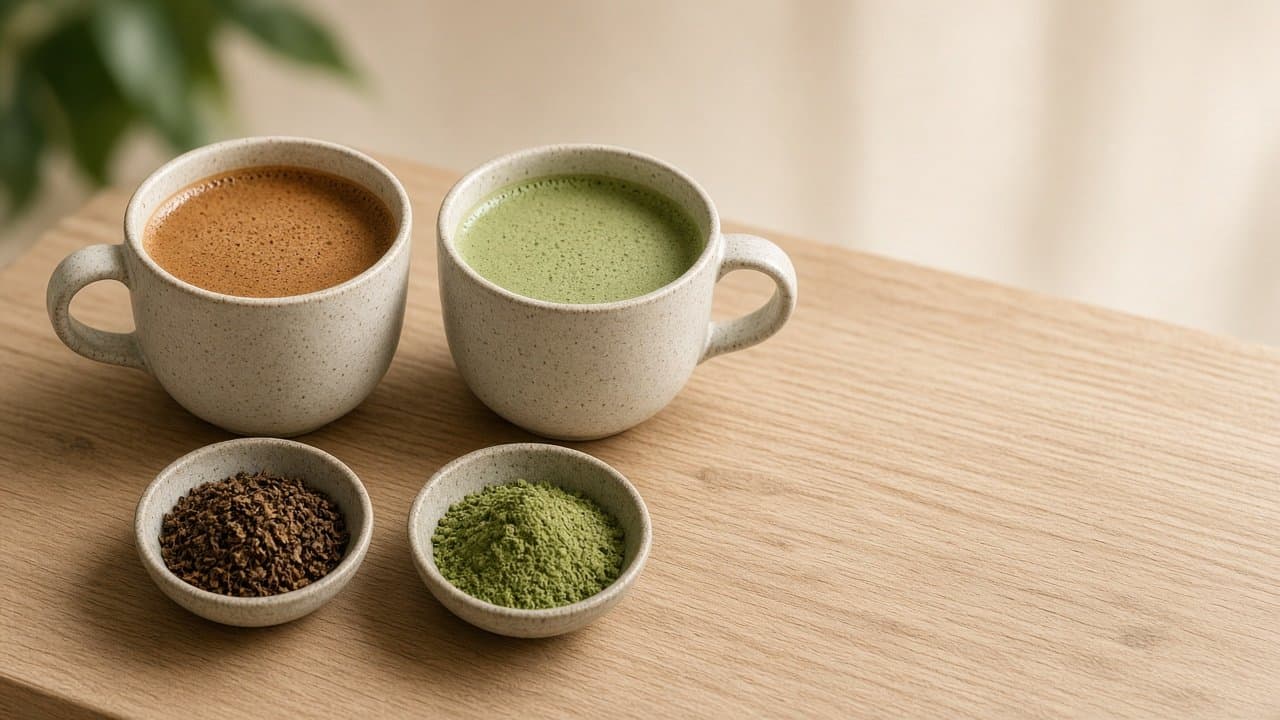
Hojicha is roasted green tea from Japan: brown instead of green, with roasted notes reminiscent of nuts, caramel or cocoa. Matcha is tencha from shaded leaves ground into powder, bright green, with umami and a fresh, grassy sweetness. On café menus both usually appear as lattes, and which one you like better is a matter of taste. On caffeine, we give the range from published analyses for matcha and no figure for hojicha, because we have no reliable primary source for it.
Status: 05.10.2026.
What hojicha is
The name says it all: "hōji" means roasting in Japanese, "cha" means tea. For hojicha, green tea is roasted after it has been made. In the process it loses its green colour and turns light to dark brown, reddish brown when brewed. Depending on the producer, leaves, stems or both are roasted, and the strength of the roast varies too.
Traditionally, hojicha is brewed as a leaf tea, much like sencha. For lattes, desserts and baking it now also comes as a fine powder that can be stirred and whisked into water or milk like matcha. This powder is not matcha, even if cafés sometimes call it "hojicha matcha": it is ground roasted tea, not ground tencha.
Terms such as "ceremonial hojicha" are, as with matcha, not a protected designation. What is in the powder is shown by the ingredients list, the origin and the producer's information, not by the word on the label.
Matcha for comparison
Matcha is made from tencha. The tea bushes are covered for about two to three weeks before the harvest, and after picking the leaves are steamed, dried without rolling and ground into a fine powder [1]. Matcha is not roasted, which is why it stays green.
- Hojicha
- green tea, roasted
- Matcha
- shaded tencha, ground
- Hojicha
- brown, reddish brown when brewed
- Matcha
- bright green
- Hojicha
- roasted notes: nutty, caramel, sometimes smoky
- Matcha
- umami, sweetness, grassy, sometimes seaweed-like
- Hojicha
- leaf tea or powder
- Matcha
- powder only
- Hojicha
- brewed; powder as a latte
- Matcha
- whisked, plain or as a latte
- Hojicha
- no figure
- Matcha
- literature range, see below
Taste: roasted notes versus umami
Hojicha tastes of the roast: warm, nutty, caramel, and with a strong roast also smoky or slightly bitter. Some people find cocoa or toasted grain in it. Green, grassy notes fade into the background. If you try hojicha for the first time and do not like it, you are not wrong: the roasted character is pronounced and not to everyone's taste. A different roast level or a latte instead of a brewed cup can taste quite different, though.
Matcha tastes of the green leaf: umami, a light sweetness, fresh grassy and sometimes seaweed-like notes. Fishy or seaweed-like notes can be typical of the variety; a clearly musty or rancid smell, on the other hand, is a warning sign. Matcha tends to turn bitter when the water is too hot or there is too much powder for the amount of water.
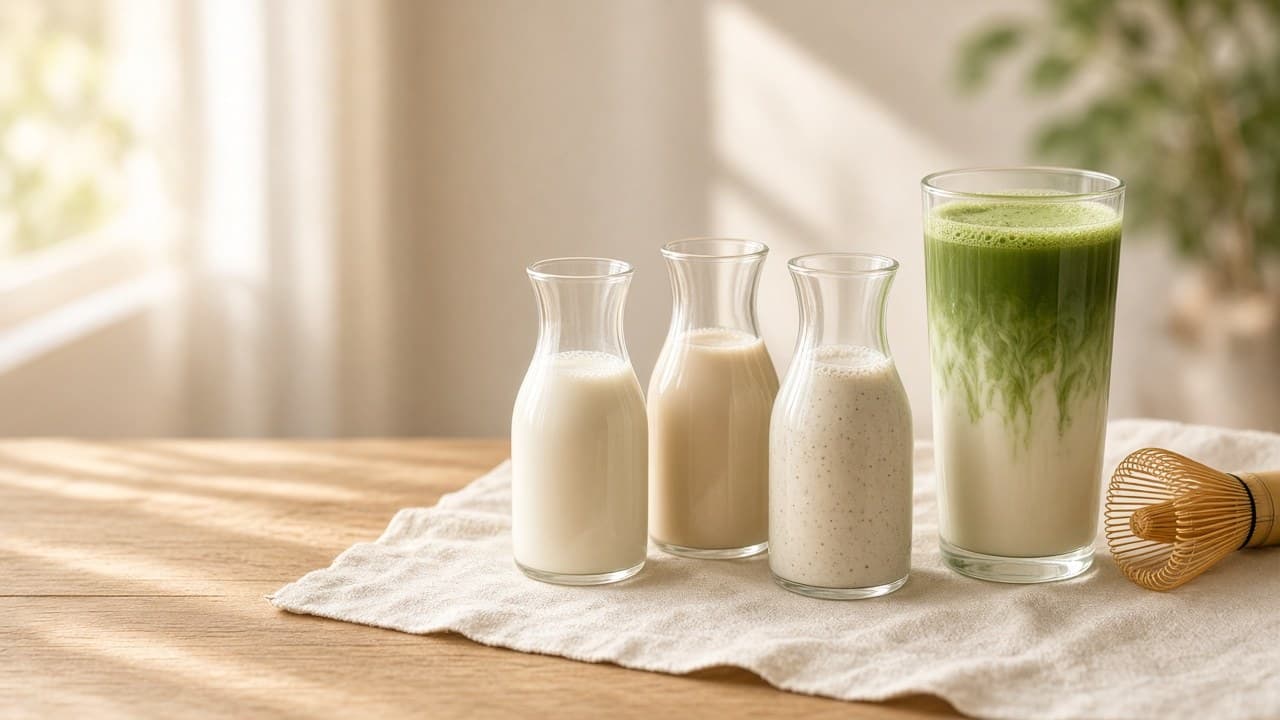
With milk, the two move closer together. Milk takes away some of matcha's astringency and umami, and hojicha's roasted notes go well with milk and a little sweetness. That is why both work as lattes, hot or iced.
Why does hojicha taste completely different from one café to the next? For the same reasons as matcha: a different powder, a different roast level, a different amount, syrup or a pre-sweetened mix in the cup.
Preparation: latte, iced latte, plain
Matcha latte (house values): sift 2 g of matcha, whisk it with 30 ml of water at about 75 °C for about 15 to 30 seconds into a fine foam and top up with 200 ml of milk or oat drink, hot or iced. Plain: whisk 2 g of matcha with 70 ml of water at about 75 °C.
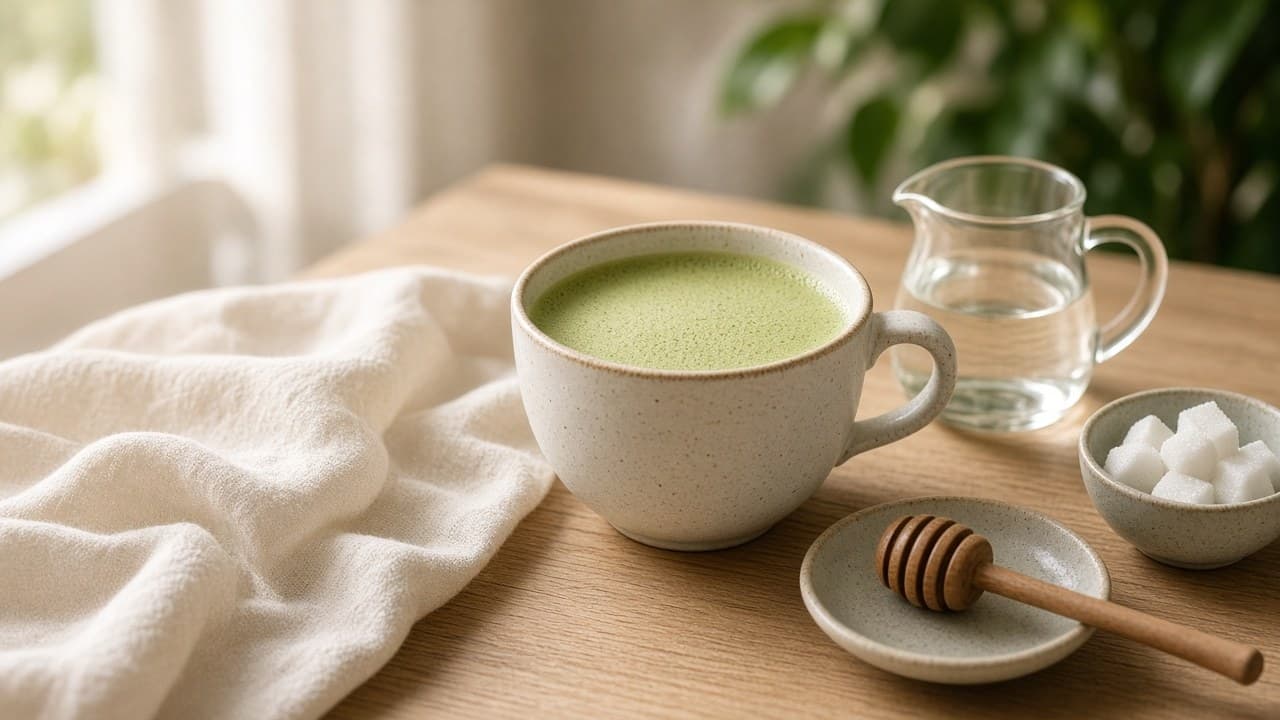
Hojicha latte: we give no house values of our own for hojicha powder. Follow the amounts on the pack. The steps are the same as for a matcha latte: sift the powder, stir or whisk it smooth with a little water, then top up with milk. If you like it sweet, stir syrup into the warm base before the milk goes in.
Hojicha as leaf tea: brew it following the producer's instructions. You can also stretch the brew with warm milk, but it will be thinner than a latte made from powder.
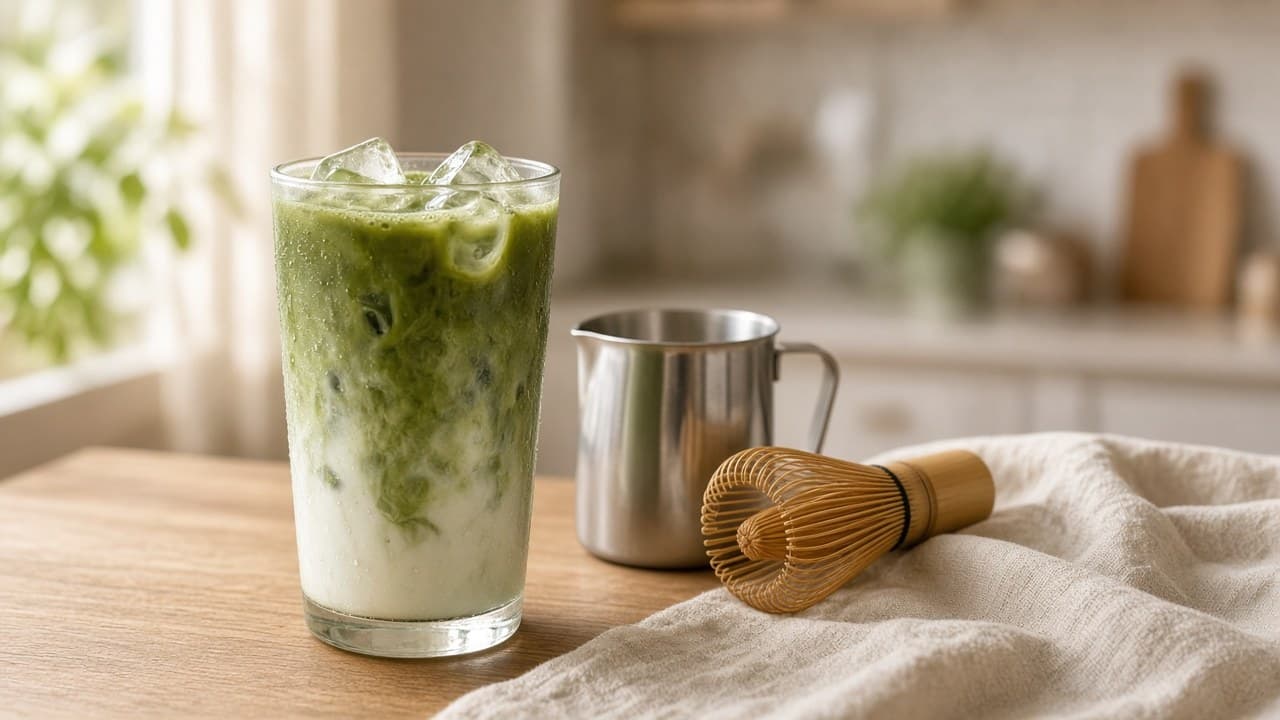
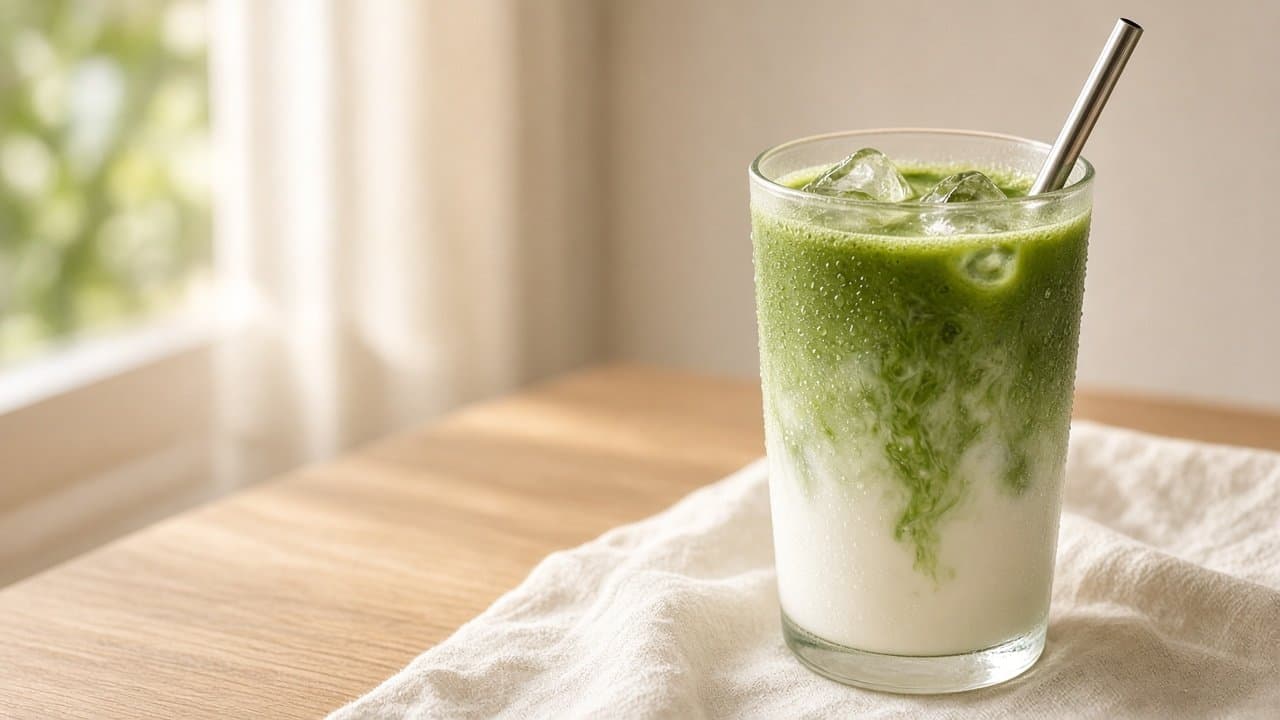
Iced latte: ice in the glass first, then cold milk, and the whisked base last. This works the same way for both powders.
Caffeine: what can be backed up
Matcha naturally contains caffeine. According to published analyses, about 14 to 44 mg per gram of powder is typical; the value depends on the variety and the batch [2][3]. For a serving of 2 g, that works out by calculation to about 30 to 90 mg. For our own batches we will only state a figure once an analysis value is available.
Hojicha is also made from green tea and contains caffeine. We do not give a figure for it: we have no primary source that backs up a reliable value or range for hojicha, and we do not adopt figures from press reports, advertising or social media. If you want to know for a particular product, ask the producer for an analysis value for the batch.
We deliberately do not rank the two. This article compares production, taste and preparation; which tea is right for you is decided by your taste.
Why hojicha is on café menus in 2026
Trade press for the food and drink industry reported in May and in August 2026 on hojicha as a possible "new matcha" and on whether it could overtake matcha. Among the background reasons given was that manufacturers still have the matcha shortages fresh in mind.
These shortages are documented: the research service of Japan's upper house quotes monthly reports from Japan's association for promoting tea exports from 2025, according to which domestic supply could not keep up with the matcha boom abroad and matcha orders could not all be accepted [4]. For cafés, hojicha is therefore a second Japanese tea that can be made into a latte with the same steps and tastes different.
For you, this mainly means: on many menus you choose between green and roasted. Try both once unsweetened or only lightly sweetened, and you will taste the difference most clearly.
Hojicha at RINSUMILA
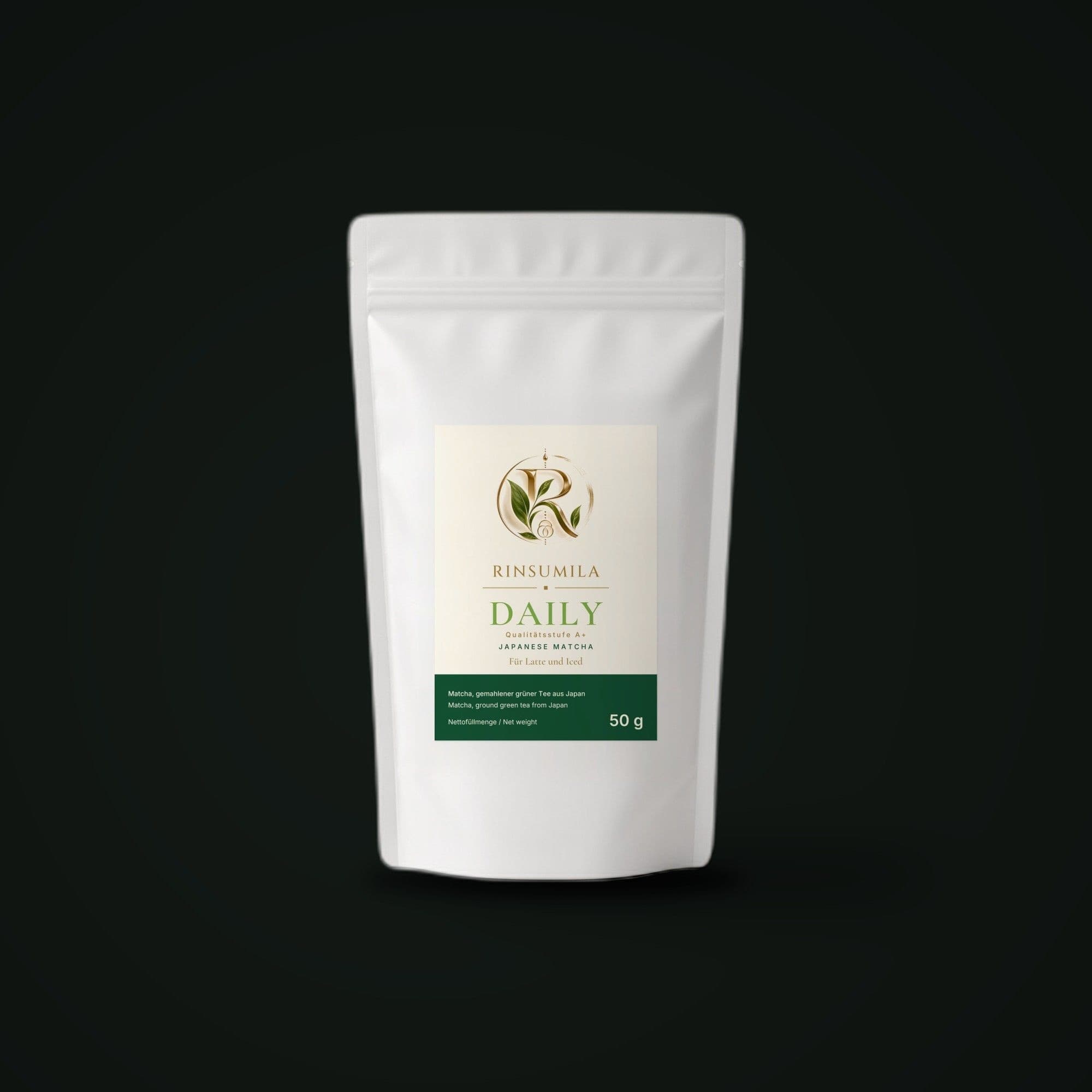
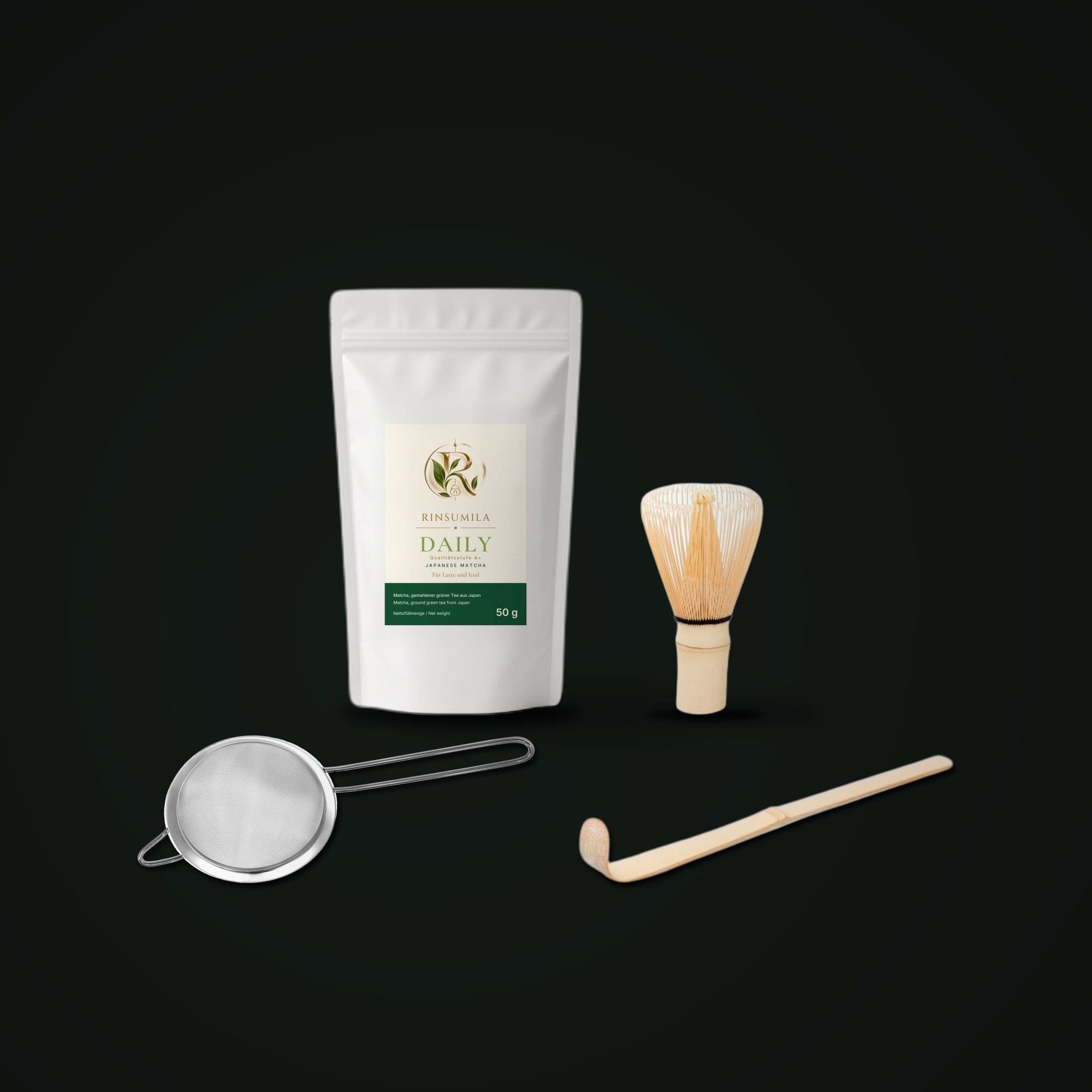
We do not sell hojicha; our range consists of matcha and accessories. For lattes and iced lattes, RINSUMILA DAILY is the one to use, ground green tea from Japan in a 50 g doypack for about 25 glasses. How to recreate the café latte at home, with amounts, syrup and foam, is covered in the guide Recreating café matcha at home.
Frequently asked questions
Is hojicha roasted matcha?
No. Hojicha is roasted green tea, usually made from leaves or stems that are roasted and then brewed or ground. Matcha is ground tencha from shaded leaves and is not roasted. Powders sold as roasted matcha are a product of their own; what is in them is shown by the producer's information.
Does hojicha have less caffeine than matcha?
We do not give a figure for hojicha because we have no reliable primary source for it. For matcha, about 14 to 44 mg per gram is typical according to published analyses, by calculation about 30 to 90 mg for 2 g. Only an analysis value of the batch in question gives a reliable comparison for a particular product.
How does a hojicha latte taste compared with a matcha latte?
A hojicha latte tastes of the roast: nutty, caramel, sometimes of cocoa. A matcha latte tastes greener, with umami and a light sweetness. Milk makes both softer; which one you like better is a matter of taste.
Can I get hojicha as a powder for home?
Yes, hojicha comes as leaf tea and as a fine powder. You prepare the powder like a matcha latte, with the amounts from the pack. You brew the leaf tea following the producer's instructions.
Sources
- Ministry of Agriculture, Forestry and Fisheries (MAFF) (2026): 茶をめぐる情勢 (Japanese). Tea situation report, July 2026.
- Kochman J, Jakubczyk K, Antoniewicz J, Mruk H, Janda K (2021): Review article; used for information on chemical composition, section 2.2. Molecules 26(1):85. DOI: 10.3390/molecules26010085.
- Kika J, Jakubczyk K, Ligenza A, Maciejewska-Markiewicz D, Szymczykowska K, Janda-Milczarek K (2024): Matcha Green Tea: Chemical Composition, Phenolic Acids, Caffeine and Fatty Acid Profile. Foods 13(8):1167.
- Tokunaga H (2025): 茶の輸出拡大 -抹茶供給体制の現状と課題- (Japanese). 立法と調査 No. 480, pp. 87-96, research service of Japan's House of Councillors, 02.12.2025.
Related products
Related recipes
More guides