Matcha Mixes, Instant and Flavoured Matcha: Reading the Ingredient List
Pure matcha or a blend? How to read the ingredient list and nutrition table of latte mixes, instant powders, capsules and flavoured matcha.
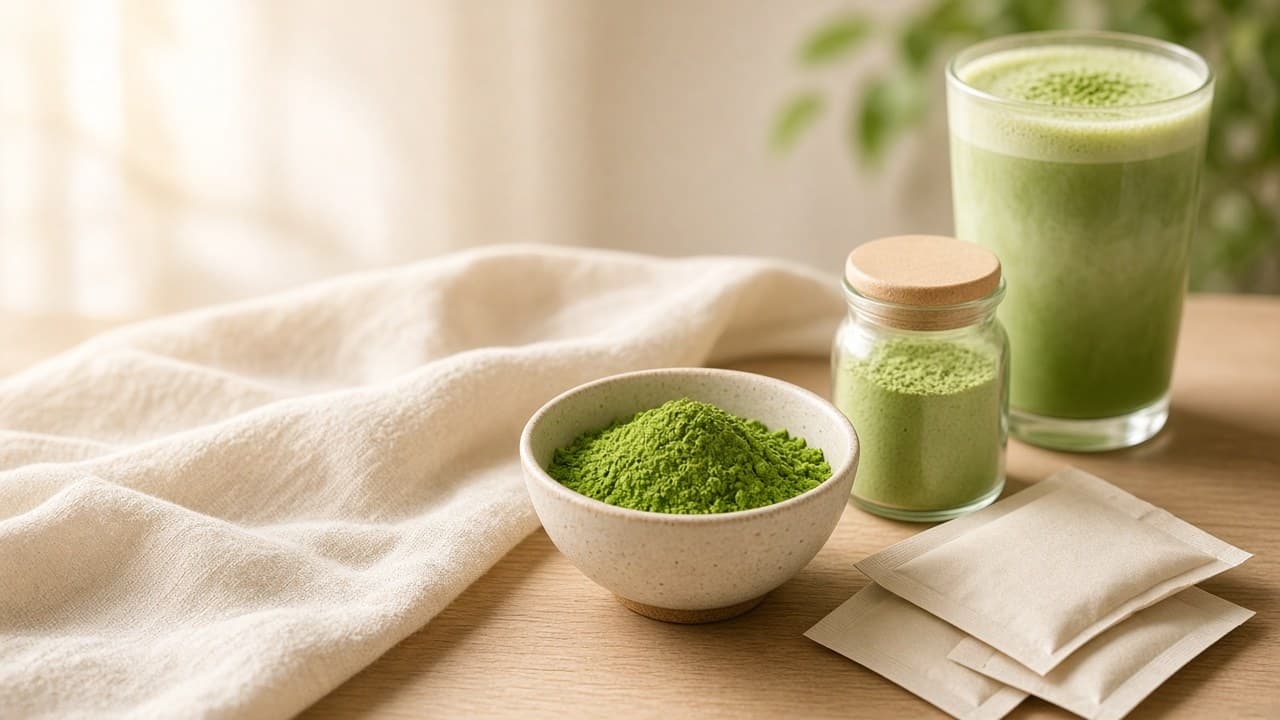
Whether a tin holds pure matcha or a blend, the ingredient list tells you in a single line: pure matcha contains only ground green tea. If it lists sugar, milk powder, flavouring or a plant extract, it is a different product, usually a latte drink powder. That is not forbidden and not automatically bad, but it tastes different, has a different price per serving and is harder to control. This article shows how to assess mixes, instant powders, capsules and flavoured variants from the packaging alone, and how to mix with pure matcha yourself.
Pure matcha or a blend: what the tin says
In the EU the ingredient list is mandatory for packaged food, and in an online shop it is shown before you buy. For pure matcha it is short: green tea or matcha, nothing else. It may even be left out when the name clearly states the only ingredient, for example "matcha, ground green tea". As soon as a second ingredient appears, you are looking at a blend.
Here is how to read the list:
- Order. Ingredients are listed by weight, in descending order. If sugar comes first, sugar is the largest ingredient by quantity, not the tea. If matcha sits far down the list, that usually points to a small share; the exact amount cannot be read from it.
- Percentage. If matcha is included in the name of the food or highlighted on the packaging, its percentage generally has to be stated; there are legal exceptions. Look for the figure next to the name as well. If it is missing, ask the producer.
- Asterisk. An asterisk after an ingredient points to a footnote under the list, for example a note on the origin or the way that ingredient was produced. Read the footnote: it belongs to the ingredient and is not a warning.
- Name of the food. The name must match the contents. "Matcha latte powder", "drink powder with matcha" or "matcha mix" tells you it is a blend, even if the word matcha is printed large on the front.
- Nutrition table. The line "carbohydrates, of which sugars" per 100 g gives the total sugar content of the mix, including sugar from milk powder; it does not quantify the added sugar alone. Which sugars were added is shown by the ingredient list, including under other names (cane sugar, glucose syrup, dextrose, honey powder, coconut blossom sugar).
So if you read a list like "sugar, skimmed milk powder, matcha (green tea), flavouring", it is not pure matcha but a latte powder with tea as the third ingredient. It may be sold that way, just not as pure matcha. This applies to every brand: we do not rate other companies' products, and you can read the ingredient list on any of them.
Sugar, milk powder, flavourings in mixes
Latte mixes are made to taste like a sweetened latte right away when stirred into water or milk. That is why they typically contain:
- Sugar in one of its forms, often as the first ingredient. It carries the flavour and covers bitterness.
- Milk powder or plant drink powder (skimmed milk powder, coconut milk powder, oat powder), so the drink turns creamy even with water.
- Flavourings, natural or not, for example vanilla.
- Emulsifiers, thickeners or anti-caking agents, so the powder disperses in water and does not clump.
- Matcha, often in a small amount, sometimes supplemented by cheaper green tea extract or ground Sencha.
How much sugar is in it? That is not in the ingredient list but in the nutrition table under "carbohydrates, of which sugars", per 100 g and often per serving as well. Convert the sugar value to the recommended amount of powder per drink. When comparing, also count sugar from any additional milk or plant drink you use.
Sweetened matcha from Japan belongs in this group too: some tea houses offer tins in which sugar is the first ingredient and the matcha is finely distributed in it. Such powders are meant for cold water or milk. That is a drink of its own, not a substitute for matcha whisked on its own, and the producers offer it as such.
Instant and pods
Several different things are sold as instant, for example single-serve sachets of pure matcha that are simply portioned for convenience: the same contents as from the tin, just for on the go. Products labelled "instant" also include easily stirred blends and tea extracts. Ground matcha disperses in water; sugar can dissolve, while the tea powder stays dispersed. Check the ingredient list and the preparation instructions instead of inferring the composition from how it dissolves.
Is instant worth it? On the go, in the office or when travelling it can be handy. Taste and cost depend on the product; compare ingredients, price per serving and your own taste impression with a tin of pure matcha that you prepare with a sieve and whisk or a milk frother. Freeze-dried matcha bites or cubes are another form of processing; here too the ingredient list counts, and the result in the glass differs from freshly whisked powder.
Capsules for coffee machines. For capsule systems from various makers there are matcha capsules, with pure powder or as a latte mix. In a capsule the powder is neither sieved nor whisked with a bamboo whisk. Check compatibility with your machine and the preparation instructions of the capsule maker; temperature, taste and foam depend on the system and the product. Work out the price per capsule and check the ingredient list, because some capsules consist mainly of sugar and milk powder.
Flavoured variants: a matter of taste
Flavoured matcha is pure or blended matcha with added flavouring or other ingredients: vanilla, strawberry, coconut, cinnamon, cocoa, mint. The same advice applies to mixes: read the ingredient list, mind the order, check the sugar in the nutrition table. A flavoured matcha without sugar that lists only green tea and natural flavouring is something different from a sweetened drink powder with strawberry taste.
What does it taste like? Flavourings overlay the tea notes. The stronger the flavouring, the less of the matcha itself you taste, and a fine powder is wasted on it. If you like flavoured matcha, a robust everyday matcha is a sensible base, not the most expensive tin. In Canada you can use local tea shops or specialised online shops with expressly confirmed delivery. Ask about ingredients, origin and batch, and check shipping costs, import duties and delivery time.
Blue matcha is not matcha and not tea, but the powder of dried butterfly pea flowers (Clitoria ternatea). It produces a deep blue colour, turning violet with acid, and tastes mild, slightly earthy and floral, almost neutral, not like matcha. Dried butterfly pea flowers are not authorised in the EU as a food ingredient for use in such drinks. We therefore do not give a recipe for it.
Blends with additives such as mushroom powder, collagen, herbal extracts or spices are often offered with promotional buzzwords. We do not assess such additives here, only what you can check on the packaging: which ingredient comes first, how high the matcha share is, how much sugar the table shows, and how it tastes. The last one is for your palate to decide. Matcha with collagen is no longer pure matcha but a blend; whether you want the additive is your decision, and the tea itself becomes neither better nor worse because of it. Comparing the ingredient lists of an old and a new pack can reveal changes to the recipe; we cannot judge a decline in quality of a specific third-party product here.
Comparing the price per serving
Mixes look cheap at first glance because the tin is large and costs little. So always calculate the price per serving:
- Count servings. Pack weight divided by the serving size the producer states on the pack. With mixes a serving is much heavier than with pure matcha, because the other ingredients are weighed in.
- Price per serving. Pack price divided by the number of servings.
- What is in the serving. With pure matcha: only tea. With mixes: everything the ingredient list names, often sugar and milk powder as well. The order shows you roughly how much of it is tea.
- Include the cost of additional ingredients. Add the cost of everything you also need according to the preparation instructions, including milk and sweetener, for pure matcha as well as for the mix.
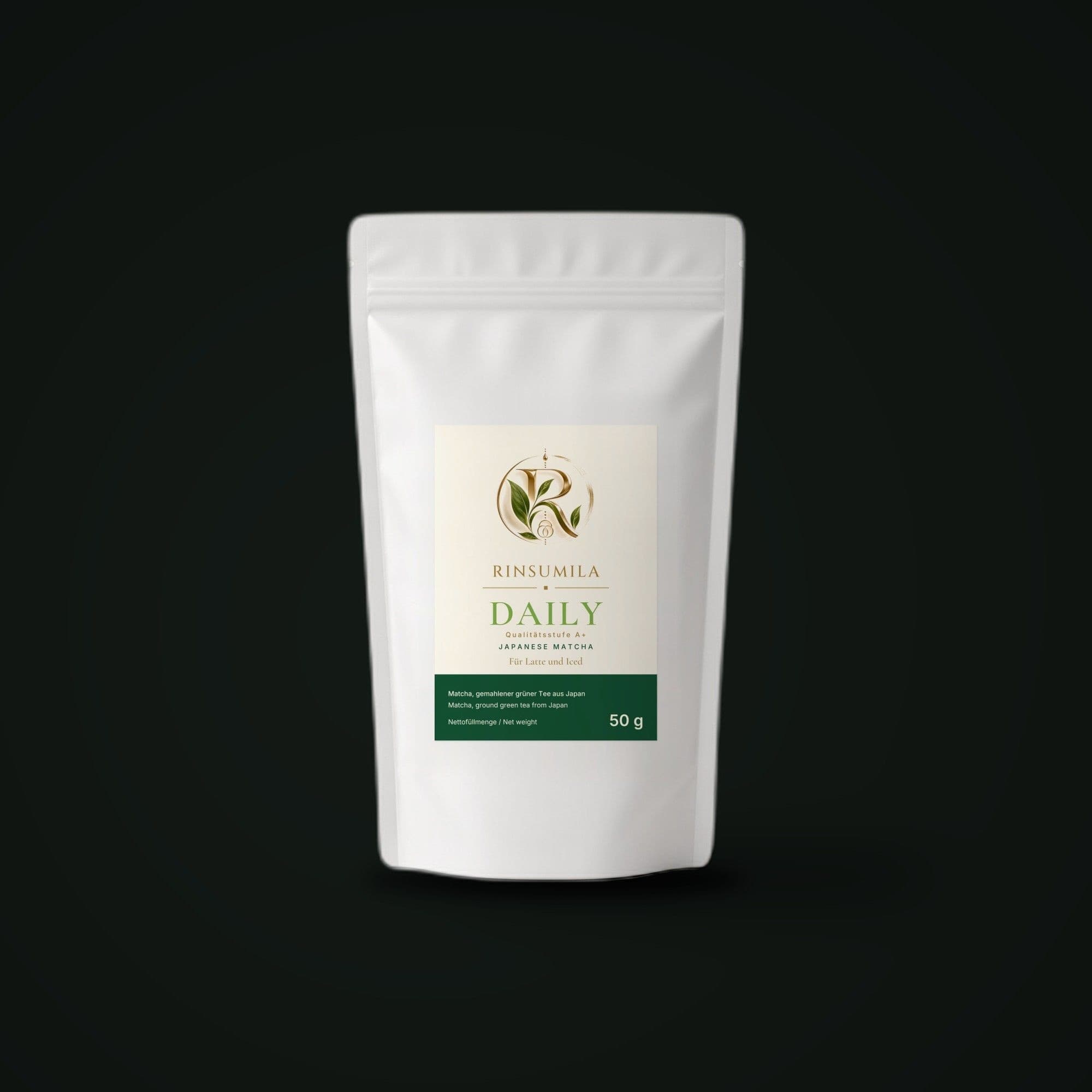
To put it in perspective: our RINSUMILA DAILY costs €34.90 for 50 g; at 2 g per latte that makes about 25 glasses and about €1.40 per serving of matcha, milk not included. Work out your mix the same way and put the two figures side by side. Only then do you see whether the mix is really cheaper and what you get for the price.
With capsules and single-serve sachets you calculate the same way, just per piece. Compare products with the same amount of tea and a similar composition; the price difference alone does not tell you the packaging surcharge. If you want a cheap sweetened latte, set pure matcha plus syrup from your pantry against the ready-made mix; with the mix you pay for all the ingredients, which is why it is worth doing the math.
Mixing it yourself
The advantage of mixing it yourself: you decide the amount of tea, the sweetness and the milk, and you know what is in it. The basic recipe:
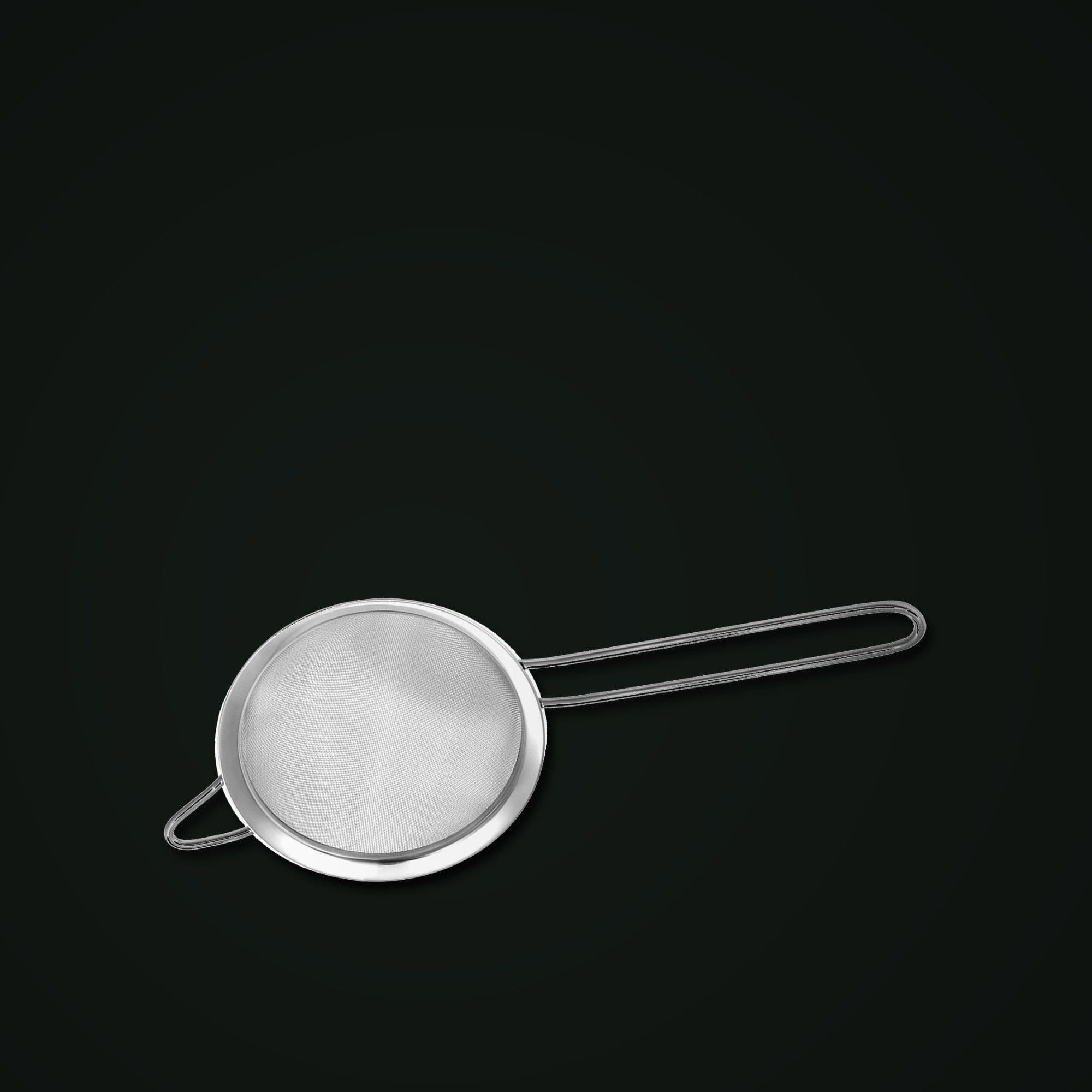
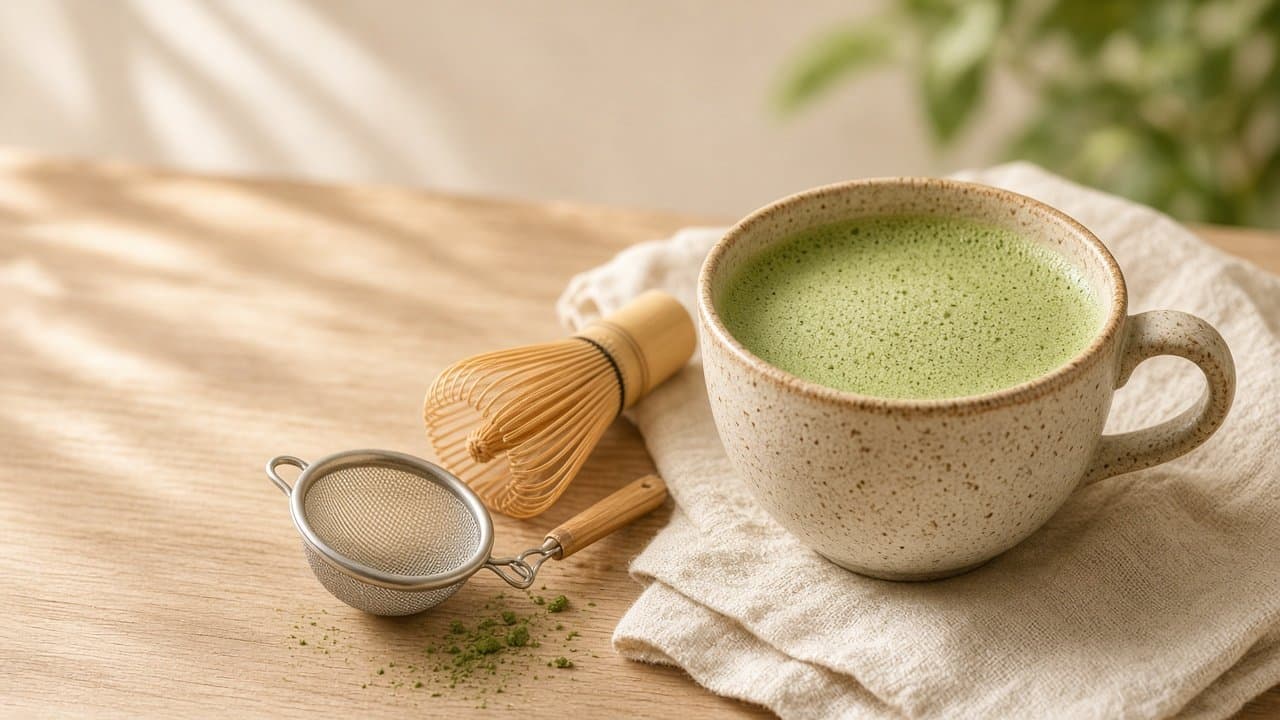
- Sieve 2 g of matcha and whisk it with 30 ml of water at about 75 °C into a fine foam, with a Chasen or a small milk frother.
- Top up with 200 ml of milk or oat drink, warm or over ice.
- Sweeten to taste: syrup disperses most easily in cold milk, honey and sugar dissolve in the warm matcha base. Start with a little and taste.
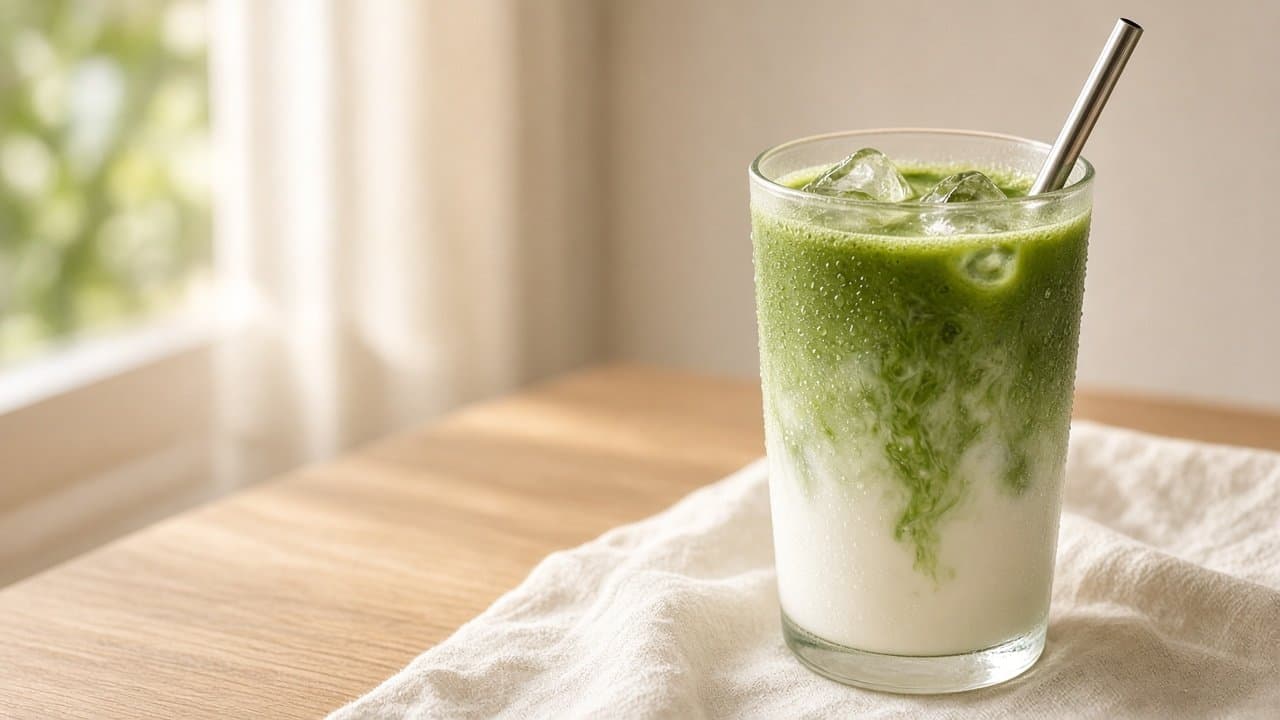
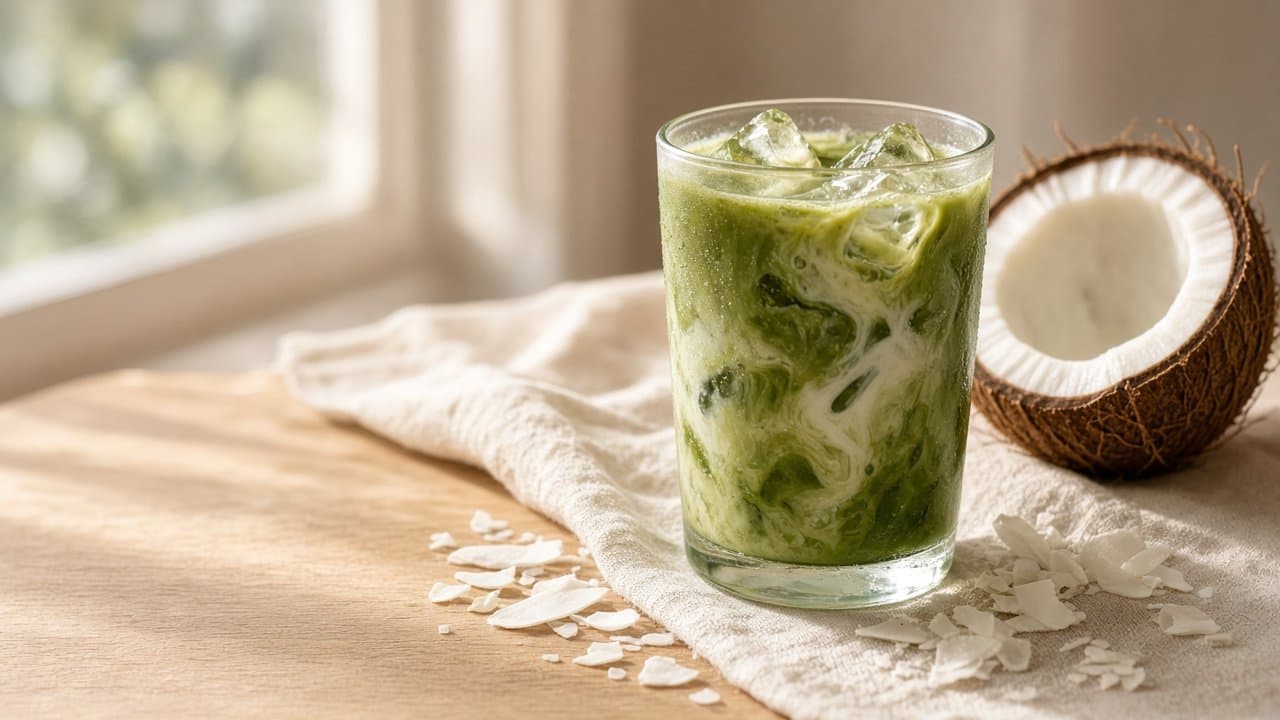
For a vanilla latte, add a little vanilla extract or a pinch of vanilla powder to the base, for coconut use coconut drink, for cinnamon put a pinch in the glass. That way you can try similar flavours and choose the amount of tea, milk and sweetness yourself. If you miss a sweetened ready-made mix you used to enjoy, try pure matcha with a little syrup and a barista plant milk. For iced: whisk 2 g in 30 ml of water, pour over ice, add 200 ml of cold milk, syrup to taste. That takes only a little longer than stirring a ready-made mix.
You can also prepare ahead: mix matcha and sugar dry and keep them in a tin with a tightly fitting lid; you leave out only the milk powder and use fresh milk. Strongly scented spices such as cinnamon are better added to the glass, because matcha takes on odours. All the steps for the latte in detail are in the basic matcha latte recipe.
Frequently asked questions
What do I do with expired flavoured matcha?
The best-before date is not an expiry date but the producer's assurance that the powder keeps its properties such as taste and colour until that day when stored correctly. Check the pack: if the powder smells musty or rancid, is damp, clumped from damp or visibly mouldy, throw it away. Mixes with sugar and milk powder pick up moisture and clump more easily, so pay particular attention. Color and taste alone say nothing about whether it is still usable; when in doubt, throw the powder away.
What does blue matcha taste like?
Mild, slightly earthy and floral, almost neutral. Blue matcha is a flower powder of the butterfly pea, not a tea, and does not taste like green matcha. Dried butterfly pea flowers are not authorised in the EU as a food ingredient for use in such drinks.
3-in-1 matcha latte: yes or no?
For keeping on hand when travelling or at the office, yes; as an everyday drink, probably not. 3-in-1 blends usually combine matcha, sweetness and a component for creaminess; the ingredient list shows the exact composition. Convenient, but the sweetness is fixed. With pure matcha, milk and a little syrup it takes hardly longer and you decide the sweetness yourself.
Are single-serve matcha sachets any good?
Single-serve sachets are handy on the go. What matters is what is inside: pure matcha or a mix. Read the ingredient list and work out the price per sachet. Compare products with the same amount of tea and a similar composition; the price difference alone does not tell you the packaging surcharge.
Is instant matcha worth it?
If you have neither whisk nor sieve with you, instant can be a solution. Taste and cost depend on the product; compare ingredients, price per serving and your own taste impression.
Related products
RINSUMILA DAILY
Sieve
Related recipes
More guides