What Is Matcha? Origin, Tencha, Grinding and Matcha from China
What matcha is, how Tencha is shaded, steamed and ground, which growing regions Japan has and how to check the origin of matcha from China.
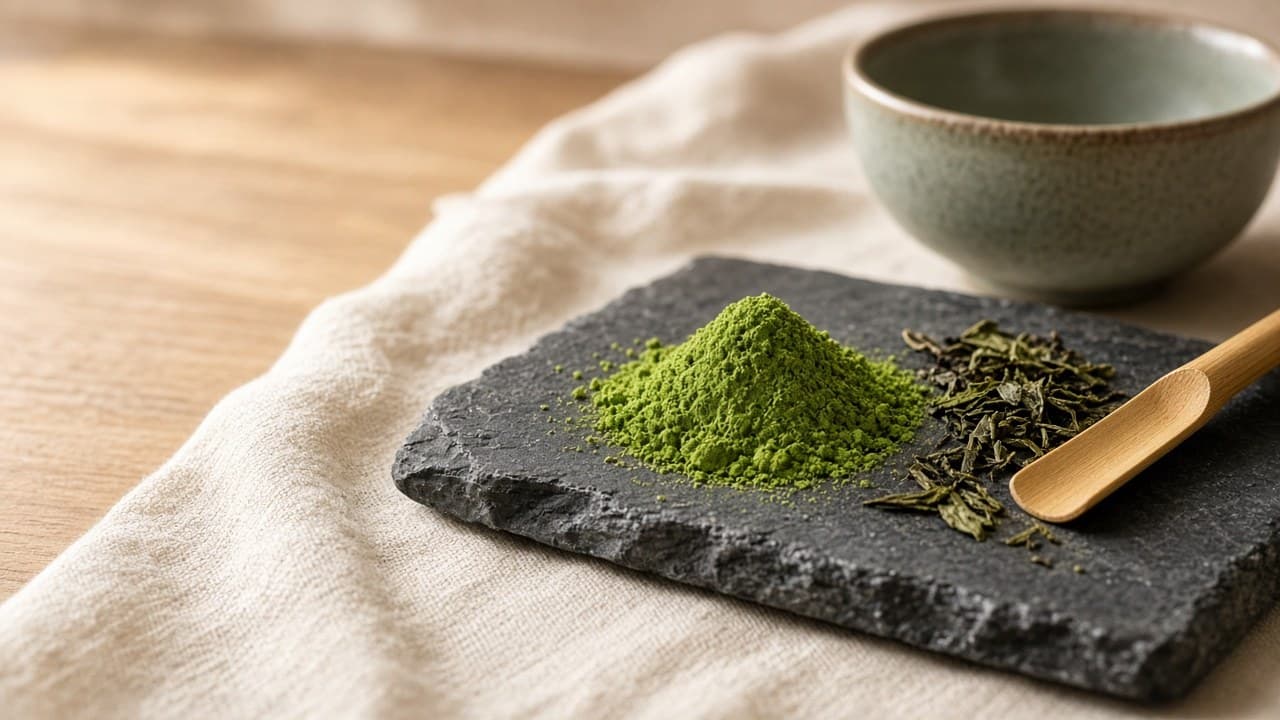
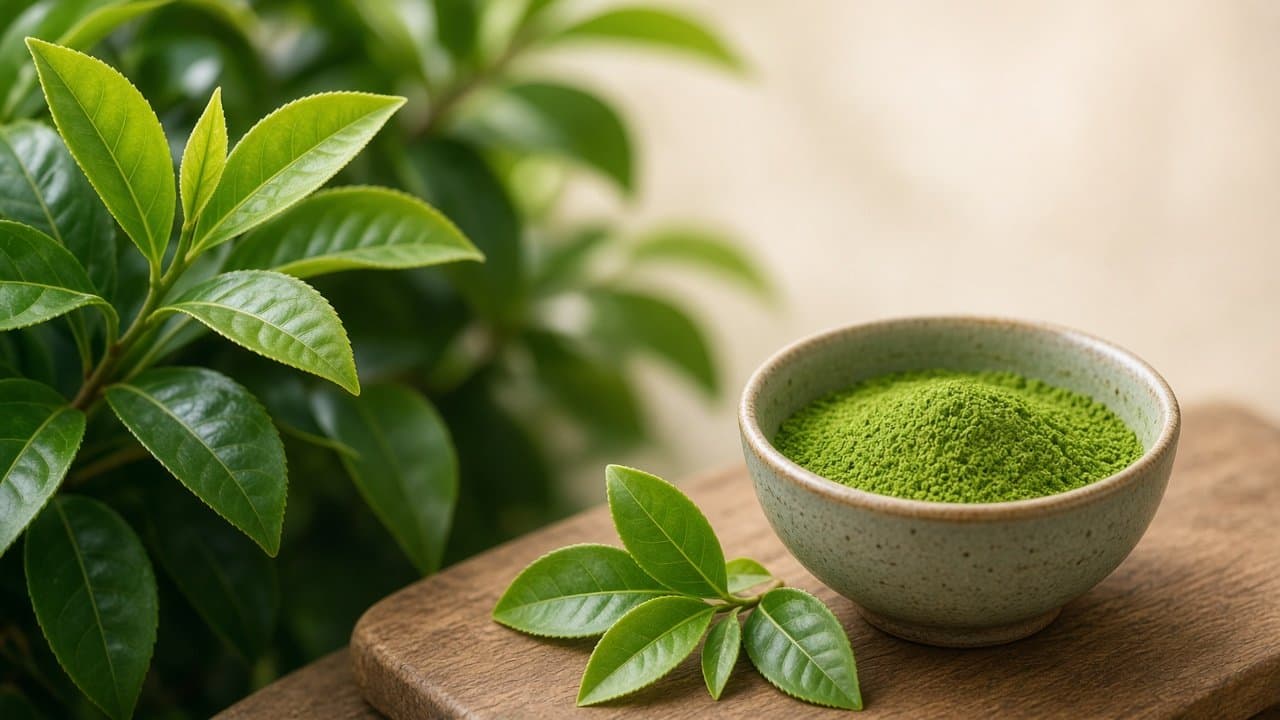
Matcha is powdered green tea: the tea leaves are shaded for several weeks before harvest, steamed after picking, dried unrolled and freed of stems and leaf veins. This intermediate product is called Tencha and is ground into a fine powder. The method originated in Japan, but matcha is now also made in China and other countries. The word itself is not protected, which is why it pays to look at the origin statement.
Matcha in one sentence
Matcha is Tencha ground to a powder, that is, green tea made from shaded, steamed and unrolled dried leaves, which you do not steep but whisk with water and drink together with the leaf.
Three things set it apart from other green tea: the shading, the processing into Tencha instead of rolled leaf tea, and the fine grinding. Matcha does not dissolve, it disperses; a sieve and a whisk make an even dispersion easier, and a little powder stays behind at the bottom.
So is matcha just ground green tea? All matcha is ground green tea, but not every ground green tea is matcha. The difference lies in the leaf material and in the processing before the mill.
Shading, Tencha, grinding: stone and machine
Shading. A few weeks before harvest, tea farmers cover the plants, today mostly with nets. The plant reacts to the missing light: it forms more chlorophyll, the leaves become darker and more tender and keep more of the amino acids that provide umami and soft sweetness, while fewer bitter compounds and tannins form. The shading period differs depending on the farm and the standard applied. Ask the seller how long a particular matcha was shaded; a generally recognised "longest shading" cannot be derived from this. The shading period alone does not determine the taste. For tencha, the Japanese agriculture ministry (MAFF) describes covering the tea gardens for about 2 to 3 weeks before picking [1]. What shading changes in the plant is shown by a study on the tea cultivar Lifeng (2025): after shading, genes for the formation and transport of certain amino acids were clearly more active, and the amino acid content of the leaf increased significantly [2].
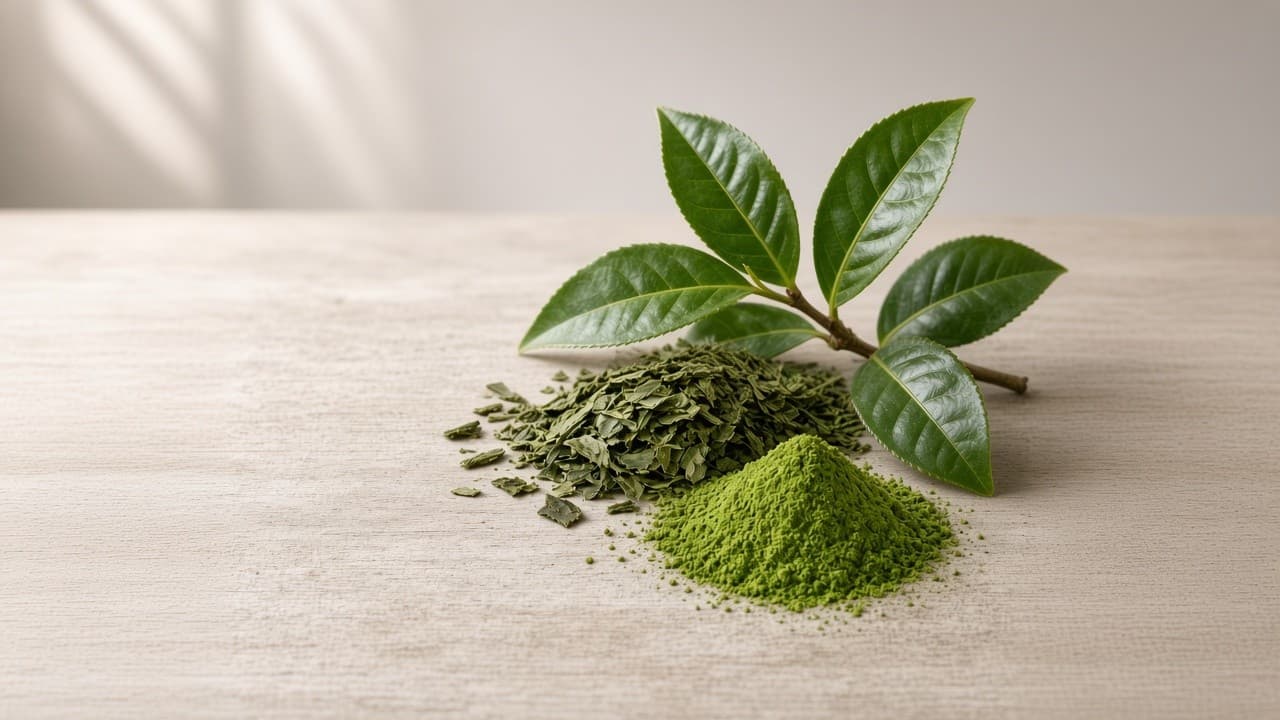
Tencha. After picking, the leaves are briefly steamed so that they stay green and, unlike Sencha, are not rolled but dried loosely. Stems, leaf veins and coarse pieces are removed; what remains are flaky pieces of leaf. Tencha can also be steeped; the taste depends on the tea and the preparation. At home you can grind Tencha in a spice grinder or a mortar; a spice grinder or mortar usually does not reach the fineness of professional matcha mills.
Grinding. Traditionally, Tencha is ground between two granite stones, with the upper one turning slowly. This is slow and produces little heat, which makes matcha ground this way more expensive. Industrially, ball mills, ceramic mills or jet mills grind with much higher throughput. What role this plays for the taste cannot be said across the board: fineness and the heat generated depend on the mill and its settings, and leaf material, shading and sorting also play a part. You cannot reliably tell the method from what is in the cup. In our review of the literature (status: October 2026) we found no comparison studies between stone and machine grinding whose results are publicly available.
Difference from Sencha and green tea powder
Sencha is Japan's most common green tea: unshaded or only briefly shaded, steamed, rolled, dried and steeped. When steeped, the leaf stays in the pot and you drink only what passes into the water. With matcha you drink the whole leaf. That is why matcha tastes different from a Sencha infusion, and the powder gives the drink more body.
Can you whisk Sencha? Leaves, no. Ground Sencha you can whisk; fineness, taste and foam formation depend on the product and the preparation. In Japan such a powder is called funmatsucha.
This is exactly the difference between "green tea powder" and "matcha powder": green tea powder can be any ground green tea, made from Sencha, from bancha, from unshaded leaves of any origin. Matcha in the narrower sense is ground Tencha. This distinction is not protected; in Japan it is a convention among producers. You recognise green tea powder by labels such as "ground green tea" or "Green Tea Powder". Price, colour and taste alone do not reliably show which leaf material was used.
Powders sold as matcha that are made from leaves other than Tencha do exist, for example ground gyokuro (shaded, but rolled) or ground Sencha. You can establish whether a seller uses Tencha only from the information they provide; if it is missing, ask.
Japan's main growing regions: Uji, Nishio, Kagoshima
Uji in Kyoto Prefecture is the historic home of matcha. The name often stands for the place of processing and trade: Uji tea comprises leaves from Kyoto, Nara, Shiga and Mie that businesses in Kyoto finish processing using the method that originated in Uji. Whether Kyoto can meet the worldwide demand from cafés and restaurants cannot be judged without current production and demand data.
Nishio in Aichi Prefecture specialised in Tencha early on and is among the large producers of matcha raw material.
Kagoshima lies in the south, on the island of Kyushu. The climate is warmer, the harvest begins earlier, the fields are large and cultivation is highly mechanised. Kagoshima now produces a large share of Japanese tea and more and more matcha.
There is also matcha from Shizuoka (an important tea region of Japan, known above all for Sencha), from Yame in Fukuoka (known for gyokuro), from Miyazaki and from other prefectures. A problem with a single pack does not allow a verdict on the whole region.
Is Uji matcha better than Kagoshima? Not across the board. The region's name alone does not allow a reliable verdict on taste, quality or price. What matters are the cultivar, shading, harvest and processing of the individual farm. Whether you like matcha from Yame or Miyazaki is also something only tasting will tell you.
Figures for context. Status: 05.10.2026. Of the first picking of 2026, in the five main growing prefectures that MAFF surveys for it, 44 % of the crude tea came from Shizuoka, 40 % from Kagoshima and 5 % from Kyoto (provisional figures of 18.08.2026) [3]. These figures cover all green crude tea, not just tencha. According to MAFF, tencha made up 8.6 % of Japan's crude tea production in 2025; its crude tea price averaged 8,562 yen per kg across all pickings. The ministry names Kagoshima, Kyoto and Shizuoka as the main growing areas for tencha [1].
Cultivar and harvest: what labels name
Cultivar is the bred variety of the tea plant. Yabukita is Japan's most widespread cultivar and is also used for matcha. Among others, Samidori, Asahi, Uji Hikari, Gokō, Okumidori, Saemidori, Kanayamidori and Yamatomidori are also used for matcha. Sellers describe their taste in different ways; only comparing them side by side will show which you prefer. That the cultivar measurably shapes the taste is shown by a laboratory study on matcha from two Chinese tea cultivars (2025): for astringency, the dry, furry feeling in the mouth, the cultivar was the most important factor; processing had a smaller influence [4].
Single cultivar or blend? Blends combine several varieties or lots, for example to reach a desired flavour profile. Single cultivar means one variety only; no general verdict on price or quality follows from it.
Harvest. The first picking of the year in spring is called ichibancha in Japan; later pickings follow in summer. You can find out which picking was used for a particular powder only from the seller's information. Some labels give the harvest year, many only the best-before date.
Is last year's matcha still good? The harvest year alone says nothing about usability; note the best-before date and the storage instructions. Whether an offer with an older harvest year is worth it depends on how much freshness is worth to you and how quickly you will use up the pack.
Matcha from China: differences and labelling
China produces matcha in Zhejiang, where Hangzhou is located, and in Guizhou, among other places. The production follows the Japanese principle: shade, steam, dry, grind. Cultivar, shading, sorting and grinding method differ from farm to farm; ask the seller for this information. Both matcha for cooking and matcha for drinking straight are available; as in Japan, the individual producer decides which to offer.
Is Chinese matcha better or worse? Neither across the board. Compare specific offers by pack size, unit price per kg and the information on production. Grade and origin are two different pieces of information: "Culinary" or "cooking grade" describes the producer's quality level, "China" the country; a cooking powder from Japan and a fine powder from China can both be good. If you are searching deliberately, look at the origin statement, the ingredient list (only ground green tea), the best-before date and the lot number.
Why do some sellers offer matcha from China when supply is short? Price and availability depend on the specific product and seller. Some sellers carry matcha from several countries of origin; check the origin of each offer. That is fine as long as it is labelled correctly. It becomes a problem when Japanese characters, names such as "Uji-Style" or pictures of Japanese tea gardens suggest an origin that is not true.
Labelling. In the EU, the country of origin or place of provenance must be stated if omitting it could mislead about the true origin, for example because presentation, name or pictures suggest a different origin. If the label as a whole gives the impression of a Japanese origin, the true origin must be stated for Chinese matcha. Beyond that, there is no general obligation to name the country of origin for tea; you can ask the seller about it.
Should Japan have the name matcha protected as a designation of origin? So far there is no such protection for the term. For Japanese tea as a whole, the geographical indication "Nihoncha" (日本茶) has existed since 10.07.2026: it covers green tea grown and processed in Japan, matcha included. Only products that match the registration may carry the name as a geographical indication and the GI mark [1]. It does not protect the term matcha itself. From a consumer's point of view, origin protection for clearly delimited regions would be more helpful than tying the term matcha to Japan across the board. Must matcha therefore come from Japan? No. Matcha is also made outside Japan; check origin and leaf material with the seller. The same applies to tea powder from Vietnam, Korea or other countries.
How to read the origin on the tin
- Country of origin. If it says "Origin: Japan" or "Product of Japan", the statement names the country of origin; individual places of processing and packing you may need to ask the seller about. More precise information such as prefecture, region or farm makes the origin easier to trace.
- Place of packing is not origin. "Filled in Germany", "Made for ..." or the importer's address say nothing about where the tea was grown. What is mandatory are the name and address of the responsible food business operator. The responsible operator is the one under whose name the food is marketed; if that operator is established outside the EU, it is the EU importer.
- Japanese script is no proof. Anyone can print characters, pictures of tea gardens and words such as "Japanese Style".
- Lot or batch number and best-before date appear on the pack; a sufficiently precise best-before date can replace the lot indication.
- Grade designations such as "Ceremonial", "Premium" or "Imperial" are producers' terms, not protected designations and not an indication of origin.
Online, the following must be shown before purchase: name of the food, ingredients, allergens, net quantity, storage/use, name and address of the food business operator, origin where required, and the unit price per kg. The best-before date is exempt from the online requirement and appears on the pack. If the product page lacks the country of origin, ask. If you are looking for everyday Japanese tea in the United Kingdom, you will find it at local specialist tea shops or specialised online shops with expressly confirmed UK delivery. Check shipping costs, import duties and delivery time, and ask about origin and batch. More buying criteria are in the guide Which matcha should I buy?.
Our origin
RINSUMILA DAILY, REFILL and PURE are ground green tea from Japan. We will only put region, cultivar, harvest time and grinding method on the product page once we have them confirmed in writing by the manufacturer. Until then, you will find the best-before date and lot number on a sticker on every pack; the QR code lets you look up your batch. For us that is the more honest statement than a region we cannot document.
Frequently asked questions
Is last year's matcha still good?
The harvest year alone says nothing about usability. Note the best-before date and the storage instructions; colour and taste alone are not enough to judge it. Matcha that smells musty, is damp or is visibly mouldy goes in the bin.
Where can I get matcha from China?
From tea merchants and online shops that state the origin openly, and in well-stocked Asian shops. Make sure that China is named as the country of origin, that the ingredient list contains only ground green tea, and that the best-before date and lot appear on the pack. Products without an origin statement are better left on the shelf, whatever the country.
What is a single-cultivar matcha, for example of the Gokō variety?
Single cultivar means one variety only; blends combine several varieties or lots, for example to reach a desired flavour profile. No general verdict on price or quality follows from that. Gokō is a cultivar that originates from Uji. We do not name brands; ask the seller about cultivar, region and harvest.
Why do some sellers offer matcha from China when supply is short?
Price and availability depend on the specific product and seller. Some sellers carry matcha from several countries of origin; check the origin of each offer. It becomes critical when presentation or name suggest a Japanese origin that is not true.
Is Uji matcha better than matcha from Kagoshima?
Not across the board. Uji has the longer matcha tradition, Kagoshima produces large quantities of tea. The region's name alone does not allow a reliable verdict on taste, quality or price; cultivar, shading, harvest and processing of the individual farm say more.
Sources
- Ministry of Agriculture, Forestry and Fisheries (MAFF) (2026): 茶をめぐる情勢 (Japanese). Tea situation report, July 2026, sections 1 and 20.
- Niu X, Ao C, Teng R, Li H, Zhao Y, Yu J, Huang H (2025): Multi-omics analysis reveals the regulatory mechanism of shading on quality-related metabolites in Camellia sinensis cv. Lifeng. Food Chemistry: Molecular Sciences 11:100314.
- Ministry of Agriculture, Forestry and Fisheries (MAFF) (2026): 令和8年産一番茶の摘採面積、生葉収穫量及び荒茶生産量(主産県) (Japanese). Statistics on the first picking of 2026, provisional figures, published 18.08.2026.
- Xue J, Liu P, Xu Y, Gui A, Wang X, Ye F, Feng L, Wang S, Teng J, Gao S, Zheng P (2025): Laboratory study on the astringency of matcha from two cultivars; used for the comparison of cultivar and processing. Food Research International 204:115954. DOI: 10.1016/j.foodres.2025.115954.
Related products
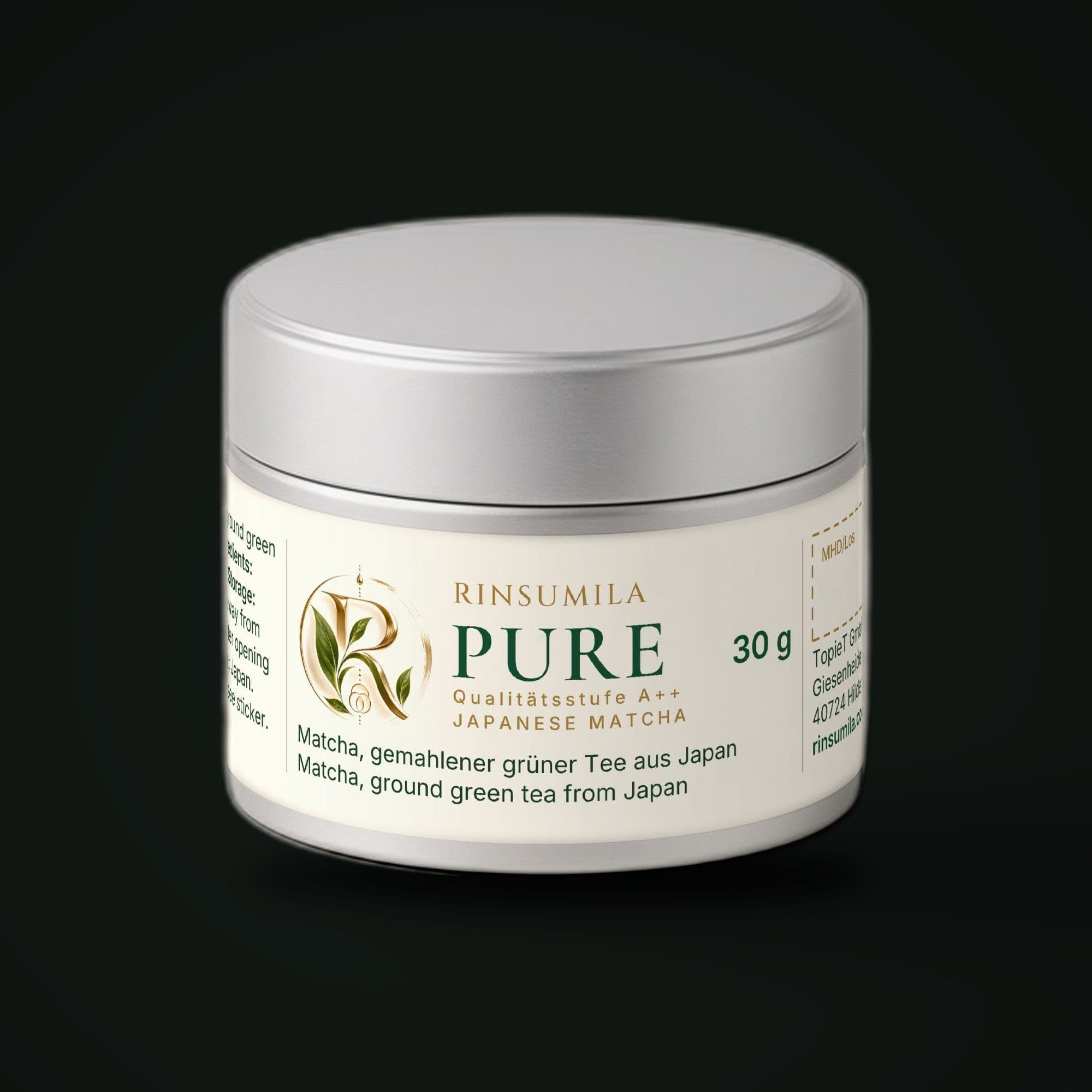
RINSUMILA PURE
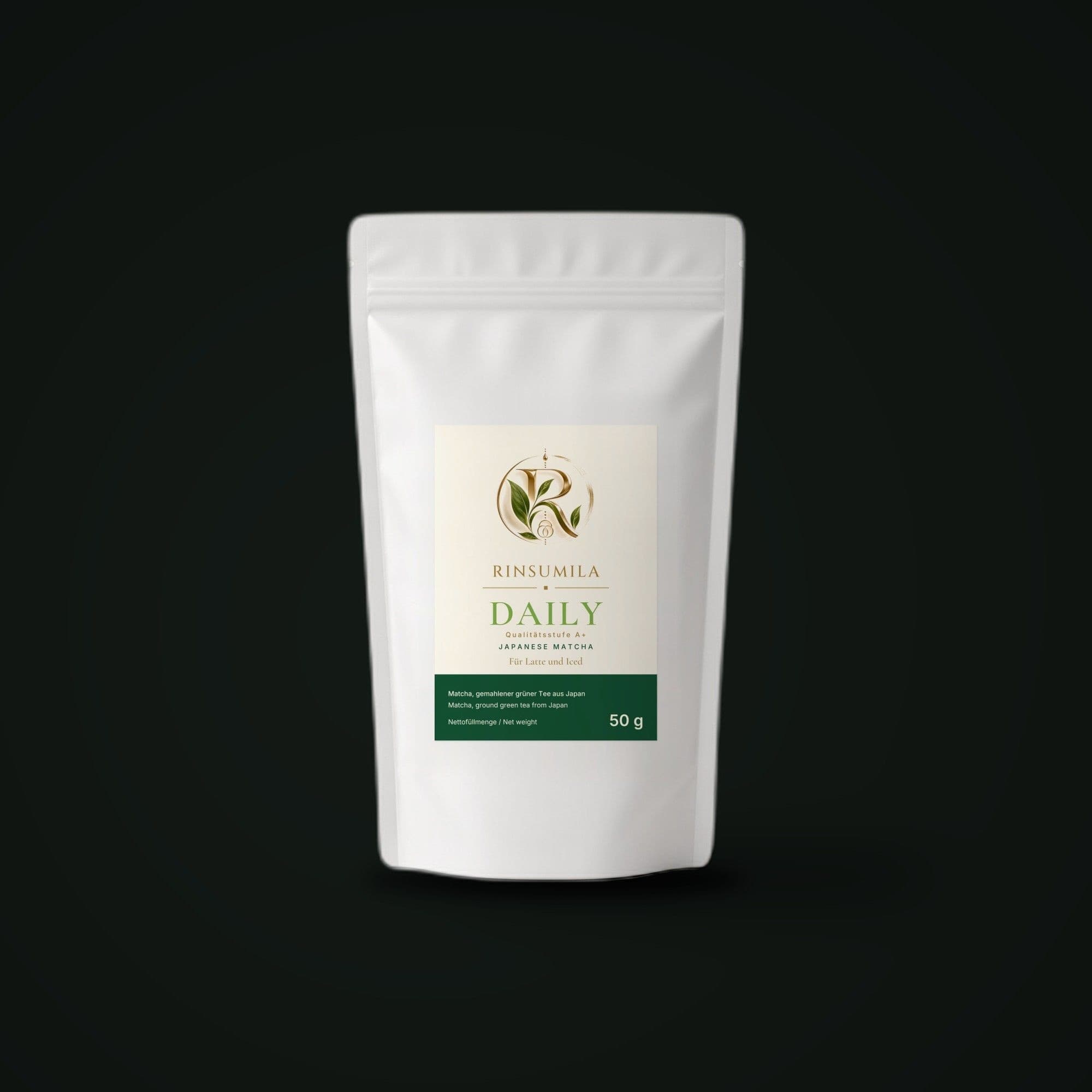
RINSUMILA DAILY
Related recipes
More guides